Join us on a literary world trip!
Add this book to bookshelf
Grey
Write a new comment Default profile 50px
Grey
Subscribe to read the full book or read the first pages for free!
All characters reduced
Thirty Strange Stories - cover

Thirty Strange Stories

H. G. Wells

Publisher: DigiCat

  • 0
  • 0
  • 0

Summary

In "Thirty Strange Stories," H. G. Wells presents a captivating anthology that spans the realms of science fiction, fantasy, and speculative fiction. Each tale blends the bizarre with the thought-provoking, often exploring themes of humanity's place in the universe, the moral implications of technological advancement, and the strange intersections of reality and imagination. Written in Wells's signature clear yet evocative prose, the collection employs innovative narrative techniques that invite the reader into a world where the ordinary transforms into the extraordinary, thereby provoking deep philosophical inquiries about existence and progress. Wells, often regarded as the father of modern science fiction, was profoundly influenced by the scientific developments of his time and the sociopolitical changes occurring at the turn of the 20th century. His background in biology when he studied under Thomas Henry Huxley, coupled with his acute observations of the human condition, molded his storytelling. Wells's fascination with futuristic themes often stemmed from his desire to challenge the era's conventions, leading to a compelling and imaginative oeuvre that stands the test of time. "Thirty Strange Stories" is an essential read for those fascinated by the transformation of literature through speculative thought. It invites readers to engage with profound questions while enjoying Wells's masterful storytelling. This collection not only entertains but also challenges us to reevaluate our understanding of the world, making it a crucial addition to the library of any engaged reader.
Available since: 06/13/2022.
Print length: 285 pages.

Other books that might interest you

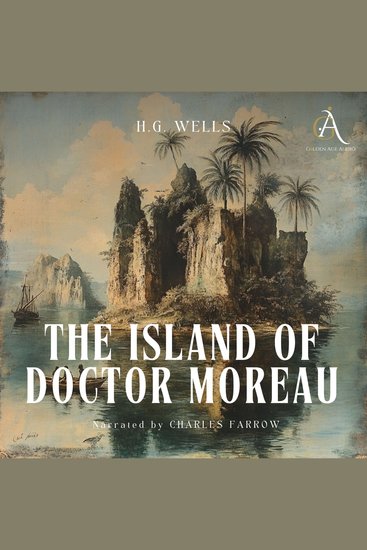
  • Island of Doctor Moreau The - Audiobook - cover

    Island of Doctor Moreau The -...

    H. G. Wells, Classic Audiobooks,...

    • 0
    • 0
    • 0
    H.G. Wells' The Island of Doctor Moreau is a chilling and thought-provoking science fiction novel that explores the dark boundaries between science, ethics, and humanity. After a shipwreck, Edward Prendick finds himself stranded on a mysterious island governed by the eccentric and unsettling Dr. Moreau — a scientist who conducts gruesome experiments to transform animals into humanoid creatures. As Prendick uncovers the horrifying truth behind Moreau's creations, he is forced to confront profound questions about evolution, morality, and what it means to be human.The novel masterfully combines elements of horror, science fiction, and philosophical allegory. Wells uses the remote island setting to examine themes of cruelty, identity, and the thin veneer of civilization. First published in 1896, The Island of Doctor Moreau remains a timeless classic that challenges readers to reflect on the ethical limits of scientific ambition.
    Show book
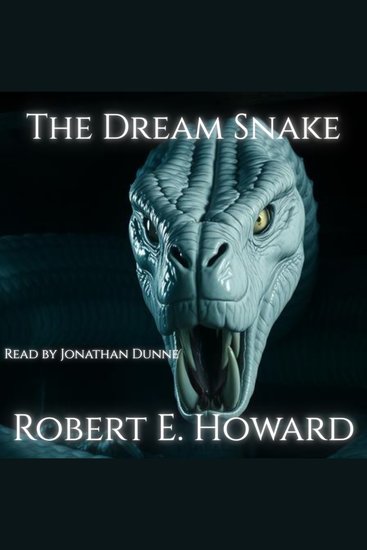
  • The Dream Snake - cover

    The Dream Snake

    Robert E. Howard

    • 0
    • 0
    • 0
    More classic horror narrations on Jonathan's YouTube channel: https://www.youtube.com/@JonathanDunneHorrorAudiobooks 
    Title: The Dream Snake 
    Author: Robert E. Howard 
    Narrator: Jonathan Dunne 
    Original Publication: 1928 
    Public Domain: Yes 
    Series: Timeless Terrors 
    Number: 102 
    Description: 
    The Dream Snake is a haunting and surreal tale of isolation, fear, and the thin line between life and death. Set in a stark and unforgiving landscape, the story follows Mary, a solitary healer who travels a remote wilderness carrying a mysterious, deadly snake used for curing illnesses. When a tragic accident occurs during one of her treatments, Mary is confronted with the fragility of human life, the limits of her knowledge, and the unpredictable consequences of her actions. 
    Robert E. Howard weaves a narrative charged with psychological tension and existential unease, exploring themes of mortality, responsibility, and the uncanny presence of forces beyond human understanding. The sparse, dreamlike prose evokes both wonder and dread, creating a world where isolation amplifies fear and where every choice can have irreversible consequences. 
    Narrated by Amazon-bestselling horror author Jonathan Dunne, this performance brings Lovecraft’s eerie, introspective story to life, immersing listeners in a chilling meditation on death, guilt, and the unknowable. The Dream Snake endures as a masterwork of psychological horror, where the most unsettling terror comes not from monsters, but from the consequences of our own hands.
    Show book
  • The Thanatos Syndrome - cover

    The Thanatos Syndrome

    Walker Percy

    • 0
    • 0
    • 0
    When Dr. Tom More (of Love in the Ruins) is released on parole from state prison, he returns to Feliciana, Louisiana, the parish where he was born and bred and where he practiced psychiatry before his arrest. Upon arriving, he notices something strange in almost everyone around him: unusual sexual behavior in women patients, a bizarre loss of inhibition, a lack of complexity in speech—even his own wife's extraordinary success at bridge tournaments, during which her mind seems to function like a computer. 
    With the ingenious help of his attractive cousin, Dr. Lucy Lipscomb, More begins to uncover a criminal experiment to "improve" people's behavior by drugging the local water supply. But beyond this scheme are activities so sinister that even Tom More wouldn't believe them if he hadn't witnessed them with his own eyes.
    Show book
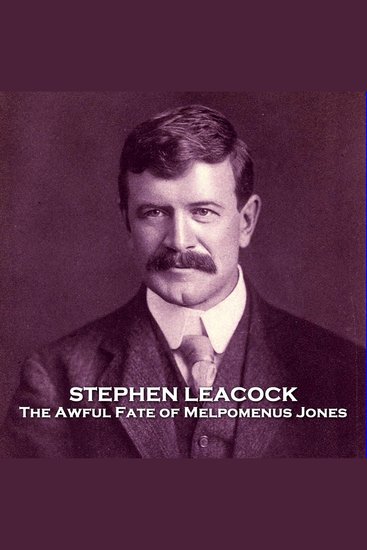
  • The Awful Fate of Melpomenus Jones - From their pens to your ears genius in every story - cover

    The Awful Fate of Melpomenus...

    Stephen leacock

    • 0
    • 0
    • 0
    Stephen P H Butler Leacock FRSC was born on 30th December 1869 in Swanmore, near Southampton, England.  He was the third of eleven children. 
    The family emigrated to Canada in 1876, settling on a 100-acre farm in Sutton, Ontario.  There Leacock was home-schooled until, funded by his grandfather, he was enrolled into the elite private school Upper Canada College in Toronto.  Academically he was very strong.  In 1887, at age 17, he became head boy and then proceeded on to the University of Toronto to study languages and literature.  Despite completing two years of study in only one, he was obliged to leave the university because his father, an alcoholic, had abandoned the family and finances could not be stretched to continue his attendance.  Leacock now enrolled in a three-month course at Strathroy Collegiate Institute to become a qualified high school teacher with a regular income. 
    He worked at Upper Canada College from 1889 through 1899 and later resumed his studies part-time at the University of Toronto, graduating with a B A in 1891.  It was during this period that he was first published in The Varsity, a campus newspaper.  But his passion was now economics and political theory.  In 1899 he enrolled for postgraduate studies at the University of Chicago and earned his PhD in 1903. 
    Leacock had married Beatrix Hamilton in 1900 and 15 years later the couple had their only child, Stephen.  In time father and son developed a love-hate relationship, partially caused by his son’s diminutive stature of only four feet.  
    Accepting a post at McGill University Leacock would remain there until he retired in 1936.  In 1906, he wrote ‘Elements of Political Science’, quickly adopted as a standard textbook for the next two decades and his most profitable book.  He also began public speaking and lecturing, and took a year's leave of absence in 1907 to speak throughout Canada on the subject of national unity.  
    Leacock had submitted humourous articles to the Toronto magazine Grip in 1894, and was soon published in other Canadian and US magazines.  In 1910, he printed privately a collection of these as ‘Literary Lapses’.  Acquired by the British publisher, John Lane, it was released in London and New York.   He was now a commercially successful writer.  There soon followed ‘Nonsense Novels’ (1911) and the sentimental favourite, ‘Sunshine Sketches of a Little Town’ (1912).  His ‘Arcadian Adventures with the Idle Rich’ (1914) is a darker collection that satirizes city life.  Collections of sketches continued to be published almost annually, filled with a mixture of light-hearted whimsy, parody, nonsense, and satire. 
    In later life, he wrote on the art of humour writing and published biographies on Twain and Dickens.  Together with continued speaking tours he also added to his non-fiction with many well-regarded and award-winning volumes on Canada. 
    Politically Leacock was a social conservative and a partisan Conservative.  He opposed women’s right to vote and had a varied record on non-English immigration.  He was a champion of Empire but an advocate of social welfare legislation and wealth redistribution, but he often caused friction with his racist views towards blacks and Indigenous peoples. 
    Leacock has for some time been forgotten as an economist, but it’s often quoted that in 1911 more people had heard of him than had heard of Canada.  For the decade after 1915 Leacock was the most popular humorist in the English-speaking world. 
    Stephen Leacock died on 28th March 1944 of throat cancer in Toronto, Canada.  He was 74.  He was buried in the St George the Martyr Churchyard, Sutton, Ontario.
    Show book

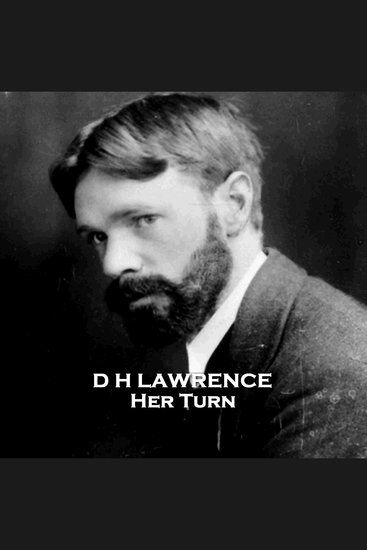
  • Her Turn - From their pens to your ears genius in every story - cover

    Her Turn - From their pens to...

    D H Lawrence

    • 0
    • 0
    • 0
    David Herbert Lawrence was born on the 11th September 1885 in Eastwood, Nottinghamshire, a coal mining town where the reality of a harsh life was only useful as experiences for future literary works. 
    He was educated at Beauvale Board School and became the first local boy to receive a scholarship to attend Nottingham High School. After 3 years he became a junior clerk in Haywood’s surgical appliances factory. He was also attempting a literary career which, in the short term, led to a teacher training position in Eastwood and later a teaching qualification from University College, Nottingham.  
    Lawrence’s first efforts were poems, short stories and a draft of ‘The White Peacock’. Moving to London and a teaching position in Croydon his writing attracted the attention of Ford Madox Ford, editor of The English Review, and he commissioned him to write ‘Odour of Chrysanthemums’.  
    Wanting to write full-time he now began work on what would become ‘Sons and Lovers.   
    In 1912 he met the older and married mother-of-three Frieda Weekley. They eloped to Germany and here Lawrence could see for himself the growing tensions with France.  So keen was his interest that he was arrested and accused of being a British spy.  
    In early 1914 Frieda obtained her divorce and they returned to Britain to be married just days before the outbreak of war. Owing to her German parentage, and his own public dislike of militarism and violence, the couple were treated with contempt and suspicion throughout the war years.  
    Despite this he continued to write but his reputation in England was so tarnished and, mirrored by his own disdain for the country, he and Frieda left England in November 1919, first for Europe and then America via Ceylon and Australia. 
    They bought a ranch in Taos, New Mexico and visited Mexico several times. The third visit in March 1925 caused a near fatal attack of malaria. To convalesce they moved to Florence. Here he continued work on ‘Lady Chatterley’s Lover’ which for many years would cause controversy. A renewed interest in oil painting resulted in an exhibition in 1929 which was raided by the police and several works were confiscated.  
    D H Lawrence died of complications arising from a bout of tuberculosis on the 2nd of March 1930 in Vence, France.  He was 44.
    Show book
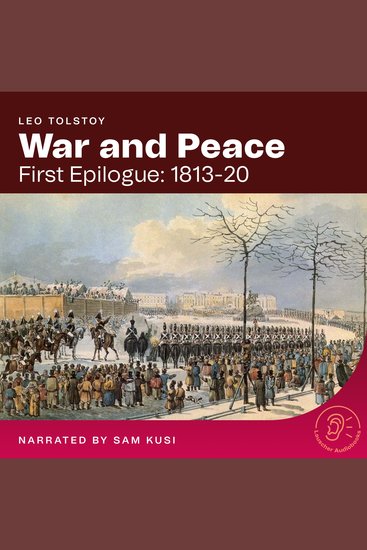
  • War and Peace (First Epilogue: 1813-20) - cover

    War and Peace (First Epilogue:...

    Leo Tolstoy

    • 0
    • 0
    • 0
    War and Peace is a literary work mixed with chapters on history and philosophy by the Russian author Leo Tolstoy. It was first published serially, then published in its entirety in 1869. It is regarded as one of Tolstoy's finest literary achievements and remains an internationally praised classic of world literature.
    First Epilogue: 1813-20: Seven years had passed. The storm-tossed sea of European history had subsided within its shores and seemed to have become calm. But the mysterious forces that move humanity (mysterious because the laws of their motion are unknown to us) continued to operate.
    Show book