Join us on a literary world trip!
Add this book to bookshelf
Grey
Write a new comment Default profile 50px
Grey
Subscribe to read the full book or read the first pages for free!
All characters reduced
The World Set Free - H G Wells' Prophetic Novel of Atomic Power and Global Transformation - cover

The World Set Free - H G Wells' Prophetic Novel of Atomic Power and Global Transformation

H. G. Wells, Zenith Golden Quill

Publisher: Zenith Golden Quill

  • 0
  • 0
  • 0

Summary

He imagined atomic bombs before they existed—and foresaw a world forever changed.

The World Set Free is H. G. Wells' visionary tale of global upheaval and renewal, written over three decades before the first real nuclear weapons. In this startlingly prescient novel, Wells imagines a society shattered by atomic warfare—and a world forced to reinvent itself under the weight of its own technological power.

More than science fiction, this is political prophecy: a gripping story of war, peace, and the possibilities of a world reborn from destruction.

📘 This Edition Features:
✔ Complete and unabridged text
✔ Kindle-optimized formatting with clickable table of contents
✔ Essential reading for fans of dystopian literature, futurism, and historical science fiction

💬 What Readers Say:
"A haunting forecast of nuclear warfare long before it became reality."
"Wells understood both the science and the stakes."
"More relevant today than ever before."

📥 Download The World Set Free now and explore the novel that predicted the atomic age—and asked whether humanity was ready for it.
Available since: 05/12/2025.
Print length: 170 pages.

Other books that might interest you

  • Manuscript Found in a Bottle - cover

    Manuscript Found in a Bottle

    Sampi Books, Edgar Allan Poe

    • 0
    • 0
    • 0
    "Manuscript Found In A Bottle" is a short story by Edgar Allan Poe that tells the story of a man who, after a shipwreck caused by a storm, finds himself on board a mysterious ghost ship with a crew destined for an unknown and catastrophic fate.
    Show book
  • From Russia With Love - A James Bond Novel - cover

    From Russia With Love - A James...

    Ian Fleming

    • 0
    • 0
    • 0
    JAMES BOND GOES HEAD-TO-HEAD WITH SMERSH IN A BID TO SECURE A KEY PIECE OF SOVIET INTELLIGENCE 
    SMERSH, the Russian intelligence unit whose acronym stands for “Death to Spies,” is hell-bent on destroying Special Agent James Bond. 
    His death would deal a catastrophic hammer blow to the heart of the British Secret Service. 
    The lure? A beautiful woman who needs 007’s help. Tatiana Romanova is a Russian spy who promises to hand over the prized Spektor decoding machine if Bond aids her defection. Bond suspects a trap but can’t resist the opportunity to give the British the upper hand in a chilling new front of the Cold War. 
    So begins a deadly game of bluff and double bluff, with Bond a marked man as he enters the murky world of Balkan espionage.
    Show book
  • Effi Briest (Unabridged) - cover

    Effi Briest (Unabridged)

    Theodor Fontane

    • 0
    • 0
    • 0
    Telling the tragic tale of a socially advantageous but emotionally ruinous match, Theodor Fontane's Effi Briest is translated from the German by Hugh Rorrison with an introduction by Helen Chambers in Penguin Classics. Unworldly young Effi Briest is married off to Baron von Innstetten, an austere and ambitious civil servant twice her age, who has little time for his new wife. Isolated and bored, Effi finds comfort and distraction in a brief liaison with Major Crampas, a married man with a dangerous reputation. But years later, when Effi has almost forgotten her affair, the secret returns to haunt her - with fatal consequences. In taut, ironic prose Fontane depicts a world where sexuality and the will to enjoy life are stifled by vain pretences of civilization, and the obligations of circumstance. Considered to be his greatest novel, this is a humane, unsentimental portrait of a young woman torn between her duties as a wife and mother and the instincts of her heart.
    Show book
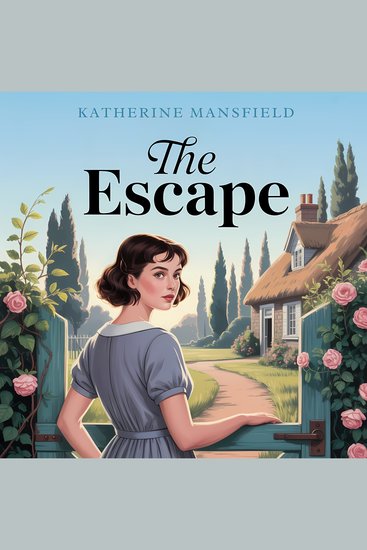
  • The Escape - A Classic Psychological Short Story of a Trapped Marriage Resentment and Emotional Control - cover

    The Escape - A Classic...

    Katherine Mansfield

    • 0
    • 0
    • 0
    What does it mean to escape when love, obligation, and habit quietly close in? In “The Escape” by Katherine Mansfield, a quiet domestic moment becomes the stage for an unspoken emotional reckoning between a husband and wife. As they prepare for an evening out, small gestures, clipped remarks, and inner reflections reveal the tensions beneath their long-standing marriage. What appears outwardly calm is charged with resentment, fatigue, and the desire - felt by both - for freedom from roles that no longer bring comfort. Mansfield masterfully exposes the psychological strain of intimacy worn thin, where politeness replaces connection and routine conceals longing. The story unfolds through subtle shifts in thought and tone, showing how escape is imagined, resisted, and quietly negotiated within the confines of everyday life. Press play and step into one of her most quietly revealing short stories - where the longing to escape is felt not in action, but in silence.
    Show book
  • Buddenbrooks - The Decline of a Family - cover

    Buddenbrooks - The Decline of a...

    Thomas Mann

    • 0
    • 0
    • 0
    Buddenbrooks is a 1901 novel by Thomas Mann, chronicling the decline of a wealthy north German merchant family over the course of four generations, incidentally portraying the manner of life and mores of the Hanseatic bourgeoisie in the years from 1835 to 1877. Mann drew deeply from the history of his own family, the Mann family of Lübeck, and their milieu.
    It was Mann's first novel, published when he was twenty-six years old. With the publication of the second edition in 1903, Buddenbrooks became a major literary success. Its English translation by Helen Tracy Lowe-Porter was published in 1924. The work led to a Nobel Prize in Literature for Mann in 1929; although the Nobel award generally recognises an author's body of work, the Swedish Academy's citation for Mann identified "his great novel Buddenbrooks" as the principal reason for his prize.
    Mann began writing the book in October 1897, when he was twenty-two years old. The novel was completed three years later, in July 1900, and published in 1901. His objective was to write a novel on the conflicts between businessman and artist's worlds, presented as a family saga, continuing in the realist tradition of such 19th-century works as Stendhal's Le Rouge et le Noir (1830; The Red and the Black). Buddenbrooks is his most enduringly popular novel, especially in Germany, where it has been cherished for its intimate portrait of 19th-century German bourgeois life.
    Before Buddenbrooks Mann had written only short stories, which had been collected under the title Der kleine Herr Friedemann (1898, Little Herr Friedemann). They portrayed spiritually challenged figures who struggle to find happiness in (or at the margins of) bourgeois society. Similar themes appear in the Buddenbrooks, but in a fully developed style that already reflects the mastery of narrative, subtle irony of tone, and rich character descriptions of Mann's mature fiction.
    The exploration of decadence in the novel reflects the influence of Schopenhauer's The World as Will and Representation (1818, 1844) on the young Mann. The Buddenbrooks of successive generations experience a gradual decline of their finances and family ideals, finding happiness increasingly elusive as values change and old hierarchies are challenged by Germany's rapid industrialisation. The characters who subordinate their personal happiness to the welfare of the family firm encounter reverses, as do those who do not.
    The city where the Buddenbrooks live shares so many street names and other details with Mann's native town of Lübeck that the identification is unmistakable, although the novel makes no mention of the name. The young author was condemned for writing a scandalous, defamatory roman à clef about (supposedly) recognisable personages. Mann defended the right of a writer to use material from his own experience.
    The years covered in the novel were marked by major political and military developments that reshaped Germany, such as the Revolutions of 1848, the Austro-Prussian War, and the establishment of the German Empire. Historic events nevertheless generally remain in the background, having no direct bearing on the lives of the characters.
    Show book

  • The Tenant of Wildfell Hall - cover

    The Tenant of Wildfell Hall

    Anne Brontë

    • 0
    • 0
    • 0
    "The Tenant of Wildfell Hall" by Anne Brontë is a novel written in the mid-19th century. The book explores themes of social customs, morality, and the struggles of women in a patriarchal society through its main character, Helen Graham, who is introduced as the mysterious tenant of Wildfell Hall.  
    At the beginning of the novel, we meet Gilbert Markham, who narrates his life as a farmer in the early 1820s, offering insights into his family dynamics and social interactions within the village. The arrival of a new tenant, Mrs. Graham, sparks curiosity and speculation among the local residents.  
    Gilbert's interactions with his family and his reflections on Mrs. Graham's character lay the groundwork for a deeper exploration of her backstory, suggesting that she is a significant woman with a troubled past. The narrative creates a strong sense of intrigue surrounding Mrs. Graham, hinting at the drama that will unfold as she navigates her choices and the judgments of society.
    Show book