Join us on a literary world trip!
Add this book to bookshelf
Grey
Write a new comment Default profile 50px
Grey
Subscribe to read the full book or read the first pages for free!
All characters reduced
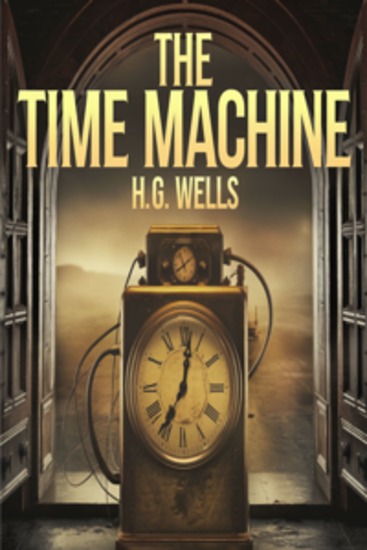
The Time Machine (illustrated) - cover

The Time Machine (illustrated)

H. G. Wells

Publisher: Swish

  • 0
  • 0
  • 0

Summary

The Time Machine by H.G. Wells
First published in 1895, The Time Machine is a pioneering science fiction novel that introduced the concept of time travel to the literary world. Follow the journey of the Time Traveller as he ventures into the distant future, discovering an unfamiliar world where humanity has evolved into two distinct races: the gentle Eloi and the subterranean, menacing Morlocks.
Through vivid storytelling and thought-provoking commentary on society, technology, and the passage of time, H.G. Wells examines the possibilities and perils of the unknown.
This public domain edition preserves the original text, formatted for optimal readability on digital devices. A timeless classic, The Time Machine continues to captivate readers with its imagination and insight into human nature and the universe.
Available since: 12/05/2024.
Other books that might interest you

  • A Complete Recovery - From their pens to your ears genius in every story - cover

    A Complete Recovery - From their...

    Barry Pain

    • 0
    • 0
    • 0
    Barry Eric Odell Pain was born at 3 Sydney Street in Cambridge on 28th September 1864. He was one of 4 children. 
    He was educated at Sedbergh School and then Corpus Christi College, Cambridge. 
    In 1889, Cornhill Magazine published his short story ‘The Hundred Gates’.  This opened the way for Pain to advance his literary career on several fronts. He became a contributor to Punch and The Speaker, as well as joining the staff of both the Daily Chronicle and Black and White.  
    Pain was also a noted and prominent contributor to The Granta and from 1896 to 1928 a regular contributor to the Windsor Magazine. 
    It is often said that Pain was discovered by Robert Louis Stevenson, who compared his work to that of Guy de Maupassant.  It’s an apt comparison. Pain was a master of disturbing prose but was also able to inject parody and light comedy into many of his works.  A simple premise could in his hands suddenly expand into a world very real but somehow emotionally fraught and on the very edge of darkness. 
    Barry Pain died on 5th May 1928 in Bushey, Hertfordshire.
    Show book
  • Vision of Hell The - The Divine Comedy 1 (Unabridged) - cover

    Vision of Hell The - The Divine...

    Dante Alighieri

    • 0
    • 0
    • 0
    Dante's Inferno by Dante Alighieri. The first part of Dante's Divine Comedy , the "Inferno" (or "Hell") begins on the night before Good Friday in the year 1300, "halfway along our life's path". Dante is thirty-five years old, half of the biblical life expectancy of 70, lost in a dark wood, assailed by beasts he cannot evade, and unable to find the straight way to salvation. Conscious that he is ruining himself and that he is falling into a deep place where the sun is silent, Dante is at last rescued by Virgil, and the two of them begin their journey to the underworld. Each sin's punishment in Inferno is a contrapasso, a symbolic instance of poetic justice.
    Show book
  • Conversation On Conversation - From their pens to your ears genius in every story - cover

    Conversation On Conversation -...

    Harriet Beecher Stowe

    • 0
    • 0
    • 0
    The bookshelves of American literature are incredible collections that have gathered together centuries of very talented authors.  From this continent their fame spread and whilst among their number many are now forgotten or neglected their talents endure.  Among them is Harriet Beecher Stowe.
    Show book
  • Two Tales From Lord Dunsany - The Sword of Welleran Carcassone - cover

    Two Tales From Lord Dunsany -...

    Lord Dunsany

    • 0
    • 0
    • 0
    Edward John Moreton Drax Plunkett, 18th Baron of Dunsany, (July 24, 1878 - October 25, 1957), commonly known as Lord Dunsany, was an Anglo-Irish writer and dramatist who published more than 90 books during his lifetime, as well as hundreds of short stories, plays, and essays. He gained a name in the 1910s as a great writer in the English-speaking world. The following recording includes the short stories "The Sword of Welleran" and "Carcassone."
    Show book
  • Greats Abridged The: Great Expectations - cover

    Greats Abridged The: Great...

    Charles Dickens

    • 0
    • 0
    • 0
    The Greats Abridged: Great Expectations brings Charles Dickens' iconic coming-of-age tale to life in a concise, compelling format ideal for modern listeners. This expertly abridged version preserves the heart and drama of Pip’s journey—from humble beginnings as an orphaned blacksmith’s apprentice to the glittering illusions of gentlemanly life in London. 
    Narrated with rich depth by Richard Stibbard, this adaptation captures the emotion, mystery, and unforgettable characters that have made Great Expectations one of the greatest novels ever written. Miss Havisham’s haunting legacy, Estella’s icy charm, and the brooding secret of Pip’s benefactor are all here, streamlined without sacrificing Dickens’ masterful storytelling. 
    Perfect for first-time listeners, busy students, or fans revisiting the novel with fresh ears—this abridged edition delivers the power of Dickens in a shorter, highly engaging form.
    Show book
  • The Murders in the Rue Morgue - cover

    The Murders in the Rue Morgue

    Edgar Allan Poe

    • 0
    • 0
    • 0
    The Murders in the Rue Morgue is a short story by Edgar Allan Poe published in Graham's Magazine in 1841. It has been recognized as the first modern detective story; Poe referred to it as one of his "tales of ratiocination". Two works that share some similarities predate Poe's stories, including Das Fräulein von Scuderi (1819) by E. T. A. Hoffmann and Zadig (1747) by Voltaire. C. Auguste Dupin is a man in Paris who solves the mystery of the brutal murder of two women. Numerous witnesses heard a suspect, though no one agrees on what language was spoken.     At the murder scene, Dupin finds a hair that does not appear to be human. As the first fictional detective, Poe's Dupin displays many traits which became literary conventions in subsequent fictional detectives, including Sherlock Holmes and Hercule Poirot. Many later characters, for example, follow Poe's model of the brilliant detective, his personal friend who serves as narrator, and the final revelation being presented before the reasoning that leads up to it. Dupin himself reappears in "The Mystery of Marie Rogêt" and "The Purloined Letter".
    Show book