Join us on a literary world trip!
Add this book to bookshelf
Grey
Write a new comment Default profile 50px
Grey
Subscribe to read the full book or read the first pages for free!
All characters reduced
The Time Machine + The Invisible Man + The War of the Worlds - 3 Unabridged Science Fiction Classics - cover

The Time Machine + The Invisible Man + The War of the Worlds - 3 Unabridged Science Fiction Classics

H. G. Wells

Publisher: DigiCat

  • 0
  • 0
  • 0

Summary

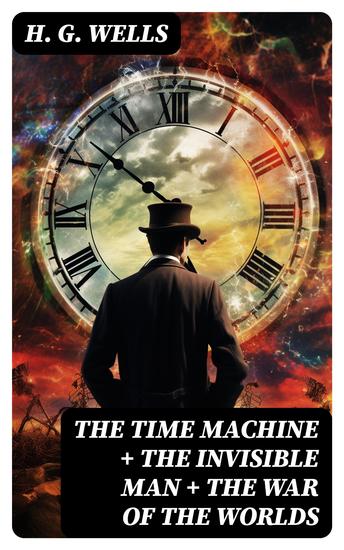
H. G. Wells's seminal works, "The Time Machine," "The Invisible Man," and "The War of the Worlds," present a trilogy that encapsulates the essence of speculative fiction. Each narrative intricately weaves themes of social criticism, human evolution, and existential dread with a pioneering narrative style that blends scientific inquiry with imaginative storytelling. The texts not only reflect the anxieties of late 19th-century industrial society but also challenge the moral implications of technological progress and the nature of humanity, pushing the boundaries of what was conventionally considered possible in literature at the time. H. G. Wells, often hailed as the father of science fiction, was profoundly influenced by the scientific advancements and philosophical debates of his era. His background in biology and his deep-seated concerns about societal change inspired him to explore the repercussions of scientific experimentation. Wells's works have roots in the literary traditions of utopian and dystopian fiction, and they boldly question the ethical dimensions of knowledge, authority, and the future of humanity. This collection is highly recommended for readers who seek thought-provoking narratives that interrogate both the limits of human comprehension and the potential consequences of progress. Wells's imaginative exploration of time travel, invisibility, and interplanetary conflict offers profound insights into the human condition, making this anthology essential for both enthusiasts of classic literature and fans of speculative fiction.
Available since: 01/01/2024.
Print length: 1200 pages.

Other books that might interest you

  • Mary Elizabeth Braddon - A Short Story Collection - A hugely popular Victorian author she has become underrated over time but here we try and correct that with an amazing compilation of stories - cover

    Mary Elizabeth Braddon - A Short...

    Mary Elizabeth Braddon

    • 0
    • 0
    • 0
    Mary Elizabeth Braddon – A Short Story Collection – An Introduction 
     
    Mary Elizabeth Braddon was born in London on the 4th October 1835. 
     
    At age 5 her parents separated but her ambition to succeed was not daunted.  After being privately educated she took to acting, and the minor roles she obtained where enough to support both her and her mother.  This potential career waned as soon as she began writing and secured an income from it. 
     
    In 1860, she met John Maxwell, a publisher of periodicals, and moved in with him the following year.  At the time Maxwell was already married with five children but his wife was confined to an Irish mental asylum.  On her death they married and she had six children by him. 
     
    Braddon was prolific and wrote over 80 novels, perhaps the most famous is ‘Lady Audley's Secret’ (1862), which won her both sales and a fortune as a bestseller.  She also wrote a number of historical fiction novels which again increased her reputation. 
     
    She was equally prolific as a short story writer, primarily supernatural and ghost stories, all of which continue to be anthologized to this day, such is the high regard they are kept in. 
     
    Braddon founded Belgravia magazine in 1866, its fare being serialised sensation novels, poems, travel narratives and biographies, along with essays on fashion, history and science, all lavishly illustrated.  She also edited Temple Bar magazine. 
     
    Mary Elizabeth Braddon died on 4th February 1915 and is buried in Richmond Cemetery. 
     
    1 - Mary Elizabeth Braddon - A Short Story Collection - An Introduction 
    2 - Colonel Benyon's Entanglement by Mary Elizabeth Braddon 
    3 - The Cold Embrace by Mary Elizabeth Braddon 
    4 - The Face in the Glass by Mary Elizabeth Braddon 
    5 - Eveline's Visitant by Mary Elizabeth Braddon 
    6 - The Higher Life by Mary Elizabeth Braddon
    Show book
  • Ukridge - cover

    Ukridge

    P. G. Wodehouse

    • 0
    • 0
    • 0
    Stanley Featherstonehough Ukridge is willing to do anything to get a buck – except, of course, work. Bombastic and big-eared, Ukridge has a bottomless well of corking ideas that never seem to work out, yet he’s always willing to volunteer others to tackle the inconvenient bits. Whether he’s commandeering a dog college, managing a tender-hearted pugilist, or brushing the perpetual chips off his aunt’s shoulder, Ukridge’s spotty success record never gets him down.  
    Ukridge had a special place in Wodehouse’s heart, appearing in stories for 60 years, with the last published as late as 1966. Ukridge first appeared to American audiences in Love Among the Chickens (1906). While this collection is the second published (1924), the events take place before the dodgy poultry adventure. 
    Show book
  • Black Beauty - The Autobiography of a Horse - cover

    Black Beauty - The Autobiography...

    Anna Sewell

    • 0
    • 0
    • 0
    "Black Beauty: The Autobiography of a Horse" by Anna Sewell is a compelling tale told from the unique perspective of Black Beauty, a noble and gentle horse. Through his eyes, we experience the highs and lows of his life, from idyllic days in the countryside to the harsh realities of urban work. Along the way, Beauty encounters both kind and cruel humans, revealing profound insights into the treatment of animals. This timeless story champions empathy, kindness, and the enduring bond between humans and horses.
    Show book
  • The Black Cat - cover

    The Black Cat

    Edgar Allan Poe

    • 0
    • 0
    • 0
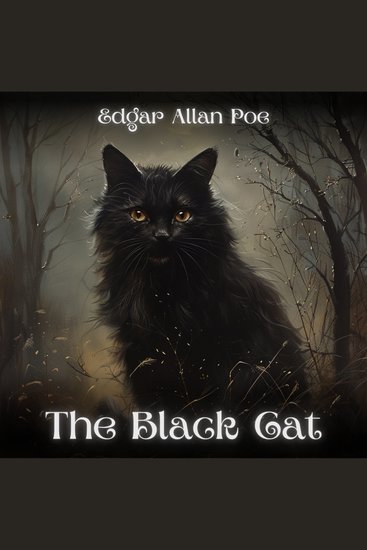
    Enter the chilling world of Edgar Allan Poe with "The Black Cat," the fourth part of an Edgar Allan Poe short story collection, narrated by Jake Urry. This dark tale follows a man whose descent into madness leads him to commit horrifying acts against those he loves, spurred by his obsession with a sinister black cat. As his guilt and paranoia intensify, the story spirals toward a terrifying conclusion. 
    Jake Urry's gripping narration captures the macabre and psychological complexity of Poe's story, making this audiobook an enthralling experience. His evocative voice and expert pacing bring the horror and suspense to life, immersing listeners in a tale of guilt, terror, and the supernatural.
    Show book
  • About Sir Thomas More (Unabridged) - cover

    About Sir Thomas More (Unabridged)

    H. G. Wells

    • 0
    • 0
    • 0
    Herbert George Wells (21 September 1866 - 13 August 1946) was an English writer. Prolific in many genres, he wrote dozens of novels, short stories, and works of social commentary, history, satire, biography and autobiography. His work also included two books on recreational war games. Wells is now best remembered for his science fiction novels and is often called the "father of science fiction", along with Jules Verne and the publisher Hugo Gernsback.
    ABOUT SIR THOMAS MORE: There are some writers who are chiefly interesting in themselves, and some whom chance and the agreement of men have picked out as symbols and convenient indications of some particular group or temperament of opinions.
    Show book
  • A Little Joke - From their pens to your ears genius in every story - cover

    A Little Joke - From their pens...

    Anthony Hope

    • 0
    • 0
    • 0
    Sir Anthony Hope Hawkins was born on 9th February 1863 in Clapton, London.  
    He was educated at St John's School, Leatherhead, Marlborough College and Balliol College, Oxford.  Hope trained as a lawyer and barrister and was called to the Bar by the Middle Temple in 1887. Despite what was thought to be a promising legal career he had literary ambitions and wrote in his spare time. 
    His early works appeared in various periodicals of the day but for his first book ‘A Man of Mark’ (1890), with no publisher interested, he published with his own resources.  
    More novels and short stories followed, including the mildly successful ‘Mr Witt's Widow’ in 1892. Hope even found time to run as the Liberal candidate for Wycombe in the election that same year but was unsuccessful. 
    His first major literary success came with ‘The Dolly Dialogues’, a collection of previously published magazine pieces followed very quickly by his instant classic, ‘The Prisoner of Zenda’. He now gave up the vestiges of his legal career to pursue writing full-time. 
    Despite never again reaching the same pinnacle of success he was popular and wrote prolifically across novels, plays and of course, short stories though his writing output rapidly diminished after the war. 
    In 1918 he was knighted for his contribution to propaganda efforts during World War I.  
    His short stories are delicate, mannered and often surprising with their wit, humour and interplay of characters who say one thing and usually mean another.  He was very definitely a writer of escapist rather than serious fare but they are no less enjoyable for that. 
    Anthony Hope died of throat cancer on 8th July 1933 at his country home, Heath Farm at Walton-on-the-Hill in Surrey. He was 70.
    Show book