Join us on a literary world trip!
Add this book to bookshelf
Grey
Write a new comment Default profile 50px
Grey
Subscribe to read the full book or read the first pages for free!
All characters reduced
The Story of the Inexperienced Ghost - cover

The Story of the Inexperienced Ghost

H. G. Wells

Publisher: The Ebook Emporium

  • 0
  • 0
  • 0

Summary

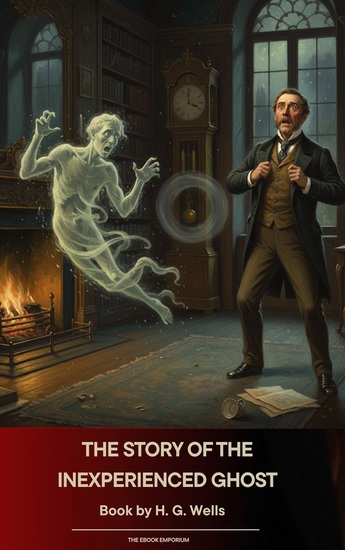
"He wasn't a terrifying ghost; he was a pathetic one. He had forgotten how to haunt."

In the cozy, smoke-filled atmosphere of the Meridian Club, a man named Clayton recounts a remarkable encounter. He recently found himself face-to-face with a ghost—not a shrieking specter, but a shy, stuttering young man who had died of "inanition" and was now failing miserably at being scary. The ghost has forgotten the complex "passes" and gestures required to disappear back into the spirit world. As Clayton attempts to help the spirit regain his "spectral footing," the story takes a turn from the humorous to the chillingly profound, questioning the thin veil between the living and the dead.

A Satire of the Gothic Tradition: Wells subverts every trope of the 19th-century ghost story. His phantom is a "low-grade" spirit who is self-conscious about his lack of haunting skills. By treating the afterlife as a bureaucratic or technical skill that one must master, Wells brings a grounded, modern sensibility to the supernatural, making the ghost's plight relatable and strangely human.

The Fatal Curiosity: The narrative tension peaks when Clayton decided to demonstrate the ghost's secret gestures to his skeptical friends. Wells masterfully builds a sense of dread as the "inexperienced" ghost's struggle becomes a real-world danger. It is a cautionary tale about the arrogance of the living when dealing with the mysteries of the beyond.

Discover the lighter—and darker—side of the supernatural. Purchase "The Story of the Inexperienced Ghost" today and master the pass.
Available since: 01/08/2026.
Print length: 27 pages.
Other books that might interest you

  • Waltz Through Eternity - cover

    Waltz Through Eternity

    Margaret Teegarden

    • 0
    • 0
    • 0
    Sit back and relax. Let your mind slip right into the characters of the pages that follow. When you completely drift into the lives of the characters you'll experience frustration, anger, hurt and despair and soon you'll feel pain and agony that lasts for all eternity. This type of suffering can only be relieved by truth and everlasting love.
    Show book
  • The Merchant Of Venice - cover

    The Merchant Of Venice

    William Shakespeare

    • 0
    • 0
    • 0
    The Merchant of Venice by William Shakespeare is a timeless classic that explores themes of justice, mercy, love, and prejudice. Set in the vibrant city of Venice, the story follows the complex relationship between Antonio, a melancholic merchant, and Shylock, a Jewish moneylender. 
     
    Antonio’s dear friend Bassanio seeks to court the wealthy and beautiful Portia but lacks the funds to do so. To help his friend, Antonio borrows money from Shylock, offering a pound of his own flesh as collateral if he cannot repay the loan. As circumstances unfold, Antonio’s ships are lost at sea, and he finds himself unable to repay the debt. Shylock, deeply wronged by the discrimination he has faced, seeks to enforce their bond and claim his pound of flesh, sparking a tense legal battle that tests the concepts of justice and revenge. 
     
    Portia, disguised as a lawyer, enters the courtroom in a dramatic attempt to save Antonio, ultimately challenging Shylock’s rigid interpretation of the law. Through its intricate plot and memorable characters, the play delves into the moral and ethical dilemmas faced by each individual, offering a thought-provoking reflection on human nature and the consequences of our choices. 
     
    This audiobook brings the rich language of Shakespeare to life, immersing listeners in the intensity of the courtroom drama, the romance of Bassanio and Portia, and the profound struggles of identity and morality. With its engaging narration and timeless relevance, The Merchant of Venice continues to captivate audiences with its exploration of loyalty, vengeance, and the complexity of mercy. A must-listen for lovers of classic literature, this audiobook provides a fresh and dynamic interpretation of one of Shakespeare's most iconic works.
    Show book
  • The Murderer - Bulgakov expertly explores life and death choices set on the backdrop of the Bolshevik Revolution - cover

    The Murderer - Bulgakov expertly...

    Mikhail Bulgakov

    • 0
    • 0
    • 0
    Mikhail Bulgakov was born on 15th May 1891 in Kiev, in the Kiev Governorate of the Russian Empire, into a Russian family.  He was one of seven children. 
     
    In 1901, Bulgakov attended the First Kiev Gymnasium, and developed a keen interest in Russian and European literature, theatre and opera.  After the death of his father in 1907, his mother assumed responsibility for his education.  After graduating Bulgakov entered the Medical Faculty of Kiev University and then took up a post as physician at the Kiev Military Hospital. 
     
    At the outbreak of the First World War, he volunteered as a doctor and was sent directly to the front, where he was badly injured at least twice.  To suppress chronic pain, especially in the abdomen, he injected morphine.  It took years to wean himself off. 
     
    He now took up medical posts in various towns and in 1919, he was mobilised by the Ukrainian People's Army and assigned to the Northern Caucasus.  There, he became seriously ill with typhus and barely survived.  
     
    After this illness, Bulgakov abandoned his medicine to pursue writing.  He moved to Vladikavkaz and had two plays staged there with great success.  He wrote too for various newspapers and other outlets, but his critics were many.  And growing. 
     
    When a Moscow's theatre director severely criticised Bulgakov, Stalin personally protected him, saying that a writer of Bulgakov's quality was above ‘party words’ like ‘left’ and ‘right’.   Indeed, it is said that Stalin watched ‘The Days of the Turbins’ at least 15 times. 
     
    It was not to last and by March 1929, Bulgakov's career was ruined when Government censorship stopped publication of any of his work and plays. 
     
    In despair, Bulgakov wrote a personal letter to Stalin.  He requested permission to emigrate.  He received a phone call from the Soviet leader, who asked the writer whether he really desired to leave. He replied that a Russian writer cannot live outside of his homeland.  Stalin thus gave him permission to continue working. In May 1930, he re-joined the theater, as stage director's assistant.  
     
    During the last stressful decade of his life, and in poor health, Bulgakov continued to work on ‘The Master and Margarita’, wrote plays, critical works, stories, and continued translations and dramatisations of novels.  Many of them were not published, others were derided by critics.  
     
    On 10th March 1940, Mikhail Afanasyevich Bulgakov died from nephrosclerosis.  He was 48. 
     
    ‘The Master and Margarita’ was not published in any form until the mid-1960’s 
     
    Here Bulgakov relates a story as told by a doctor describing the terrible things that humanity is capable of doing in times of war.
    Show book
  • Love's Labour's Lost - cover

    Love's Labour's Lost

    William Shakespeare

    • 0
    • 0
    • 0
    This new edition of Shakespeare's Love's Labour's Lost presents a highly readable text of the play based on the first quarto of 1598. A thorough but concise critical commentary and a comprehensive introduction illuminate the significant elements of the play, its remarkable use of language, and its performance history.
    Show book
  • The Secret Sense - cover

    The Secret Sense

    Isaac Asimov

    • 0
    • 0
    • 0
    "The Secret Sense" is a science fiction short story by American writer Isaac Asimov, published in Cosmic Stories in March 1941. It takes place against the background of an ancient and highly developed culture living in large underground cities on Mars.The Martians couldn't taste and their hearing was bad, but they had a secret sense all their own.
    Show book
  • The Jungle Book - cover

    The Jungle Book

    Rudyard Kipling

    • 0
    • 0
    • 0
    "The Jungle Book" by Rudyard Kipling is a collection of stories originally published in the late 19th century. The central focus is on the adventures of a young boy named Mowgli, who is raised by wolves in the Indian jungle. The book explores themes of nature, survival, and the conflict between civilization and the wild.  
    The narrative highlights the bonds formed between Mowgli and various animal characters, emphasizing the laws that govern the lives of the jungle's inhabitants. At the beginning of the book, we learn about Mowgli's origins when he is discovered by Father Wolf after wandering into the wolf pack's territory. The fierce tiger, Shere Khan, poses a significant threat as he seeks to claim Mowgli for himself. However, Mother Wolf fiercely defends Mowgli, declaring him as her own, which ignites a debate among the pack members about the implications of accepting a human child into their midst. 
    This opening sets the stage for Mowgli’s complex relationship with both the jungle and the human world, showcasing the challenges he faces as he grows up estranged from both realms. The tone of adventure and danger that permeates the stories to come invites listeners into a vividly imagined natural world.
    Show book