Join us on a literary world trip!
Add this book to bookshelf
Grey
Write a new comment Default profile 50px
Grey
Subscribe to read the full book or read the first pages for free!
All characters reduced
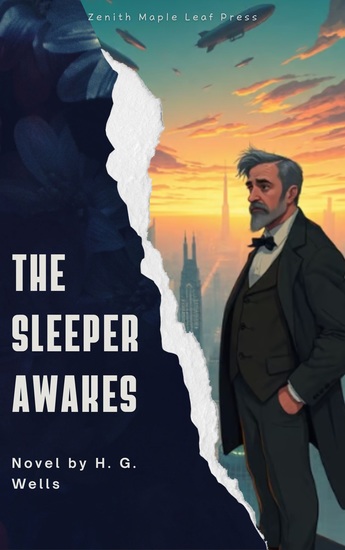
The Sleeper Awakes - A Visionary Dystopian Sci-Fi Classic of Power Rebellion and the Future - cover

The Sleeper Awakes - A Visionary Dystopian Sci-Fi Classic of Power Rebellion and the Future

H. G. Wells, Zenith Maple Leaf Press

Publisher: Zenith Maple Leaf Press

  • 0
  • 0
  • 0

Summary

A man sleeps for two centuries… and wakes to a world he never imagined.
Graham, an ordinary man from Victorian England, falls into a mysterious, decades-long sleep—only to awaken in the year 2100. To his astonishment, his name is legendary and his wealth has multiplied beyond imagination, making him the richest man on Earth. But with unimaginable power comes dangerous enemies.

In The Sleeper Awakes, H. G. Wells crafts a gripping tale of technological marvels, mass media manipulation, and political revolution. What begins as wonder soon turns to peril, as Graham is drawn into a battle for freedom against a totalitarian regime that rules the future.

First published in 1910, this novel is an eerily prophetic look at consumerism, class struggle, and the power of information—decades ahead of its time.

"A chillingly accurate vision of the future's social and political conflicts."
– The Guardian

"Wells at his most prophetic—unsettling, thrilling, and deeply thought-provoking."
– The New York Times

✅ Why Readers Love It:
🏙 A vivid, detailed vision of a futuristic world

⚖️ Themes of wealth, inequality, and revolution

📚 A classic dystopian novel from a master of science fiction

🎯 Click 'Buy Now' to awaken in Wells' unforgettable vision of the future.
Available since: 08/13/2025.
Print length: 271 pages.
Other books that might interest you

  • Through the Looking-Glass - cover

    Through the Looking-Glass

    Lewis Carroll

    • 0
    • 0
    • 0
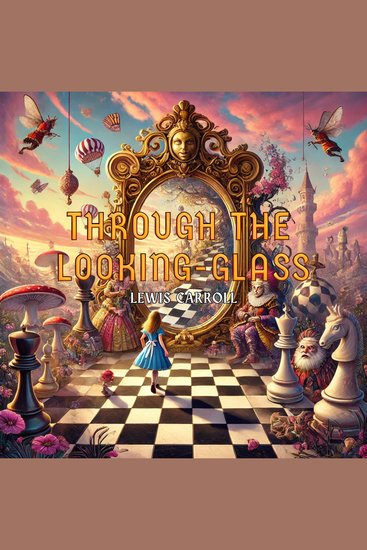
    Step through the mirror into the whimsical world of Through the Looking-Glass, Lewis Carroll’s enchanting sequel to Alice’s Adventures in Wonderland. Join Alice as she embarks on a fantastical journey through a topsy-turvy land where logic is reversed, and everything is a delightful puzzle. From her encounters with the Red Queen and Tweedledee and Tweedledum to her meetings with peculiar creatures like Humpty Dumpty and the White Knight, Alice navigates a chessboard-like landscape filled with riddles, poetry, and wonder. 
    Carroll’s timeless classic brims with imagination, wit, and charm, captivating readers of all ages with its playful language and unforgettable characters. Through the Looking-Glass is a literary treasure that celebrates curiosity and the magic of dreams. 
    Narrated with warmth and whimsy, this audiobook brings Alice’s extraordinary journey to life, making it an enchanting experience for listeners everywhere. 
    Start listening to Through the Looking-Glass today and follow Alice into a world where anything is possible!
    Show book
  • Bartleby the Scrivener: A Story of Wall Street - cover

    Bartleby the Scrivener: A Story...

    Herman Melville

    • 0
    • 0
    • 0
    Experience the haunting tale of "Bartleby, the Scrivener: A Story of Wall Street" by Herman Melville, now available as a captivating audiobook. In this classic short story, Melville explores themes of isolation, alienation, and the struggle for individuality in a conformist society. 
    Listeners will be drawn into the enigmatic world of the story's protagonist, Bartleby, a scrivener whose peculiar behavior challenges the norms of the workplace and defies easy explanation. As the narrator grapples with Bartleby's refusal to conform, the story unfolds with a sense of mystery and melancholy that lingers long after the final words. 
    Perfect for fans of classic literature and psychological fiction, "Bartleby, the Scrivener: A Story of Wall Street" offers a thought-provoking exploration of the human condition and the complexities of human relationships. Whether you're a longtime admirer of Melville's work or discovering it for the first time, this audiobook promises to captivate and intrigue. 
    So, if you're ready to delve into a timeless tale of existential angst and societal disillusionment, start listening to "Bartleby, the Scrivener: A Story of Wall Street" today and immerse yourself in the haunting beauty of Herman Melville's prose. Start Listening to "Bartleby, the Scrivener: A Story of Wall Street" today!
    Show book
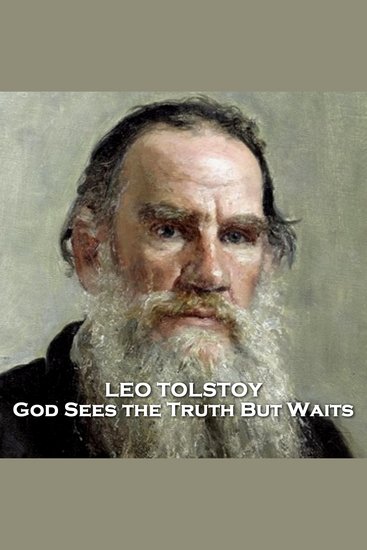
  • God Sees the Truth But Waits - From their pens to your ears genius in every story - cover

    God Sees the Truth But Waits -...

    Leo Tolstoy

    • 0
    • 0
    • 0
    Leo Tolstoy was born in 1828 in the Russian province of Tula to a wealthy noble family. As a child, he had private tutors but he showed little interest in any formal education. When he went to the University of Kazan in 1843 to study oriental languages and law, he left without completing his courses.  Life now was relaxed and idle but with some writing also taking place.  Gambling debts forced an abrupt change of path and he joined the army to fight in the Crimean War.  He was commended for his bravery and promoted but was appalled at the brutality and loss of life.  He recorded these and other earlier experiences in his diaries which formed the basis of several of his works. 
    In 1852 ‘Childhood’ was published to immediate success and was followed by ‘Boyhood’ and ‘Youth’. 
    His experience in the army and the horrors he witnessed resulted in ‘The Cossacks’ in 1862 and the trilogy ‘Sevastopol Tales’. After the war he travelled around Europe, visiting London and Paris and meeting such luminaries as Victor Hugo and Charles Darwin.  
    It was now that Tolstoy began his masterpiece, ‘War and Peace’. Published in 1869 it was an epic work that changed literature. He quickly followed this with ‘Anna Karenina’.  
    These successes made Tolstoy rich and helped him accomplish many of his dreams but also brought problems as he grappled with his faith and the lot of the oppressed poor. These revolutionary views became so popular that the authorities now kept him under surveillance.  
    He led a life of asceticism and vegetarianism and put his socialist ideals into practice by establishing numerous schools for the poor and food programmes. He also believed in giving away his wealth, which caused much discord with his wife.  
    His writing continued to bring forth classics such as ‘The Death of Ivan Ilyich’ and many brilliant and incisive short stories such as ‘How Much Land Does A Man Need’.  
    In 1901 Tolstoy was excommunicated from the Church and controversially deselected for the Nobel Prize for Literature. 
    Whilst undertaking a pilgrimage by train in October 1910 with his daughter Aleksandra he caught pneumonia in the nearby town of Astapovo.  Leo Tolstoy died on November 9th, 1910, he was 82.
    Show book
  • Christmas Carol A: Retold Inclusively - cover

    Christmas Carol A: Retold...

    Charles Dickens, Kath Shone

    • 0
    • 0
    • 0
    One Christmas eve many years ago Scrooge was haunted by three ghosts! 
    We know this, yes. But how do we know? 
    We know because A Christmas Carol is part of our collective Christmas consciousness. 
    A Christmas Carol is a brilliant story, with fabulous characters including Scrooge whose dramatic transformation has our human heart strings all a harping for Christmas at the close of the story. 
    Christmas revelers of any age love Scrooge! 
    Unfortunately the old Victorian English alienates most of us from the content of the story. And so we come to the reason for this audio book. This audio book serves listeners who would like to experience the original story more easily.
    Show book
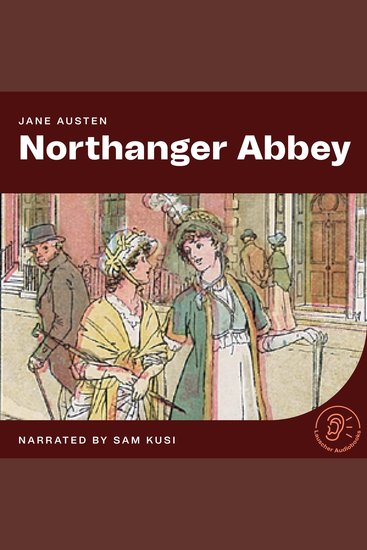
  • Northanger Abbey - cover

    Northanger Abbey

    Jane Austen

    • 0
    • 0
    • 0
    Northanger Abbey was the first of Jane Austen's novels to be completed for publication, in 1803. However, it was not published until after her death in 1817, along with another novel of hers, Persuasion. Northanger Abbey is a satire of Gothic novels, which were quite popular at the time, in 1798-99. This coming-of-age story revolves around Catherine Morland, a young and naïve "heroine", who entertains the reader on her journey to a better understanding of the world and those around her. In the course of the novel, she discovers that she differs from those other women who crave wealth or social acceptance, as instead she wishes only to have happiness supported by genuine morality.
    Seventeen-year-old Catherine Morland is one of ten children of a country clergyman. Although a tomboy in her childhood, by the age of 17 she is "in training for a heroine" and is excessively fond of reading Gothic novels, among which Ann Radcliffe's Mysteries of Udolpho is a favourite.
    Show book
  • A Haunted House - From their pens to your ears genius in every story - cover

    A Haunted House - From their...

    Virginia Woolf

    • 0
    • 0
    • 0
    Adeline Virginia Woolf was born on the 25th January 1882 in South Kensington in London. 
    Although lauded as a founder of modernist writing with such classics as ‘Orlando’, ‘Mrs Dalloway’ and ‘To the Lighthouse’ and, of course, many classic short stories, her background is filled with elements of tragedy that she somehow overcame to become such a revered writer.   Her mother died when she was 13, her half-sister Stella two years later and with it her first of several nervous breakdowns.  Appallingly it was later found that three of her half-brothers had sexually abused her so darkness must have seemed ever present.   
    She began writing professionally at age 20 but her father’s death two years later brought a complete mental collapse and she was briefly institutionalised.  Somehow she found within herself a literary career and with it great innovations in writing; she was a pioneer of “stream of consciousness”.    
    Her tight circle of friends were the founders of the Bloomsbury Group, a movement whose legacy still influences across the arts and society in many way to this day.   
    Whilst the dark periods continued to interrupt her emotional state her rate of work never ceased.  Until, on 28th March 1941, Woolf put on her overcoat, filled up its pockets with stones, and walked into the River Ouse, in Lewes, East Sussex and drowned herself.  Her body was not recovered until the 18th April.  She was 59. 
    She left behind a note which read in part “Dearest, I feel certain that I am going mad again.  I feel we can't go through another of those terrible times.  And I shan't recover this time.  I begin to hear voices, and I can't concentrate.  So I am doing what seems the best thing to do”.
    Show book