Join us on a literary world trip!
Add this book to bookshelf
Grey
Write a new comment Default profile 50px
Grey
Subscribe to read the full book or read the first pages for free!
All characters reduced
THE IDEA OF A LEAGUE OF NATIONS (Volume 1&2) - Enriched edition - cover

THE IDEA OF A LEAGUE OF NATIONS (Volume 1&2) - Enriched edition

H. G. Wells

Publisher: Musaicum Books

  • 0
  • 0
  • 0

Summary

H. G. Wells' 'The Idea of a League of Nations' (Volume 1&2) is a groundbreaking work that explores the concept of international cooperation and peace. Written in a clear and persuasive style, Wells delves into the origins and potential benefits of a global organization that promotes unity and prevents conflicts. Drawing on historical examples and political theory, the book offers a visionary perspective on the possibility of a League of Nations to maintain world order. With an insightful analysis of diplomatic relations and the role of technology in shaping global politics, Wells presents a compelling argument for a united front against war. This seminal work combines political thought with Wells' signature scientific imagination, making it a unique contribution to the genre of political philosophy. As a prolific writer and social commentator, H. G. Wells was a leading figure in the early 20th century advocating for social change and global governance. Inspired by the devastation of World War I, Wells passionately believed in the potential of international cooperation to promote peace and prosperity. His firsthand experience with the effects of war and his progressive ideals informed his writing, including 'The Idea of a League of Nations,' which reflects his commitment to a more harmonious world order. I highly recommend 'The Idea of a League of Nations' to readers interested in political philosophy, international relations, and the history of diplomacy. Wells' insightful analysis and visionary proposals offer a thought-provoking perspective on the challenges and opportunities of global governance in the modern era.

In this enriched edition, we have carefully created added value for your reading experience:
- A succinct Introduction situates the work's timeless appeal and themes.
- The Synopsis outlines the central plot, highlighting key developments without spoiling critical twists.
- A detailed Historical Context immerses you in the era's events and influences that shaped the writing.
- An Author Biography reveals milestones in the author's life, illuminating the personal insights behind the text.
- A thorough Analysis dissects symbols, motifs, and character arcs to unearth underlying meanings.
- Reflection questions prompt you to engage personally with the work's messages, connecting them to modern life.
- Hand‐picked Memorable Quotes shine a spotlight on moments of literary brilliance.
- Interactive footnotes clarify unusual references, historical allusions, and archaic phrases for an effortless, more informed read.
Available since: 12/06/2017.
Print length: 44 pages.

Other books that might interest you

  • Slave Girls: The Cutting Girl - cover

    Slave Girls: The Cutting Girl

    Louise Allen

    • 0
    • 0
    • 0
    Slave Girls, a new series by bestselling author Louise Allen, reveals a shocking modern-day scandal of County Lines – the single most dangerous form of systematic child abuse prevalent today. 
     
    Charlotte - The Cutting Girl - comes from a family of high achievers. Her father is a politician, and her mother is a senior medical officer. 
     
    When she moves from her prestigious boarding school she is groomed by a girl two years her senior, spiralling into a cycle of drugs, self-harm and sexual abuse. 
     
    When she goes missing, five other girls do, too. A nationwide media campaign sets out to track them down, but can Charlotte ever escape the gang behind the abduction and abuse?
    Show book
  • Against Technoableism - Rethinking Who Needs Improvement - cover

    Against Technoableism -...

    Ashley Shew

    • 0
    • 0
    • 0
    When Ashley Shew became a self-described "hard-of-hearing chemobrained amputee with Crohn's disease and tinnitus," there was no returning to "normal." Suddenly well-meaning people called her an "inspiration" while grocery shopping or viewed her as a needy recipient of technological wizardry. Most disabled people don't want what the abled assume they want—nor are they generally asked. 


    In vibrant prose, Shew shows how we can create better narratives and more accessible futures by drawing from the insights of the cross-disability community. To forge a more equitable world, Shew argues that we must eliminate "technoableism"—the harmful belief that technology is a "solution" for disability; that the disabled simply await being "fixed" by technological wizardry; that making society more accessible and equitable is somehow a lesser priority. 


    This badly needed introduction to disability expertise considers mobility devices, medical infrastructure, neurodivergence, and the relationship between disability and race. The future, Shew points out, is surely disabled—whether through changing climate, new diseases, or even through space travel. It's time we looked closely at how we all think about disability technologies and learn to envision disabilities not as liabilities, but as skill sets enabling all of us to navigate a challenging world.
    Show book
  • The Nixon-Gleason Alien Encounter - cover

    The Nixon-Gleason Alien Encounter

    Paul Blake Smith

    • 0
    • 0
    • 0
    Under the cover of night, on February 19, 1973, another U.S. president witnessed extraterrestrials. 


    President Richard Nixon made a secret trip to a top security U.S. Air Force base, as his former boss, President Dwight Eisenhower, did in 1954. Nixon was said to have taken his golfing buddy, comedian Jackie Gleason. According to Gleason's then wife, Beverly McKittrick Gleason, Jackie was deeply shaken later that night when he returned home and confessed to their clandestine trip. 


    As established in Smith's previous work, President Eisenhower's Close Encounters, this meeting was reminiscent of and perhaps even predicated by similar visits made by the president's predecessors, as well as others in the American government and entertainment industry. This in-depth book will attempt to separate fact from fiction. These events were carried off without the public learning the hushed facts and data connecting the two different presidential administrations . . . 


    until now.
    Show book
  • When Harry Met Pablo - Truman Picasso and the Cold War Politics of Modern Art - cover

    When Harry Met Pablo - Truman...

    Matthew Algeo

    • 0
    • 0
    • 0
    Harry Truman and Pablo Picasso were contemporaries and were both shaped by and shapers of the great events of the twentieth century—the man who painted Guernica and the man who authorized the use of atomic bombs against civilians. But in most ways, they couldn’t have been more different. Picasso was a communist, and probably the only thing Truman hated more than communists was modern art. Picasso was an indifferent father, a womanizer, and a millionaire. Truman was utterly devoted to his family and, despite his fame, far from a rich man. How did they come to be shaking hands in front of Picasso’s studio in the south of France? Truman’s meeting with Picasso was quietly arranged by Alfred H. Barr Jr., the founding director of New York’s Museum of Modern Art and an early champion of Picasso. Barr knew that if he could convince these two ideological antipodes, the straight-talking politician from Missouri and the Cubist painter from Málaga, to simply shake hands, it would send a powerful message, not just to reactionary Republicans pushing McCarthyism at home but to the whole world: modern art was not evil. A rigorous history with a heartwarming center, When Harry Met Pablo intertwines the biographies of Truman and Picasso, the history of modern art, and twentieth-century American politics, but at its core, it is the touching story of two old men who meet for the first time and realize they have more in common—and are more alike—than they ever imagined.
    Show book
  • Belonging Matters - Conversations on Adoption Family and Kinship - cover

    Belonging Matters -...

    Julie Ryan McGue

    • 0
    • 0
    • 0
    Belonging Matters is meant to support the adoption community while creating a conversation with those not directly touched by adoption. The collection addresses the questions:
    —If you are part of the adoption universe, how do you find identity, family, and community
    
    —If someone you know is adopted, how do you understand and support them in their search for identity, family, and belonging
    
    —How do we improve the adoption experience to invoke social change that benefits the individual, the family unit, and the communities in which they live?
    
    This collection is about examining all that makes us unique, and it is about finding meaning and healing from the difficulties we encounter in life.
    Show book
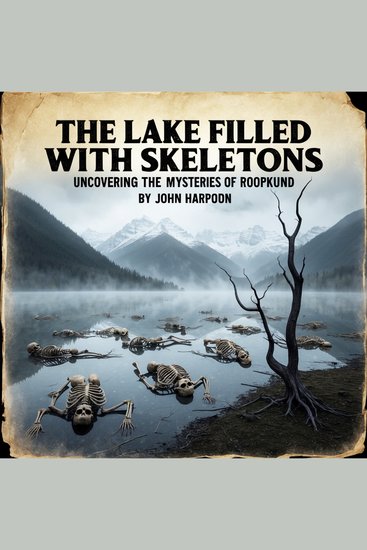
  • The Lake Filled with Skeletons - Uncovering the Mysteries of Roopkund - cover

    The Lake Filled with Skeletons -...

    John Harpoon

    • 0
    • 0
    • 0
    The discovery of Roopkund Lake, a high-altitude lake nestled in the Indian Himalayas, shocked the world with its eerie and haunting mystery. Known as the "Skeleton Lake," the site became a focus of international attention when dozens of human skeletons were found in and around the lake, scattered across the landscape. Hidden among the rugged mountains, at an elevation of about 16,500 feet, the lake was nearly inaccessible, which contributed to its preservation for centuries. This discovery raised more questions than answers and sparked numerous theories about the origins and circumstances surrounding the remains. 
      
    The skeletons found at Roopkund are not just ordinary human remains. They are unique in that they are incredibly well-preserved despite their age, leading researchers and scientists to embark on an extraordinary quest to uncover their origins. Some of the bones belong to people who lived thousands of years ago, while others are more recent, creating an enigmatic mixture of the past and present. Various expeditions have sought to determine who these people were, how they died, and why their bodies were left in such an unusual location. 
      
    Roopkund Lake, located in the state of Uttarakhand in India, was long known to the local populations, who regarded it with awe and fear. The lake and its surrounding areas are deeply ingrained in local folklore, with stories that attempt to explain the presence of these bones. Some claim that the skeletons are those of pilgrims who perished in a sudden snowstorm, while others suggest the lake holds the remains of ancient warriors or victims of a mass sacrifice. Over time, these legends have woven themselves into the cultural fabric of the region, adding an extra layer of mystique to an already puzzling phenomenon.
    Show book