Join us on a literary world trip!
Add this book to bookshelf
Grey
Write a new comment Default profile 50px
Grey
Subscribe to read the full book or read the first pages for free!
All characters reduced
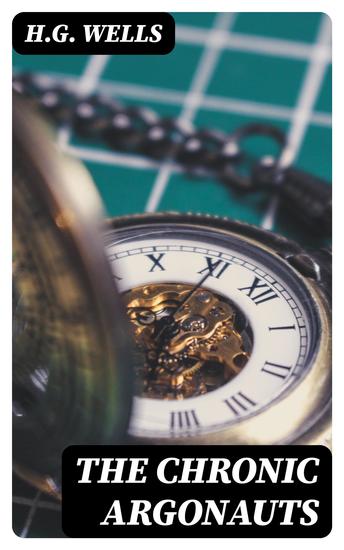
The Chronic Argonauts - cover

The Chronic Argonauts

H. G. Wells

Publisher: DigiCat

  • 0
  • 0
  • 0

Summary

In H.G. Wells's seminal work, "The Chronic Argonauts," readers are introduced to a groundbreaking narrative that deftly intertwines science fiction with philosophical inquiry. This novella, written in 1888, predates Wells's more famous works and serves as a precursor to his exploration of time travel and the human condition. Employing a rich, descriptive literary style, Wells weaves a tale filled with vivid imagination and social critique, presenting a commentary on Victorian society and the moral implications of scientific advancement through the adventures of his protagonist, Dr. Moses Nebogipfel, as he navigates the complexities of time and existence. H.G. Wells, often regarded as the father of science fiction, was deeply influenced by the tumultuous social changes and the rapid scientific progress of his time. Educated in the sciences and passionately engaged with the socio-political currents of the late 19th century, Wells infused his writings with a profound curiosity about the future and humanity's place within it. "The Chronic Argonauts" reflects this intellectual milieu, emphasizing the inherent potential and peril of technological innovation as well as the ethical dilemmas it poses. Ideal for both enthusiasts of science fiction and students of literature, "The Chronic Argonauts" offers an essential glimpse into the genesis of Wells's themes that would resonate in later works. This novella merits close examination not only for its imaginative storytelling but also for its innovative treatment of critical ideas about time, morality, and the human experience. Readers will find it a thought-provoking exploration that continues to inspire conversations about science and its implications.
Available since: 11/22/2022.
Print length: 23 pages.
Other books that might interest you

  • The Adventures of Peregrine Pickle Volume 1 - cover

    The Adventures of Peregrine...

    Tobias Smollett

    • 0
    • 0
    • 0
    The Adventures of Peregrine Pickle is a rollicking 18th-century picaresque novel chronicling the reckless life of its eponymous anti-hero, a hot-headed and impulsive young gentleman. Born to a wealthy family but disinherited after a quarrel, Peregrine embarks on a turbulent journey through the brothels, gambling dens, and naval ships of Britain and continental Europe. Alongside vivid depictions of debauchery and misadventure, the novel features the unforgettable character of Commodore Trunnion, a comically eccentric naval veteran. Smollett blends satire, bawdy humor, and sharp social critique to expose the vices and follies of the age. A foundational work in the development of the English novel, it captures the wild spirit of youth, rebellion, and self-destruction.
    Show book
  • Rise of Historical Criticism The (Unabridged) - cover

    Rise of Historical Criticism The...

    Oscar Wilde

    • 0
    • 0
    • 0
    Oscar Wilde (16 October 1854 - 30 November 1900) was an Irish poet and playwright. After writing in different forms throughout the 1880s, he became one of the most popular playwrights in London in the early 1890s.
    THE RISE OF HISTORICAL CRITICISM: This Essay was written for the Chancellor's English Essay Prize at Oxford in 1879, the subject being 'Historical Criticism among the Ancients.' The prize was not awarded. To Professor J. W. Mackail thanks are due for revising the proofs.
    Show book
  • Frau Brechenmacher Attends a Wedding - cover

    Frau Brechenmacher Attends a...

    Mansfield Katherine

    • 0
    • 0
    • 0
    In Frau Brechenmacher Attends a Wedding by Katherine Mansfield we have the theme of gender roles, domination, submission, control, struggle, identity and tradition. Taken from her In a German Pension collection the story is narrated in the third person by an unnamed narrator and after reading the story the reader realises that Mansfield may be exploring the theme of control. Throughout the story Frau Brechenmacher is at the beck and call of her husband.
    Show book
  • The Oblong Box - cover

    The Oblong Box

    Sampi Books, Edgar Allan Poe

    • 0
    • 0
    • 0
    "The Oblong Box" is a short story by Edgar Allan Poe that explores human mysteries and obsessions. The narrative follows a man who, during a sea voyage, becomes intrigued by a strange oblong box brought on board by a friend, triggering a series of enigmatic events and surprising revelations.
    Show book
  • Les Misérables: Volume 4: The Idyll in the Rue Plumet and the Epic in the Rue St Denis - Book 7: Slang (Unabridged) - cover

    Les Misérables: Volume 4: The...

    Victor Hugo

    • 0
    • 0
    • 0
    Victor-Marie Hugo (26 February 1802 - 22 May 1885) was a French poet, novelist, essayist, playwright, and dramatist of the Romantic movement. During a literary career that spanned more than sixty years, he wrote abundantly in an exceptional variety of genres: lyrics, satires, epics, philosophical poems, epigrams, novels, history, critical essays, political speeches, funeral orations, diaries, and letters public and private, as well as dramas in verse and prose.
    BOOK 7: SLANG: Pigritia is a terrible word. It engenders a whole world, la pègre, for which read theft, and a hell, la pègrenne, for which read hunger.
    Show book
  • Memory (Unabridged) - cover

    Memory (Unabridged)

    H. P. Lovecraft

    • 0
    • 0
    • 0
    This story takes place in the ancient valley of Nis, in vegetation-covered stone ruins described by Lovecraft in great detail. These crumbling blocks of monolithic stone now serve only for grey toads and snakes to nest under. Interspersed in the ruins are large trees that are home to little apes. Through the bottom of this valley runs the great, slimy red river called Than. "Memory" involves only two characters: "the Genie that haunts the moonbeams" and "the Daemon of the Valley". The Genie inquires of the Daemon who it was that long ago placed the stones that were now the desolate ruin near the river Than. The Daemon replies that he remembers the name of the creatures "clearly," but only because their name rhymed with that of the river: they were called Man. He also remembers "dimly" that they appeared like the small apes that now leap through the ruins. The Genie flies back to his moonbeams, and the Daemon turns to regard an ape in silent contemplation.
    Show book