Join us on a literary world trip!
Add this book to bookshelf
Grey
Write a new comment Default profile 50px
Grey
Subscribe to read the full book or read the first pages for free!
All characters reduced
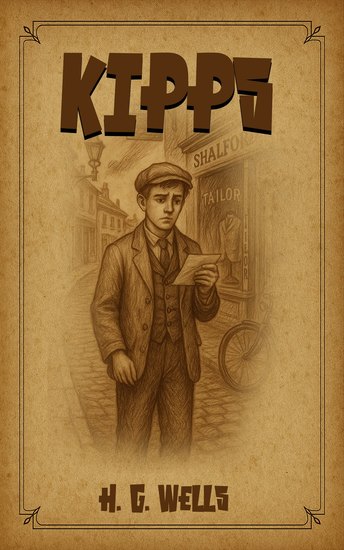
Kipps - cover

Kipps

H. G. Wells

Publisher: CLXBX

  • 0
  • 0
  • 0

Summary

Kipps is a humorous and insightful novel that explores social class, ambition, and personal identity in early 20th-century England. The story follows Arthur Kipps, a kind-hearted and somewhat naïve young man who works as a draper's assistant and dreams of a better life beyond his modest circumstances.

When Kipps unexpectedly inherits a fortune, his world is turned upside down. Suddenly thrust into high society, he struggles to adapt to new expectations, manners, and relationships that feel foreign and restrictive. As Kipps navigates romance, social pressure, and the tension between authenticity and ambition, he must decide whether wealth truly offers happiness or merely complicates life.

With warmth, realism, and gentle satire, H. G. Wells paints a vivid portrait of class mobility and social pretension. Kipps is both a coming-of-age story and a thoughtful critique of Edwardian society, celebrating honesty, individuality, and the quiet dignity of staying true to oneself.
Available since: 02/10/2026.
Print length: 389 pages.

Other books that might interest you

  • The Wild Duck - cover

    The Wild Duck

    Henrik Ibsen

    • 0
    • 0
    • 0
    "The Wild Duck" is a play written by Henrik Ibsen, a renowned Norwegian playwright. First published in 1884, it is considered one of Ibsen's most complex and psychologically intense works. "The Wild Duck" delves into themes of truth, illusion, and the consequences of deception, exploring the effects of hidden truths on individuals and their relationships. 
     
    The play revolves around the Ekdal family and their complex dynamics. Gregers Werle, a well-intentioned but idealistic outsider, enters their lives and sets in motion a chain of events that unravel long-held secrets. Central to the story is the metaphor of the wild duck, which represents the ideal of truth and the consequences of disrupting the illusions that people construct to protect themselves. 
     
    Through the characters' interactions and revelations, Ibsen explores the destructive nature of hidden truths and the self-deception that individuals engage in to maintain a fragile sense of happiness. The play raises questions about the value of truth, the masks people wear to navigate their lives, and the consequences of confronting or avoiding painful realities. 
     
    Ibsen's skillful character development and intricate plot twists make "The Wild Duck" a powerful exploration of human nature and the complexities of interpersonal relationships. The play challenges societal norms and exposes the destructive effects of maintaining illusions. It serves as a critique of social hypocrisy and the consequences of clinging to idealistic notions of truth. 
     
    "The Wild Duck" continues to be regarded as a significant work in the canon of modern drama. Its exploration of truth, illusion, and the consequences of deception resonates with audiences, prompting contemplation of the human capacity for self-deception and the inherent complexities of navigating relationships and society. 
    .
    Show book
  • Ulysses - cover

    Ulysses

    James Joyce

    • 0
    • 0
    • 0
    "Ulysses" by James Joyce is a modernist novel published in 1922. It is considered one of the most influential works of the 20th century and is renowned for its complex narrative structure, innovative use of language, and exploration of the human consciousness. The novel follows the experiences of three main characters, Leopold Bloom, Stephen Dedalus, and Molly Bloom, over the course of a single day in Dublin, June 16, 1904.
    Show book
  • Fireside Reading of The Call of the Wild - cover

    Fireside Reading of The Call of...

    Jack London

    • 0
    • 0
    • 0
    Experiencing a story read out loud is one of the oldest forms of entertainment there is. Fireside Reading is a way to slow down, reconnect with the timeless wisdom of great books and rediscover the simple pleasure of being read to. Join Gildart Jackson in front of a cozy fire as he reads The Call of the Wild by Jack London to you and your family from beginning to end.
    Show book
  • Penguin Island - cover

    Penguin Island

    Anatole France

    • 0
    • 0
    • 0
    'Believe me, the best proof is to have none at all. That is the only evidence one cannot debate.' 
     
    Anatole France's 1908 novel Penguin Island offers a thinly veiled lampoon of French history and of human civilization. When a wayward Christian missionary monk lands on an island off the northern coast of Europe, he perceives the island's seabirds, a colony of upright, unafraid auks, as a sort of pre-Christian society of noble pagans and baptizes them. This causes a problem for God, who normally only allows humans to be baptized. He resolves the dilemma by converting the baptized birds to humans and giving them each a soul. The ensuing history of Penguinia presents a comic send-up of the foibles and frailty of humanity. 
     
    The novel's centerpiece is an immensely skillful and scathing parody of the Dreyfus Affair, which stands alongside Émile Zola's 'J'accuse' for its humanity and intellectual bravery. This new translation, more than a century after the first and only English version, offers a full introduction to the novel, setting it in its historical and literary context, including France's life and rich literary legacy.
    Show book
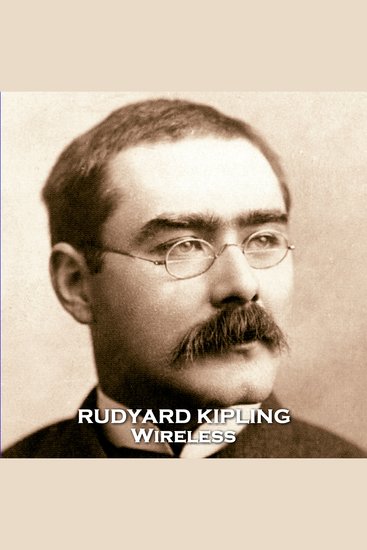
  • Wireless - A rare Kipling venture into sci fi about a technological leap - cover

    Wireless - A rare Kipling...

    Rudyard Kipling

    • 0
    • 0
    • 0
    Joseph Rudyard Kipling was born in Mumbai, India on 30th December 1865.   
     
    As was the custom in those days, he and his sister were sent back to England when he was 5.  The ill-treatment and cruelty by the Portsmouth couple they boarded with Kipling said contributed to the onset of his literary life.  
     
    At 16 he returned to India to work on a local paper where he was soon contributing and writing.  It also exposed him to the issues of identity and national allegiance which pervade much of his work.  
     
    In 1886, his ‘Departmental Ditties’, collection of verse appeared in print followed by 39 short stories for his newspaper over only 8 months.  These were then published as ‘Plain Tales from the Hills’, shortly after his 22nd birthday.  
     
    He continued his prolific pace of writing before being dismissed in a dispute and, taking his pay-off and the profits from the sale of some publishing rights, decided to return to London, travelling via Rangoon, Hong Kong, Japan and the United States, all the while writing articles, and arriving at Liverpool in October 1889. 
     
    Over the next two years he saw further works published as books and in magazines, as well as a nervous breakdown for which he was prescribed a sea voyage, to South Africa, Australia, New Zealand and India.  
     
    Happier times came with marriage to Caroline Starr Balestier in January 1892.  The honeymoon began in Vermont and ended in Yokahama where they heard their bank had failed.  They returned to Vermont and settled.  Caroline was now pregnant and he was planning the ‘Jungle Books’.  
     
    A failed arbitration between the US and England resulted in an argument between Caroline’s brother and Kipling, and then his arrest.  At the hearing he was mortified by the exposure of his private life and after settling the matter they returned to England and life in Torquay.  ‘Kim’ was published in 1902, and ‘Just So Stories for Little Children’, a year later.  
     
    In 1907 he was awarded the Nobel Prize for Literature with the citation “in consideration of the power of observation, originality of imagination, virility of ideas and remarkable talent for narration which characterise the creations of this world-famous author”.   
     
    When the Great War erupted, he scorned those who refused conscription.  His son enlisted and was killed at the Battle of Loos in September 1915, at 18, an exploding shell had ripped his face apart.  This death inspired Kipling’s writing thereafter, but the tragedy broke his life and by 1930 his prolific pen had almost ceased. 
     
    Rudyard Kipling died on 18th January 1936 from a perforated duodenal ulcer.  He was 70.  His ashes are buried at Poets’ Corner in Westminster Abbey.
    Show book
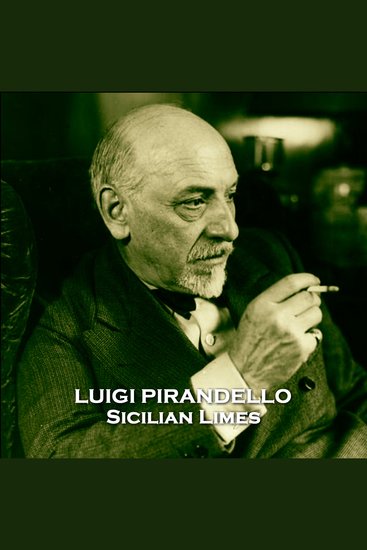
  • Sicilian Limes - From their pens to your ears genius in every story - cover

    Sicilian Limes - From their pens...

    Luigi Pirandello

    • 0
    • 0
    • 0
    Luigi Pirandello was born on 28th June 1867 into an upper-class family in Agrigento, in Sicily. 
    In 1880, the family moved to Palermo and there he completed high school and thence to the University of Palermo, at that time the centre of what became the Fasci Siciliani movement.  Although not an active member he had close friendships with many of its leading ideologists.  Pirandello then completed his university studies in Rome and Bonn, receiving his Doctorate in March, 1891. 
    His time in Rome had provided him with the opportunity to visit its many theatres. "Oh the dramatic theatre! I will conquer it. I cannot enter into one without experiencing a strange sensation, an excitement of the blood through all my veins..." 
    1894 brought marriage, at his father's suggestion, to a shy, withdrawn girl: Mara Antonietta Portulano.  The marriage encouraged his studies and writings and, the following year, the first part of the ‘Dialoghi tra Il Gran Me e Il Piccolo Me’ was published. 
    In 1903 the flooding of the sulphur mines in which his father had invested the family capital and Antonietta's dowry, brought financial catastrophe.  She, on hearing the news, was mentally broken.  Pirandello would now work a full day and then watch over his troubled wife at night. Somehow he found time to write ‘The Late Mattia Pascal’.  It was an immediate and resounding success.  
    In 1909, Pirandello began his collaboration with the prestigious Corriere della Sera.  Whilst his fame as a writer was increasing his private life was poisoned by the suspicion and jealousy of Antonietta who now turned physically violent.  His plays were now being regularly performed but, within a decade, Antonietta had to be placed into an asylum from which she never left. 
    In 1921, in Rome his play, ‘Six Characters in Search of an Author’ debuted.  It was a failure.  However, when presented in Milan it was a great success, as it also was in London and New York. 
    In 1925, Pirandello, with Mussolini’s help, assumed the artistic direction and ownership of the Teatro d'Arte di Roma.  He now described himself both as ‘a Fascist because I am Italian’ and ‘I'm apolitical, I'm only a man in the world...’  However his later conflicts with fascist leaders meant he fell under close surveillance by the OVRA, the secret police. 
    In 1934 he won the Nobel Prize but asked that the medal be melted down for Italy’s occupation of Abyssinia Campaign to which he had given his support.  
    Pirandello's canon stretches across novels, short stories, poetry, essays and some 40 plays.  His tragic farces are often cited as forerunners of the Theatre of the Absurd. 
    Luigi Pirandello died on the 10th December 1936 at his home at Via Bosio, Rome, Italy.  He was 69.
    Show book