Join us on a literary world trip!
Add this book to bookshelf
Grey
Write a new comment Default profile 50px
Grey
Subscribe to read the full book or read the first pages for free!
All characters reduced
H G Wells' Short History of The World - Enriched edition The Beginnings of Life The Age of Mammals The Neanderthal and the Rhodesian Man Primitive Thought - cover

H G Wells' Short History of The World - Enriched edition The Beginnings of Life The Age of Mammals The Neanderthal and the Rhodesian Man Primitive Thought

H. G. Wells

Publisher: DigiCat

  • 0
  • 0
  • 0

Summary

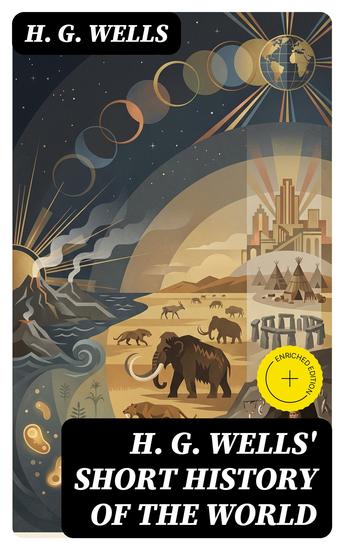
H. G. Wells' "Short History of The World" presents a sweeping narrative that distills the complexities of human civilization into a coherent and accessible format. Wells employs a distinctive style that merges engaging storytelling with a scientific worldview, elucidating pivotal events from prehistoric times through the early 20th century. His work reflects the burgeoning interest in history as a discipline during Wells' era, influenced by contemporary advancements in sociology and evolutionary theory, which he seamlessly integrates into his analysis of cultural, political, and technological progress. The book serves as both a reflective commentary on civilization and a critique of the pattern of human behavior throughout time. H. G. Wells, often hailed as the father of science fiction, was deeply engaged with the intellectual currents of his age, including the scientific advancements and social upheavals of the late 19th and early 20th centuries. His experiences as a humble school teacher and a keen observer of events likely shaped his perspective on history and its lessons, enabling him to write this concise yet comprehensive work. Throughout his life, Wells was committed to social reform, which undoubtedly influenced his desire to demystify history for a broader audience, encouraging critical thinking about humanity's potential. I highly recommend "Short History of The World" to readers seeking an insightful yet digestible overview of human history. Wells' ability to weave narrative and factual analysis makes this text an invaluable resource for students and history enthusiasts alike. Whether you are embarking on a journey through time or seeking to understand the roots of contemporary society, Wells' profound observations and engaging prose will leave a lasting impression.

In this enriched edition, we have carefully created added value for your reading experience:
- A succinct Introduction situates the work's timeless appeal and themes.
- The Synopsis outlines the central plot, highlighting key developments without spoiling critical twists.
- A detailed Historical Context immerses you in the era's events and influences that shaped the writing.
- An Author Biography reveals milestones in the author's life, illuminating the personal insights behind the text.
- A thorough Analysis dissects symbols, motifs, and character arcs to unearth underlying meanings.
- Reflection questions prompt you to engage personally with the work's messages, connecting them to modern life.
- Hand‐picked Memorable Quotes shine a spotlight on moments of literary brilliance.
- Interactive footnotes clarify unusual references, historical allusions, and archaic phrases for an effortless, more informed read.
Available since: 12/30/2023.
Print length: 344 pages.
Other books that might interest you

  • Suspended Education - School Punishment and the Legacy of Racial Injustice - cover

    Suspended Education - School...

    Aaron Kupchik

    • 0
    • 0
    • 0
    Every year, millions of public school students are suspended. This overused punishment removes students from the classroom, but it does not improve their behavior. Instead, suspension disrupts their education, harming the students, their families, and their schools. Black students suffer most within this broken system, experiencing a far greater risk of school punishment and the significant harms that accompany it. Many activists and scholars have considered how school punishment increases racial inequity, but few have thought to ask why. Why do we punish students the way we do, and why have we allowed this harmful practice to impact the lives of our nation's children? 


    In Supended Education, Aaron Kupchik shows that suspensions were not intended as a behavior management tool. Instead, they were designed to remove unwanted students from the classroom. Through statistical analysis and in-depth case studies of schools in Massachusetts and Delaware, Kupchik reveals how suspension rates skyrocketed after the 1954 Brown v. Board of Education decision, serving as an unofficial means of removing Black children from newly desegregated schools. His groundbreaking research traces the legacy of these segregationist movements, demonstrating that school districts with more desegregation-related legal battles from the 1950s onward suspend more Black students today.
    Show book
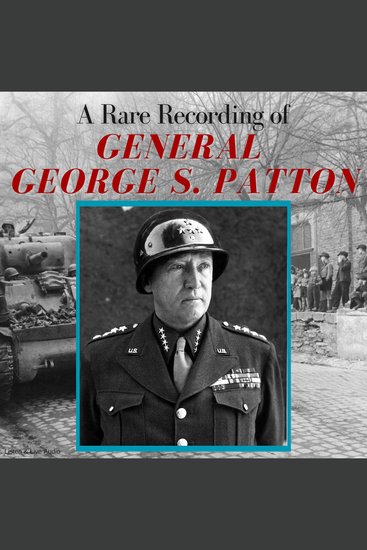
  • A Rare Recording of General George S Patton - cover

    A Rare Recording of General...

    General George S. Patton

    • 0
    • 0
    • 0
    George Smith Patton Jr. (November 11, 1885 - December 21, 1945) was a charismatic, hard-driving and highly-regarded general in the United States Army who commanded the Seventh United States Army in the Mediterranean Theater of World War II, and the Third United States Army in France and Germany after the Allied invasion of Normandy in June 1944. The following is from a speech Patton gave in Los Angeles during World War II.
    Show book
  • Brahma Vishnu Shiva - The Yogic Trinity With The Brama Samhita - cover

    Brahma Vishnu Shiva - The Yogic...

    Sripad Jaganantha Das

    • 0
    • 0
    • 0
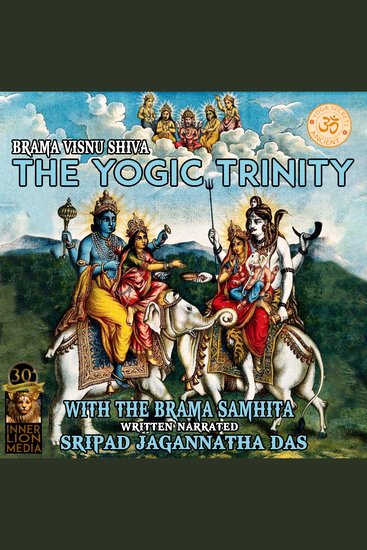
    Brahma is the controller of nature in the mode of passion; he is the engineer who creates the universe. Every universe has its Brahma, who appears as the first created being in it. Although Brahma is usually in the category of the jiva soul, he is designated an avatar (incarnation) of Krishna because he is especially empowered with Krishna’s own creative potency. Using the ingredients furnished by Krishna and following Krishna’s blueprints, Brahma constructs the material universe, and then he begets the offspring, called Prajapatis, whose descendants populate all the planets. 
     
    Vishnu, who controls nature in the mode of goodness and sustains the creation, is directly the Supreme Lord. In the spiritual kingdom of God, where everything is everlasting, the quality of goodness exists without either passion or ignorance. Therefore it is appropriate that Vishnu personally controls this quality even in the material world, where it becomes bracketed by ignorance and passion. 
      
    Shiva, the lord of the mode of ignorance, devastates the universe at the end by his wild, all-annihilating dance. Shiva is a personal expansion of Krishna, not a jiva. Yet, because he comes into intimate contact with the quality of ignorance and with matter (which is innately ignorant), you cannot receive the same spiritual restoration by worshiping him that you do by worshiping Krishna or Vishnu. Shiva is therefore given his own category, shiva-tattva. Learn all about the sacred trinity of yogic lore. 
     
    The Sri Brama-samhita is a collection of prayers by Brahma at the beginning of material creation after the Supreme Person Krishna gave Brahma a divine vision of the spiritual world. Brama, in his amazement, speaks volumes of divinely inspired praise before beginning his work of creation. Sri Chaitanya Mahaprabhu acquired the Fifth Chapter of the Brama-Samhita from the Adi-Keshava temple in South India. 
    Show book
  • Supes Ain't Always Heroes - Inside the Complex Characters and Twisted Psychology of The Boys - cover

    Supes Ain't Always Heroes -...

    Matthew Snyder, Lynn S. Zubernis

    • 0
    • 0
    • 0
    Go deeper inside the hit TV show The Boys and its characters with psychologists, media experts, filmmakers, and more—including the original comic series' cocreator and the actors behind Soldier Boy and Stormfront. 


    Supes Ain't Always Heroes offers a fresh look at The Boys, delving into the show's unflinching depiction of celebrity, politics, social media, corporate greed, racism, sexism, and more: 


    ● The true difference between Homelander and Billy Butcher—and who the show's biggest villain really is 


    ● What Soldier Boy's characterization says about how we define masculinity 


    ● How today's media landscape has contributed to The Boys' success 


    ● What the evolutions of Hughie, Starlight, A-Train, Mother's Milk, and other show standouts reflect about addiction, family, identity, and self-acceptance 


    PLUS: Exclusive interviews with The Boys comics cocreator Darick Robertson and actors Jensen Ackles, Jim Beaver, Aya Cash, and Nathan Mitchell provide a unique glimpse behind the scenes. Comments from editor interviews with more of the show's stars give further insight into their experiences in bringing these complex characters to life.
    Show book
  • War Victims - The Silent Suffering of Those Affected by Conflict (2 in 1) - cover

    War Victims - The Silent...

    Marcus Klein

    • 0
    • 0
    • 0
    This book consists of the following two titles: 
    War Crimes - The need for accountability in the face of war crimes is critical. It is not only about bringing perpetrators to justice but also about establishing a global standard that deters such crimes in the future. The introduction of international laws and institutions aimed at prosecuting war crimes marks a pivotal shift in the international community's approach to warfare. The atrocities committed during World War II, particularly the Holocaust and other acts of genocide, were a wake-up call for the global community. This led to the creation of the Nuremberg Trials, the first real attempt to hold individuals accountable for war crimes, and set the foundation for modern international law. 
    Child Soldiers - The use of child soldiers in armed conflicts represents one of the most tragic and pervasive human rights violations of our time. Children, often as young as eight or nine, are forcibly recruited or manipulated into participating in violent wars, often by rebel groups or government forces. These young individuals, deprived of their innocence and forced to endure unimaginable hardships, are exploited in ways that not only strip them of their childhoods but also leave lasting scars on their bodies, minds, and spirits.
    Show book
  • Izabela the Valiant: The Story of an Indomitable Polish Princess - cover

    Izabela the Valiant: The Story...

    Adam Zamoyski

    • 0
    • 0
    • 0
    A Spectator Best Book of the Year 
    Trawling through a vast family archive and arcane sources in half a dozen languages, Adam Zamoyski has revealed the dramatic life of his great-great-great grandmother, an uneducated, vulnerable girl cast into a man’s world. 
    Her aristocratic position enmeshed her in high politics and close encounters with Frederick the Great, Benjamin Franklin, Rousseau, Joseph II, Marie-Antoinette and Tsar Alexander I, and earned her the enmity of Catherine the Great. She lived through revolution and no less than five wars, in which her cherished homes were devastated, her possessions looted and her children scattered. Caught up in tempestuous love affairs which led her to nervous breakdown and the brink of suicide, exploited by her lovers, she remained undaunted and liberated herself through education. And, unusually for her time, she became a caring mother devoted to her children. 
    She learned much by travelling extensively around Europe at a time of political and ideological change, and her observations, particularly on Georgian Britain, are remarkable. She gradually won the admiration of learned men and intellectual honours. She pioneered schooling for children of the poor and developed her own educational methods. Fascinated by the power of objects to kindle memories and arouse emotions, she was an avid collector of anything with a sensuous association and built two unique museums to act as teaching aids. 
    This is a story of triumph over adversity and betrayal. It was not achieved by her looks: ‘I have never been beautiful, but I have sometimes been pretty,’ she wrote. It was achieved by force of character and resilience. 
    This non-fiction biography of Izabela the Valiant, a woman of character and resilience, takes the reader on a journey through the rebellions and revolutions of her time. Her story, deeply intertwined with the history of Poland, is a captivating exploration of royalty, politics, and personal strength. 
    For fans of Christopher Clark (Kaiser Wilhelm II), Martyn C. Rady (The Habsburgs), Norman Davies (George II), Tom Holland (Athelstan), and Simon Sebag Montefiore (Jerusalem). 
    HarperCollins 2024
    Show book