Join us on a literary world trip!
Add this book to bookshelf
Grey
Write a new comment Default profile 50px
Grey
Subscribe to read the full book or read the first pages for free!
All characters reduced
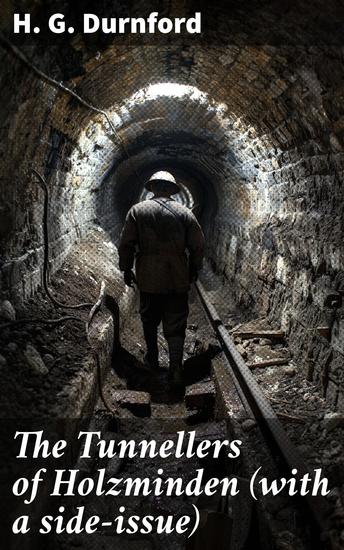
The Tunnellers of Holzminden (with a side-issue) - The Resilience of Captive Soldiers: A Tale of Bravery and Escape - cover

The Tunnellers of Holzminden (with a side-issue) - The Resilience of Captive Soldiers: A Tale of Bravery and Escape

H. G. Durnford

Publisher: Good Press

  • 0
  • 0
  • 0

Summary

H. G. Durnford's "The Tunnellers of Holzminden (with a side-issue)" presents a compelling narrative that delves into the harrowing experiences of British prisoners of war during World War I. Written in a style marked by a blend of personal memoir and historical analysis, Durnford intricately details the subterranean endeavors of prisoners who ingeniously crafted tunnels for escape. This work not only highlights the ingenuity and resilience of the human spirit in times of dark adversity but also situates these events within the broader context of war literature, where themes of survival and camaraderie take center stage. The narrative offers vivid descriptions that evoke a strong sense of place, immersing the reader in the stark realities of wartime imprisonment and the triumphs of human ingenuity against overwhelming odds. H. G. Durnford's background as a soldier and later as a historian infuses this work with authenticity and depth. His firsthand experience and keen insights into military life, coupled with his reflective prose, serve to illuminate the psychological and emotional landscapes of those men caught in the relentless machinery of war. Durnford's commitment to preserving the stories of the marginalized and often forgotten aligns with his broader mission to foster understanding of the complexities of human behavior during conflict. For readers interested in World War I history, military strategy, or the psychological effects of confinement, "The Tunnellers of Holzminden" is a must-read. Durnford's meticulous research and emotive storytelling not only educate but also engage, inviting the reader to reflect on the indomitable spirit of humanity that emerges even in the most trying circumstances. This book is an essential contribution to both war literature and historical narratives, appealing to scholars and casual readers alike.
Available since: 10/28/2023.
Print length: 149 pages.

Other books that might interest you

  • Am I Aware of the Process of Thinking? - Gstaad 1965 - Small Group Discussion 2 - cover

    Am I Aware of the Process of...

    Jiddu Krishnamurti

    • 0
    • 0
    • 0
    Am I aware of the process of thinking? 18 August 1965.Can I see that thought is destructive, except where it is essential? Why is it that we don't see something immediately? Do you know when you are thinking? Is the thing that we call thinking thinking at all? Do you think from the background noise when a problem arises? When the mind becomes totally aware of the background, is there thinking when a problem arises? What happens when I am aware of this hum, this noise incessantly going on? Is the background noise different from the observer? How am I to live an everyday life with complete silence?
    Show book
  • Hope for Ukraine - Stories of Grit and Grace from the Front Lines of War - cover

    Hope for Ukraine - Stories of...

    Kyle Duncan, Esther Fedorkevich,...

    • 0
    • 0
    • 0
    A Harrowing, Intimate Look into the Most Devastating War in Eight Decades 


    Part narrative, part wartime dispatch, Hope for Ukraine transports you into the gritty reality of war-torn Ukraine—and the front lines of faith, survival, and miraculous intervention. From scrambling to escape the bombs leveling their neighborhoods to fleeing sex traffickers in the chaos of border crossings to rescuing orphans trapped by Russian tanks, these stunning firsthand accounts tell the stories of real Ukrainians enduring terrible hardships with grit and grace. 


    Join bestselling writer Kyle Duncan and his coauthor Esther Fedorkevich—both with deep family ties to Ukraine—as they take you inside the conflict with dramatic boots-on-the-ground stories and eyewitness accounts of Ukrainian refugees, aid workers, soldiers, and families affected by the conflict. 


    As the world holds its collective breath, these stories reveal the unbreakable spirit of a nation under siege. Even amid the chaos and tragedy of Europe's largest war since World War II, God is indeed at work in redemptive ways.
    Show book
  • The Dead Beat - cover

    The Dead Beat

    Anonymous

    • 0
    • 0
    • 0
    Marilyn Johnson was enthralled by the remarkable lives that were marching out of this world—so she sought out the best obits in the English language and the people who spent their lives writing about the dead. She surveyed the darkest corners of Internet chat rooms, and made a pilgrimage to London to savor the most caustic and literate obits of all. Now she leads us on a compelling journey into the cult and culture behind the obituary page and the unusual lives we don't quite appreciate until they're gone.
    Show book
  • Neon Girls - A Stripper's Education in Protest and Power - cover

    Neon Girls - A Stripper's...

    Anonymous

    • 0
    • 0
    • 0
    A riveting true story of a young woman’s days stripping in grunge-era San Francisco where a radical group of dancers banded together to unionize and run the club on their own terms.  
     
    When graduate student Jenny Worley needed a fast way to earn more money, she found herself at the door of the Lusty Lady Theater in San Francisco, auditioning on a stage surrounded by mirrors, in platform heels, and not much else. So began Jenny’s career as a stripper strutting the peepshow stage as her alter-ego “Polly” alongside women called Octopussy and Amnesia. But this wasn’t your run-of-the-mill strip club—it was a peepshow populated by free-thinking women who talked feminist theory and swapped radical zines like lipstick. 
    As management’s discriminatory practices and the rise of hidden cameras stir up tension among the dancers, Jenny rallies them to demand change. Together, they organize the first strippers’ union in the world and risk it all to take over the club and run it as a co-operative. Refusing to be treated as sex objects or disposable labor, they become instead the rulers of their kingdom. Jenny’s elation over the Lusty Lady’s revolution is tempered by her evolving understanding of the toll dancing has taken on her. When she finally hangs up her heels for good to finish her Ph.D., neither Jenny nor San Francisco are the same—but she and the cadre of wild, beautiful, brave women who run the Lusty Lady come out on top despite it all.  
    A first-hand account as only an insider could tell it, Neon Girls paints a vivid picture of a bygone San Francisco and a fiercely feminist world within the sex industry, asking sharp questions about what keeps women from fighting for their rights, who benefits from capitalizing on desire, and how we can change entrenched systems of power.
    Show book
  • Baron Munchausen - cover

    Baron Munchausen

    Rudolf Erich Raspe

    • 0
    • 0
    • 0
    Baron Munchausen is a popular German fairy tale. Baron Munchausen likes to tell everyone about his travels. The only thing is his stories seems very unlikely, he is always exaggerating everything... The moral of the story is: people will see through your lies. Recommended for age 3+.
    Show book
  • World War II in 1943: The History of the Pivotal Year that Saw the Allies Begin to Push Back the Axis Powers - cover

    World War II in 1943: The...

    Charles River Editors

    • 0
    • 0
    • 0
    Entering 1943, the Allies looked to press their advantage in the Pacific and Western Europe. The United States was firmly pushing the Japanese back across the Pacific, while the Americans and British plotted a major invasion somewhere in Western Europe to relieve the pressure on the Soviets. By the time the Allies conducted that invasion, the Soviets had lifted the siege of Stalingrad.  
    	Even before the British and Americans were able to make major strategic decisions in 1943, a massive German surrender at Stalingrad in February marked the beginning of the end for Hitler’s armies in Russia. From that point forward, the Red Army started to steadily push the Nazis backward toward Germany. Yet it would still take the Red Army almost an entire two years to push the Germans all the way out of Russia. In July, just a few months after the surrender at Stalingrad, the Allies conducted what at the time was the largest amphibious invasion in history, coordinating the landing of two whole armies on Sicily, over a front more than 100 miles long. Within weeks of the beginning of the Allied campaign in Italy, Italy’s government wasted no time negotiating peace with the Allies and quickly quit the war.  
    	Though Italy was no longer fighting for the Axis, German forces continued to occupy and control Italy in 1943. The Germans attempted to resist the Allies’ invasion on Sicily but were badly outmanned and outgunned, leading to a German evacuation of the island within a month. The Allies would land on the mainland of Italy in September and continue to campaign against the Germans there. 
    	With Allied forces firmly established in Italy, the British and Americans began to plot a much more massive invasion to liberate Western Europe from the Nazis. 
    Show book