Join us on a literary world trip!
Add this book to bookshelf
Grey
Write a new comment Default profile 50px
Grey
Subscribe to read the full book or read the first pages for free!
All characters reduced
A Little of What You Fancy - cover

We are sorry! The publisher (or author) gave us the instruction to take down this book from our catalog. But please don't worry, you still have more than 500,000 other books you can enjoy!

A Little of What You Fancy

H. E. Bates

Publisher: Open Road Media

  • 0
  • 0
  • 0

Summary

The Larkin family’s rich spirit is tested when Pop has a heart attack in this series finale by the author of The Darling Buds of May. Pop Larkin enjoys the finer things in life, like good food and drink, but too much of it leads him to a mild heart attack. Placed on bedrest and an uncharacteristically strict diet, the family patriarch soon finds himself in low spirits. As nurses try their hand at helping Pop get well, Ma pursues alternative remedies. And Primrose, meanwhile, is in hot pursuit of the dashing Mr. Candy. But when it is discovered the government has plans to run a railroad through the Larkins’ home, it is all hands on deck as the Larkins, their community, and even Pop rise up to prove that the country way of life is always worth fighting for . . .Praise for the Pop Larkin Chronicles “The Larkins live—these novels please us by escaping definition.” —The Guardian “Like Wodehouse’s Jeeves, Bates’ Larkins must continue in their own delightful milieu—in this case the Kentish countryside.” —The New York Times
Available since: 01/11/2022.
Print length: 222 pages.
Other books that might interest you

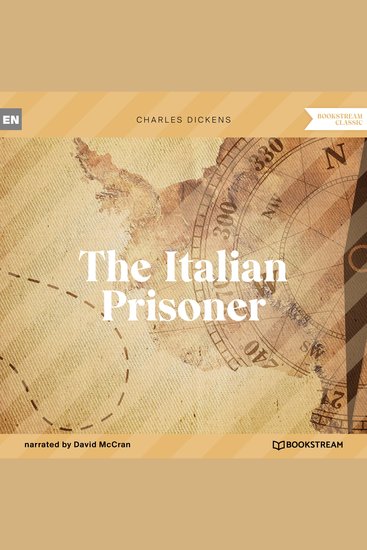
  • Italian Prisoner The (Unabridged) - cover

    Italian Prisoner The (Unabridged)

    Charles Dickens

    • 0
    • 0
    • 0
    Charles Dickens was a writer and social critic who created some of the world's best-known fictional characters and is regarded as the greatest novelist of the Victorian era. His works enjoyed unprecedented popularity during his lifetime, and by the twentieth century critics and scholars had recognised him as a literary genius. His novels and short stories enjoy lasting popularity.
    THE ITALIAN PRISONER: The rising of the Italian people from under their unutterable wrongs, and the tardy burst of day upon them after the long long night of oppression that has darkened their beautiful country, have naturally caused my mind to dwell often of late on my own small wanderings in Italy.
    Show book
  • The Undying Man - cover

    The Undying Man

    D H Lawrence

    • 0
    • 0
    • 0
    'The Undying Man' is a slight unfinished piece, drawing its inspiration from Shelley's 'Frankenstein' about the creation of life and the fear of death. It is interesting to speculate where Lawrence would have gone with the story but the sound of broken glass is the most likely ending.
    Show book
  • The Rynard Hold Reef Company - 19th century writer that was rewarded with a knighthood for his literary contributions - cover

    The Rynard Hold Reef Company -...

    Walter Besant

    • 0
    • 0
    • 0
    The bookshelves of British literature are incredible collections that have gathered together centuries of very talented authors.  From these Isles their fame spread and whilst among their number many are now forgotten or neglected their talents endure.  Among them is Walter Besant.
    Show book
  • The Happy Prince - cover

    The Happy Prince

    Oscar Wilde

    • 0
    • 0
    • 0
    In a town full of suffering poor people, a swallow who was left behind after his flock flew off to Egypt for the winter meets the statue of the late "Happy Prince", who has never experienced true sorrow, for he lived in a palace where sorrow was not allowed to enter. Viewing various scenes of people suffering in poverty from his tall monument, the Happy Prince asks the swallow to take the ruby from his hilt, the sapphires from his eyes, and the gold leaf covering his body to give to the poor...
    Show book
  • Winifred Holtby - A Short Story Collection - Ardent feminist and activist who wrote many stories before tragically dying young - cover

    Winifred Holtby - A Short Story...

    Winifred Holtby

    • 0
    • 0
    • 0
    Winifred Holtby was born on 23rd June 1898 to a prosperous farming family in the village of Rudston in Yorkshire.  
     
    A governess provided her early education before she went to Queen Margaret's School in Scarborough.  After passing the entrance exam for Somerville College, Oxford in 1917, she decided to join the Women's Army Auxiliary Corps in early 1918.  However, soon after her arrival in France, the War ended. 
     
    She returned to study at Oxford and met fellow student Vera Brittain.  After graduating from Oxford, in 1921, Winifred and Vera moved to London, hoping to establish themselves as authors. 
     
    Her early novels met with only moderate success but as a journalist she was both prolific and increasingly well-known.  Her articles graced more than 20 newspapers and magazines, including the Manchester Guardian newspaper.   
     
    Winifred was a committed feminist, socialist and pacifist.  She gave many lectures for the League of Nations Union.  She was also active in the Independent Labour Party and was a campaigner for the unionisation of black workers in South Africa. 
     
    In 1931 the symptoms of high blood pressure, recurrent headaches and bouts of lassitude brought forth a diagnosis of Bright's disease.  She was given two years to live and now put all her efforts into what was to become her crowning achievement: South Riding.  Released posthumously it received lavish praise and enormous sales.  Her canon of works tackle difficult subjects head on, many in unusual ways, brimming with verve and usually strong female protagonists. 
     
    Winifred Holtby died on 29th September 1935 in London.  She was 37. 
     
    1 - Winifred Holtby - A Short Story Collection - An Introduction 
    2 - The Voice of God by Winifred Holtby 
    3 - Truth is Not Sober by Winifred Holtby 
    4 - The Casualty List by Winifred Holtby 
    5 - The Man Who Hated God by Winifred Holtby 
    6 - Why Herbert Killed His Mother by Winifred Holtby
    Show book
  • Hide And Seek - From their pens to your ears genius in every story - cover

    Hide And Seek - From their pens...

    Fyodor Sologub

    • 0
    • 0
    • 0
    Fyodor Kuzmich Teternikov was born on 1st March 1863 in St. Petersburg into the family of a poor tailor.  When his father died of tuberculosis in 1867, his illiterate mother was forced to become a servant in the home of an aristocrat, where Sologub and his younger sister grew up.  
    Seeing how difficult his mother's life was, Sologub was determined to rescue her from it, and after graduating from the St. Petersburg Teachers' Institute in 1882 he took his mother and sister with him to his first teaching post in Kresttsy.  It was here he began his literary career in 1884 with his poem ‘The Fox and the Hedgehog’ under the name Te-rnikov. 
    It would be another decade before he could escape his various jobs to move to Moscow and begin his literary career on what would be his most famous novel, ‘The Petty Demon’.  It was now suggested that he use a pseudonym and so Sologub became his new identity. 
    In 1896 he published a book of poems, a collection of short stories, and his first novel, ‘Bad Dreams’, which is considered one of the first decadent Russian novels. 
    In 1905 ‘The Petty Demon’, was published, initially in serial form. But life was still difficult unrewarding jobs, little time to write and a small, cramped apartment lightened only by gatherings of friends, poets and writers. 
    By the October Revolution his work was becoming popular and with the novel of ‘The Petty Demon’, finally published as a book, he now had a growing income. 
    His sister's tuberculosis could now be more easily treated with treatments in proper sanitoria, even as far away as Finland, but in June 1907 she passed. 
    He returned to St. Petersburg and retired.  The following year he married the translator Anastasia Chebotarevskaya who reordered his life.  A big new apartment was rented, small gilt chairs were bought, and the walls of the large cold office were decorated with paintings. 
    Sologub continued to write and publish poems, plays, and translations and in 1914 he started a magazine, Writers' Journals, but the outbreak of World War I put an end to it.  
    The October Revolution, with publishing under Bolshevik control, ensured he now had no outlets for his writing and could only lecture. 
    His wife’s suicide in September 1921, mainly due to deprivation and uncertainty, as they prepared for a new life abroad, grieved him for the rest of his life. 
    In May 1927 Sologub became seriously ill, and by summer he could leave his bed only rarely.  
    After a long struggle, Fyodor Sologub died on 5th December 1927 in Leningrad.  He was 64.
    Show book