Join us on a literary world trip!
Add this book to bookshelf
Grey
Write a new comment Default profile 50px
Grey
Subscribe to read the full book or read the first pages for free!
All characters reduced
Myths of northern lands - Narrated with special reference to literature and art - cover

Myths of northern lands - Narrated with special reference to literature and art

H. A. Guerber

Publisher: Good Press

  • 0
  • 0
  • 0

Summary

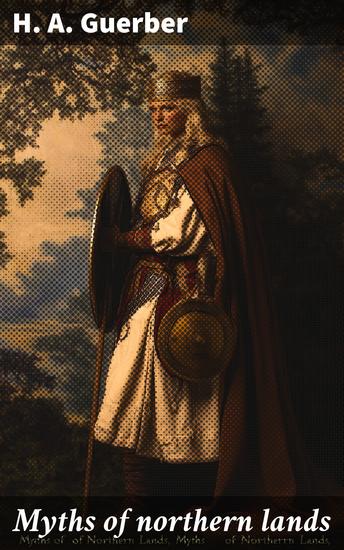
In "Myths of Northern Lands," H. A. Guerber delves into the rich tapestry of mythological narratives originating from Scandinavian and other northern cultures. This scholarly work is characterized by its lyrical prose and meticulous research, weaving together ancient stories to illuminate the beliefs and values of these societies. Guerber contextualizes the myths within the broader landscape of European folklore, enabling readers to understand how these tales reflect civilizational concerns regarding nature, fate, and the human condition. By tracing themes of heroism, divinity, and the natural world, the author offers a comprehensive portrayal of the cultural psyche prevalent in the northern reaches of Europe. H. A. Guerber was an eminent scholar and writer, whose passion for myth and history was cultivated during her extensive studies across the globe. Born in 1859, she was deeply influenced by the folkloric traditions that permeated her childhood in France and later her engagement with Anglo-Saxon literature. Her scholarly work often sought to bridge gaps between diverse cultures, a goal evident in this collection as she artfully connects Norse mythology with its wider European context, showcasing her commitment to understanding humanity's shared narratives. For readers interested in mythology, folklore, or the intricate interplay of culture and narrative, "Myths of Northern Lands" is an invaluable resource. Guerber's engaging narrative and thorough analysis make these ancient tales accessible both to scholars and casual readers alike. This book not only entertains but also educates, providing profound insights into the human spirit as expressed through the myths of the northern regions.
Available since: 03/02/2025.
Print length: 110 pages.

Other books that might interest you

  • The Wages of Peace - How to Confront Economic Inequality and Love Your Neighbor Well - cover

    The Wages of Peace - How to...

    Brian Humphreys

    • 0
    • 0
    • 0
    It’s getting harder and harder to get by. Inflation. Stagnant wages. Spiraling costs of living. Even in the world’s wealthiest nation, it is too hard to earn enough money to thrive without a tremendous amount of privilege or luck. When so many people are struggling, what can we do? ​The Wages of Peace offers aspiring economic peacemakers an empathetic, informed perspective on today’s economy and the difficulty of getting by. Reporting back from his work in community development, Brian Humphreys unpacks the core needs of low-income households and communities, starting with living-wage jobs. He then offers practical steps to address complex socioeconomic challenges and become equipped to talk about money, work, and well-being. This includes confronting where our theologies of wealth and work have come up short and naming that when we put profits over people, we pay the price in despair and violence. Jesus calls us to seek shalom in the marketplace and the neighborhood. It’s time to dismantle inequality and work for an equitable peace.  
    Show book
  • Tao Te Ching - cover

    Tao Te Ching

    Lao Tzu

    • 0
    • 0
    • 0
    The Tao Te Ching is a Taoist philosophical treatise. Lao Tzu, a great Ancient Chinese philosopher and teacher, is considered to be the author of this book. We owe this book to an unnamed guardian who kept safe the far western borders of a country, Zhou in the fifth century BC. The legend says that exhausted from misunderstanding Teacher with a tired heart went on his last journey – to die in a dessert. The guardian recognized great Lao Tzu, called him by name and, nobody knows how, persuaded the wise man to tell a world about Dao and De. "When you said Dao, you said nothing", the teacher replied. And you were wrong: five thousand words, that contains this book, have been existing for two and a half thousand years...
    Show book
  • IN SEARCH of a WAY OUT - A TRUE STORY OF BULLYING DEPRESSION and a JOURNEY TOWARD HOPE - cover

    IN SEARCH of a WAY OUT - A TRUE...

    Bobby Straus

    • 0
    • 0
    • 0
    When an early childhood event triggers the onset of depression, Bobby Straus’s life is changed forever. The experience marks the beginning of the ups and downs, and twists and turns of Bobby’s life-long struggle to overcome depression and find a renewed sense of hope. But the road is not an easy one and after years of enduring the mental pain of depression, he finally reaches a crisis point and is catapulted into the throes of hopelessness. His life is changed forever. But what appears to be the end, turns out to be the beginning of Bobby’s journey to healing and recovery.
    Show book
  • 24 Hours in Ancient Egypt - A Day in the Life of the People Who Lived There - cover

    24 Hours in Ancient Egypt - A...

    Donald P. Ryan

    • 0
    • 0
    • 0
    Spend twenty-four hours with the ancient Egyptians. 


    Ancient Egypt wasn't all pyramids, sphinxes and gold sarcophagi. For your average Egyptian, life was tough, and work was hard, conducted under the burning gaze of the sun god Ra. 


    During the course of a day in the ancient city of Thebes (modern-day Luxor), Egypt's religious capital, we meet twenty-four Egyptians from all strata of society—from the king to the bread-maker, the priestess to the fisherman, the soldier to the midwife—and get to know what the real Egypt was like by spending an hour in their company. We encounter a different one of these characters every hour and in every chapter, and through their eyes see what an average day in ancient Egypt was really like.
    Show book
  • African Mythology - Exploring African Mythology and Spiritual Traditions - cover

    African Mythology - Exploring...

    Christiano Farrezi

    • 0
    • 0
    • 0
    African mythology is a vast and complex field that encompasses the myths, legends, and spiritual beliefs of numerous cultures across the continent. Unlike mythologies from other parts of the world that often center around a single pantheon or narrative, African mythology is a tapestry of stories that vary widely among regions, tribes, and languages. These myths serve not only as captivating tales but also as the foundation for many African cultural values, ethics, and social norms. Through mythology, African societies have historically explained the mysteries of the universe, human existence, and the relationship between the physical and spiritual realms. The myths often act as a bridge that connects the people to their ancestors, guiding them through life’s challenges, reinforcing traditions, and celebrating the wonders of nature and the supernatural. 
    Myths hold a central place in African culture, weaving through every aspect of life, from religious practices and ceremonies to moral lessons and social structures. They serve as more than just entertainment; they are the backbone of cultural identity, teaching values, history, and spiritual wisdom. In many African communities, myths are used to instill societal values such as respect, bravery, honesty, and the importance of community over individualism. These stories also shape the rituals and ceremonies that mark significant life events, including birth, initiation into adulthood, marriage, and death. Myths give people a sense of belonging and identity, linking them to their ancestors, land, and the unseen forces that govern their world. Through these narratives, individuals are reminded of their place in a larger cosmic order, where human actions and natural elements are interconnected.
    Show book
  • Tarascan Empire - The Fierce Rivals of the Aztecs and Masters of West Mexico - cover

    Tarascan Empire - The Fierce...

    Rolf Hedger

    • 0
    • 0
    • 0
    The Tarascan Empire flourished in the rugged and resource-rich region of western Mexico, primarily in what is now the state of Michoacán. Unlike the arid landscapes of central Mexico dominated by the Aztecs, the Tarascan homeland was defined by volcanic highlands, fertile valleys, and vast lakes, particularly Lake Pátzcuaro, which played a central role in their civilization. The geography of this region not only shaped their way of life but also provided a natural defense against external threats, including the expansionist ambitions of the Aztecs. 
    The varied landscape of Michoacán consisted of towering mountains, deep forests, and fertile plateaus. This diverse terrain allowed the Tarascans to develop a robust agricultural system, cultivating maize, beans, squash, and chili peppers, which formed the foundation of their diet. The presence of rivers and lakes further supported fishing and provided fresh water, making settlements around these water bodies highly strategic. Lake Pátzcuaro, in particular, was not only an economic and social hub but also held deep religious significance. It was believed to be the gateway to the underworld in Tarascan mythology, reinforcing its central role in spiritual life. 
    Natural resources played a crucial role in the rise of the Tarascan Empire. The region was rich in minerals, especially copper and obsidian, which were vital for both tools and weaponry. Unlike the Aztecs, whose military strength relied on wooden clubs and stone blades, the Tarascans developed advanced metalworking techniques, producing copper axes, bronze weapons, and intricate ornaments. This technological advantage gave them a distinct edge in warfare and trade, allowing them to maintain independence from their more dominant neighbors.
    Show book