Join us on a literary world trip!
Add this book to bookshelf
Grey
Write a new comment Default profile 50px
Grey
Subscribe to read the full book or read the first pages for free!
All characters reduced
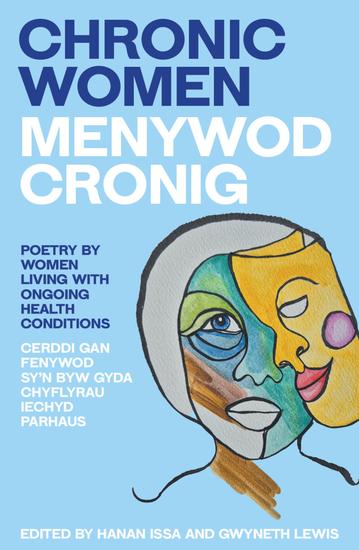
Chronic Women - Menywod Cronig - Poetry by women living with ongoing health conditions - Cerddi gan fenywod sy'n byw gyda chyflyrau iechyd parhaus - cover

Chronic Women - Menywod Cronig - Poetry by women living with ongoing health conditions - Cerddi gan fenywod sy'n byw gyda chyflyrau iechyd parhaus

Gwyneth Lewis, Hanan Issa

Publisher: Honno Press

  • 0
  • 0
  • 0

Summary

A collection to inspire discussions, debate and embolden the difficulties faced by women in the healthcare system.


This is a bilingual anthology of new writing from 13 women poets of Wales who suffer with pain and/or chronic illness and health conditions. The aim of the book is to bring about change in legislation, and a voice for the women of Wales and beyond, who are not given the autonomy and power of voice to speak up about their own bodies within the patriarchal healthcare system. The book will be distributed in GP surgeries and healthcare settings and is designed to open up conversations for the women and men that use them and work in them. The book is edited by Hanan Issa and Gwyneth Lewis. A powerful and unflinching collection of poems about living with long term health conditions.

'It is an act of testimony, a call to awareness, and, in many ways, a rallying cry.' – Dr Helen Munro, Clinical Lead Women's Health Network in Wales

'I hope that any woman reading this will find comfort in these pages. You may be unwell. The future may be uncertain. But you are not alone and do not have to endure pain by yourself.' – Hanan Issa, National Poet of Wales

'All the poets in this book have, in some way … found the creative resources to respond to the surreal world of illness in poems that show insight, generosity and a joy that defy the downward pull of being constantly ill at ease. This is a significant human achievement.' – Gwyneth Lewis


Casgliad pwerus a dewr o gerddi yn trafod byw gyda chyflyrau iechyd hirdymor.

'Fel cyfanwaith, mae'r gyfrol hon yn weithred o dystiolaeth, yn alwad am ymwybyddiaeth, ac, mewn sawl ffordd, yn gri i godi llais.' – Dr Helen Munro, Arweinydd Clinigol Rhwydwaith Iechyd Menywod yng Nghymru

'Rwy'n gobeithio y bydd unrhyw fenyw sy'n darllen yn canfod cysur yn y tudalennau hyn. Efallai eich bod yn sâl. Efallai bod y dyfodol yn ansicr. Ond dydych chi ddim ar eich pen eich hun a does dim rhaid i chi ddioddef poen ar eich pen eich hun.' – Hanan Issa, Bardd Cenedlaethol Cymru

'Mae pob un o'r beirdd yn y gyfrol hon wedi ... dod o hyd i adnoddau creadigol i ymateb i fyd swrrealaidd salwch mewn cerddi sy'n dangos dealltwriaeth a haelioni yn ogystal a llawenydd sy'n gwrthsefyll syrthni anhwylder. Mae hon yn gamp 'fenywol' arwyddocaol.' – Gwyneth Lewis
Available since: 02/19/2026.
Print length: 200 pages.
Other books that might interest you

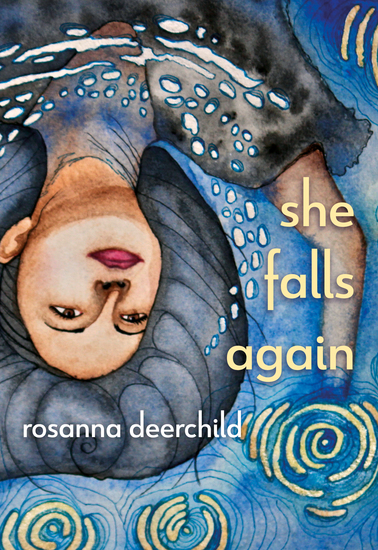
  • She Falls Again - cover

    She Falls Again

    Rosanna Deerchild

    • 0
    • 0
    • 0
    WINNER OF THE 2025 INDIGENOUS VOICES AWARD 
    CBC BOOKS 'CANADIAN POETRY COLLECTIONS TO WATCH FOR IN 2024' 
    CBC BOOKS 'BOOKS TO READ IN HONOUR OF THE NATIONAL DAY FOR TRUTH AND RECONCILIATION'The Sky Woman has returned to bring down the patriarchy!This book is about a poet who may or may not be going crazy, who is just trying to survive in Winnipeg, where Indigenous people, especially women, are being disappeared. She is talking to a crow who may or may not be a trickster, and who brings a very important message: Sky Woman has returned, and she is ready to take down the patriarchy.  This is poetry, prose and dialogue about the rise and return of the matriarch. It’s a call to resistance, a manifesto to the female self. Cree poet and broadcaster Rosanna Deerchild is an important voice for our time. Her poems – angry, funny, sad – demand a new world for Indigenous women.
    Show book
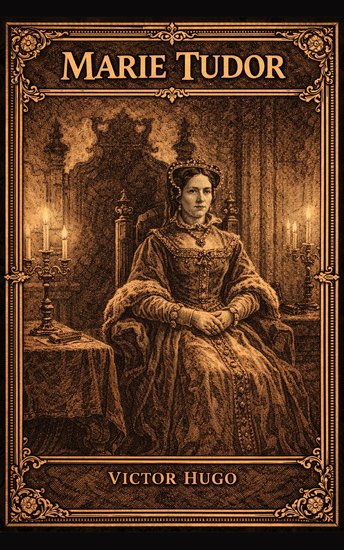
  • Marie Tudor - cover

    Marie Tudor

    Victor Hugo

    • 0
    • 0
    • 0
    Marie Tudor is a gripping historical drama by Victor Hugo, first performed in 1833, that brings to life the turbulent reign of Mary I of England. Set against the shadowed backdrop of political intrigue, religious conflict, and personal betrayal, this powerful play blends romance, tragedy, and suspense into a compelling theatrical masterpiece.
    
    At the heart of the story stands Queen Mary Tudor, a monarch torn between the immense responsibilities of the crown and the vulnerabilities of her heart. Hugo portrays her not merely as a historical figure remembered for her harsh religious persecutions, but as a deeply human woman—passionate, jealous, loving, and capable of both tenderness and cruelty. Through this complex characterization, the play explores the emotional struggles of a ruler whose private desires collide with public duty.
    
    The drama unfolds in the court of England, where political conspiracies simmer beneath a façade of royal authority. Mary is secretly in love with Fabiani, a charming but unscrupulous adventurer whose ambitions and moral weaknesses set the tragedy in motion. When deception, betrayal, and jealousy intertwine, the Queen finds herself ensnared in a web of intrigue that threatens not only her heart but her throne. Alongside her stands Gilbert, a noble and steadfast figure whose integrity and courage contrast sharply with the duplicity that infects the court.
    
    Victor Hugo masterfully weaves together themes of power, justice, revenge, and redemption. As tensions rise and loyalties are tested, the play questions the nature of authority: Can a sovereign truly separate personal emotion from political responsibility? Is justice possible when passion clouds judgment? Hugo's vivid dialogue and dramatic intensity create a work that is both emotionally charged and intellectually resonant.
    
    True to the spirit of Romanticism, Marie Tudor emphasizes strong emotion, moral conflict, and larger-than-life characters. Hugo's language is rich and expressive, elevating the drama beyond mere historical retelling into a timeless exploration of human frailty and strength. The play also reflects Hugo's broader literary vision—his fascination with the marginalized, his critique of rigid institutions, and his belief in the dramatic potential of history.
    
    Though rooted in a specific moment of sixteenth-century England, Marie Tudor speaks to universal struggles between love and power, mercy and vengeance, fate and free will. It is a story of a woman caught between the crown and the heart, forced to confront the consequences of her choices in a world where authority can both protect and destroy.
    
    Dark, passionate, and profoundly human, Marie Tudor remains a striking example of Victor Hugo's dramatic genius. For readers and theater lovers alike, it offers a powerful portrait of monarchy, emotion, and the tragic cost of desire.
    Show book
  • Here in America - cover

    Here in America

    David Edgar

    • 0
    • 0
    • 0
    'I'm saying there's someone who could stop this madness. If you stood up, and said "no".'
    On a rainswept afternoon in 1952, Hollywood and Broadway's leading director Elia Kazan met his closest collaborator, the playwright Arthur Miller. As the anti-Communist crusade of McCarthyism blacklisted hundreds of their colleagues, Kazan and Miller faced a stark choice. Should they betray their friends, or risk never working again?
    David Edgar's play Here in America is a compelling drama that imagines a confrontation between two giants of stage and screen, both passionately involved with an actress about to become the most famous movie star in the world. It was first performed at the Orange Tree Theatre, London, in 2024, directed by James Dacre.
    Show book
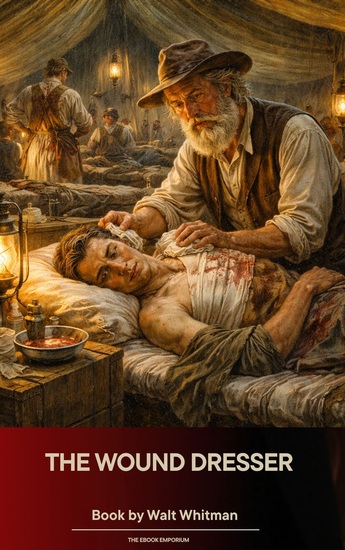
  • The wound dresser - cover

    The wound dresser

    Walt Whitman

    • 0
    • 0
    • 0
    What does true compassion look like in the midst of war?
    
    The Wound-Dresser by Walt Whitman is one of the most tender and powerful poems ever written about the human cost of conflict. Drawn from Whitman's real-life experience as a volunteer nurse during the American Civil War, the poem offers a deeply personal account of caring for wounded soldiers amid pain, fear, and loss.
    
    Rather than focusing on battle or glory, Whitman turns his attention to quiet acts of mercy—washing wounds, holding hands, and offering comfort to the dying. His free-verse style gives voice to empathy, love, and the dignity of suffering humanity.
    
    This eBook presents the poem in a clear, accessible format, allowing readers to experience one of the most moving expressions of compassion in American literature.
    
    Inside this eBook, you'll encounter:
    
    A firsthand poetic response to the Civil War
    
    Themes of empathy, service, and human connection
    
    Whitman's revolutionary free-verse style
    
    A timeless meditation on suffering and care
    
    Frequently studied in literature and history courses, The Wound-Dresser remains essential reading for anyone interested in war poetry, caregiving, and the moral power of compassion.
    
    Witness the quiet heroism behind the front lines. Buy now and experience one of Walt Whitman's most heartfelt works.
    Show book
  • Side Chick - cover

    Side Chick

    Pamela Hayes

    • 0
    • 0
    • 0
    In Side Chick, the main character addresses three women involved with a man who has already committed to someone else. She encourages them to recognize their own self-worth and urges them to stop giving men power in these situations. She empowers them to build their self-esteem, take control of their lives, and realize that they are more than enough to deserve their own relationships without relying on someone else's man.
    Show book
  • Locked Box The: Part 1 - The Powerful Impact of a Silent Epidemic - cover

    Locked Box The: Part 1 - The...

    Karen Danzey, Christie Glascoe

    • 0
    • 0
    • 0
    As the weight of her trauma grew heavier, Sophia Jones grappled with the stigma of sexual assault. She suffered in silence, she lost faith in humanity and she lost her faith in God. Although she was raised to believe that God sees and knows it all, she wondered where was God when her predators took her body against her will. Will Sophia Jones seek justice to quench the pain of her trauma or will her faith be restored and surrender to the God she felt abandoned her when she needed Him most?
    Show book