Join us on a literary world trip!
Add this book to bookshelf
Grey
Write a new comment Default profile 50px
Grey
Subscribe to read the full book or read the first pages for free!
All characters reduced
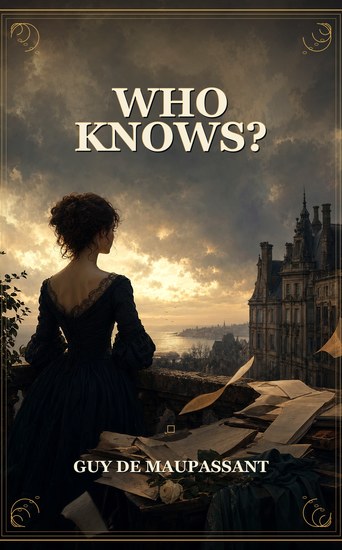
Who Knows? - cover

Who Knows?

Guy de Maupassant

Publisher: Caelwick Press

  • 0
  • 0
  • 0

Summary

Who Knows? by Guy de Maupassant is presented in a clean English digital edition with active navigation. The book belongs to classics and preserves the character of the source text for sustained ebook reading. The opening pages establish the work's atmosphere with this first movement: My God! My God! I am going to write down at last what has happened to me. But how can I? How dare I? The thing is so bizarre, so inexplicable, so incomprehensible, so silly! If I were not perfectly sure of what I have seen, sure that there was not in my reasoning any defect, no error in my declarations, no lacune in th. Detected sections include: Chapter 1, Chapter 2. This edition is prepared for a fluent reading experience with clear typography and no extraneous promotional material.
Available since: 06/13/2026.
Print length: 17 pages.

Other books that might interest you

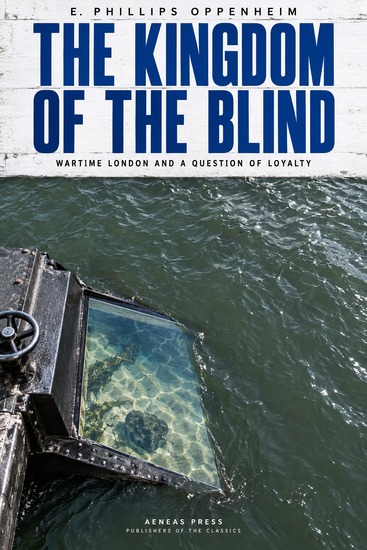
  • The Kingdom of the Blind - Wartime London and a Question of Loyalty - cover

    The Kingdom of the Blind -...

    E. Phillips Oppenheim

    • 0
    • 0
    • 0
    London, 1916: a German-born gentleman moves in the best houses, dines at the best clubs, and something is going out of England to the enemy through channels the Admiralty cannot find. Oppenheim worked in his father's leather business for twenty years while writing at night, then produced some hundred and fifteen novels from a villa on the Riviera; the wartime paranoia here is contemporary reporting, not hindsight. Fifty-nine plates of painting, among them John Lavery and Spencer Gore, track the dinner parties, clubs and jury rooms of the London that Oppenheim's traitor moves through.
    Show book
  • Before the Law - From their pens to your ears genius in every story - cover

    Before the Law - From their pens...

    Franz Kafka

    • 0
    • 0
    • 0
    Franz Kafka was born on 3rd July 1883 in Prague, then in Bohemia, the eldest of 6, into a middle-class Jewish family. 
    Life for the young Kafka and his passion for literature was often made an ordeal by his over-bearing and domineering entrepreneur of a father.   
    In 1889 Kafka was sent to the Deutsche Knabenschule, an elementary school in Prague. His father would only allow him to be educated in German-speaking schools and even went so far as to limit visits to the synagogue to four a year. 
    In 1901 he graduated from the classics-oriented Altstädter Gymnasium. Kafka did well there and across a large range of subjects.  He now enrolled at the Charles Ferdinand University, to study chemistry, but quickly switched to law for which he obtained his degree in June 1906 and then performed the mandatory year of unpaid service as clerk at the civil and criminal courts. 
    A job at an Italian insurance company left him little time to write and after a year he took another job with the Worker's Accident Insurance Institute for the Kingdom of Bohemia where he stayed until ill health led to his resignation in 1922. 
    Although he saw work as a means to pay the bills and to allow him time to write, he received several promotions and was noted as a good employee. 
    By 1917 Kafka was suffering from tuberculosis, which required frequent periods of convalescence. Interspersed with this, were several intense affairs before he settled in Berlin with Dora Diamant, a 25-year-old kindergarten teacher who herself having left the ghetto now influenced Kafka's interest in the book of Jewish law, the Talmud. 
     
     
    Kafka’s on-going health was littered with problems. Apart from TB there were several other ailments, including migraines, insomnia, boils, depression, all usually brought on by excessive stresses and strains. He attempted to counteract all of this by naturopathic treatments, a vegetarian diet and consuming large quantities of unpasteurized milk. 
    His tuberculosis still worsened. He returned to Prague, where he died on 3rd June 1924. He was 40.
    Show book
  • The Adventures of Tom Sawyer - cover

    The Adventures of Tom Sawyer

    Mark Twain

    • 0
    • 0
    • 0
    The Adventures of Tom Sawyer (also simply known as Tom Sawyer) is an 1876 novel by Mark Twain about a boy growing up along the Mississippi River. It is set in the 1840s in the town of St. Petersburg, which is based on Hannibal, Missouri, where Twain lived as a boy. In the novel, Tom Sawyer has several adventures, often with his friend Huckleberry Finn. Originally a commercial failure, the book ended up being the best-selling of Twain's works during his lifetime. Though overshadowed by its sequel, Adventures of Huckleberry Finn, the book is considered by many to be a masterpiece of American literature. It was one of the first novels to be written on a typewriter.
    Show book
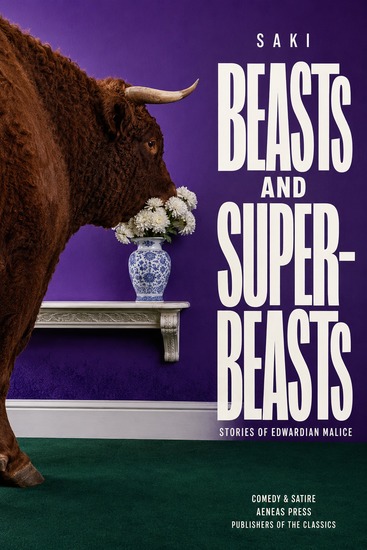
  • Beasts and Super-Beasts - Stories of Edwardian Malice - cover

    Beasts and Super-Beasts -...

    Saki Saki

    • 0
    • 0
    • 0
    A girl explains to a nervous visitor why the French window is always left open, a governess is disposed of with tact, and a bachelor on a train tells three children a story about a horribly good little girl. Saki was born in Burma and raised by two tyrannical aunts whom he spent his career killing in print; each story is three pages long, ends on a line you do not see coming, and he was shot dead by a sniper on the Somme at forty-five. Sixty plates of painting from 1821 to 1908, by painters including James Tissot and David Roberts, catch the social comedy and uneasy landscapes behind these tales.
    Show book
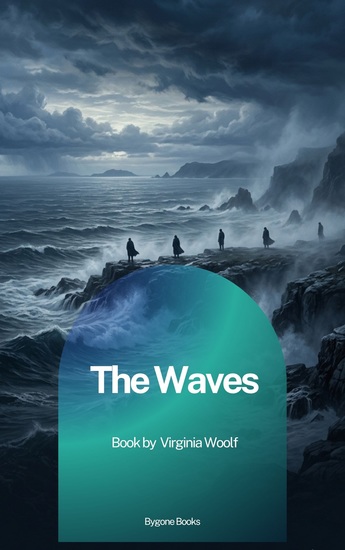
  • The Waves - cover

    The Waves

    Virginia Woolf

    • 0
    • 0
    • 0
    A breathtaking literary masterpiece that explores the rhythms of life, memory, and identity through Virginia Woolf's most innovative writing.
    
    Discover "The Waves" by Virginia Woolf, one of the greatest achievements of modernist literature and a landmark of twentieth-century fiction. Poetic, philosophical, and profoundly moving, this timeless novel transforms the inner lives of its characters into a lyrical meditation on friendship, individuality, time, and the ever-changing nature of human experience.
    
    Through the interconnected voices of six lifelong companions, The Waves traces the journey from childhood to old age, revealing their thoughts, emotions, aspirations, and memories as their lives unfold. Interwoven with beautifully crafted passages depicting the changing sea and the passage of the day, Virginia Woolf creates a unique narrative that explores themes of identity, love, loss, creativity, mortality, friendship, and the flow of time. Her masterful stream-of-consciousness technique offers an intimate portrait of consciousness itself without revealing the novel's most powerful moments.
    
    First published in 1931, "The Waves" is widely regarded as Virginia Woolf's most experimental and poetic novel. Celebrated for its innovative structure, lyrical language, and philosophical depth, it remains one of the defining masterpieces of modernist literature and continues to inspire readers, writers, and scholars around the world.
    
    Perfect for readers who enjoy classic literature, literary fiction, modernist novels, psychological fiction, philosophical fiction, British literature, and timeless literary masterpieces, this extraordinary novel offers a rich and deeply rewarding reading experience.
    
    Experience one of the most remarkable works of twentieth-century literature. Add "The Waves" to your Kindle library today and discover a timeless masterpiece of memory, identity, and the enduring beauty of human consciousness.
    Show book

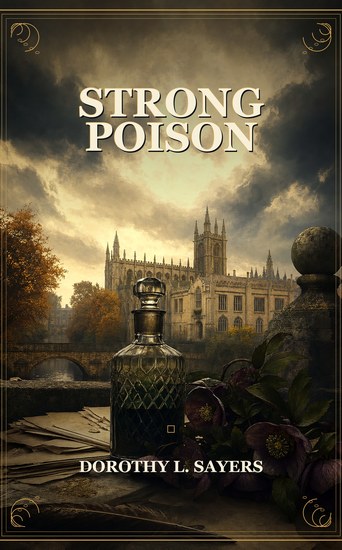
  • Strong Poison - cover

    Strong Poison

    Dorothy L. Sayers

    • 0
    • 0
    • 0
    We rely on your support to help us keep producing beautiful, free, and unrestricted editions of literature for the digital age. Will you support our efforts with a donation ? Lord Peter Wimsey, gentleman detective, is in love. Unfortunately, it is with a woman who has very nearly been convicted of murder. Crime novelist Harriet Vane is being tried for the murder of her ex-lover, a writer with strong views on free love and atheism who seems to have not been true to his professed beliefs. He has died by arsenic poisoning. Harriet is known to have quarreled with him; she saw him the night he was poisoned; and she has just written a manuscript describing how easy it is to poison someone by arsenic. Lord Peter believes in her innocence, though, and has mere weeks to find the actual culprit before she's convicted and hanged. In this, the sixth Lord Peter Wimsey novel , Dorothy L. Sayers offers a humorous look at the English aristocracy, proponents of free love, the writing and publishing of crime novels, and a fake seance. Sayers based the murder victim on her own ex-lover, lending an autobiographical note to the story. First published in 1930, the novel has been adapted for television and radio multiple times. Dorothy L. Sayers (died 1957) was an influential writer of the modernist period. Their work has endured across generations and continues to be read and studied worldwide. As a work of classic literary fiction, Strong Poison exemplifies the narrative craft and social insight that defined great storytelling of its era. Literary fiction of this period was characterized by careful attention to character psychology, social milieu, and the moral questions that animated public discourse.
    Show book