Join us on a literary world trip!
Add this book to bookshelf
Grey
Write a new comment Default profile 50px
Grey
Subscribe to read the full book or read the first pages for free!
All characters reduced
The Horla (Horror Classic) - (The Classic English Edition) - A Chilling Descent into Madness and the Supernatural - cover

The Horla (Horror Classic) - (The Classic English Edition) - A Chilling Descent into Madness and the Supernatural

Guy de Maupassant

Publisher: Good Press

  • 0
  • 0
  • 0

Summary

In "The Horla," Guy de Maupassant explores the intricacies of madness and existential dread through the eyes of an unnamed narrator haunted by a mysterious, invisible presence. This short story, characterized by its impressionistic style and psychological depth, embodies a turning point in late 19th-century literature, as it deftly navigates themes of isolation, the supernatural, and the fragility of the human mind. With vivid imagery and disquieting descriptions, Maupassant immerses readers in a haunting atmosphere that reflects the anxieties of a society grappling with modernity and the unknown. Guy de Maupassant, a leading figure in the French literary movement, was significantly influenced by his tumultuous personal life and the societal shifts of his time, including his battle with mental health issues. His experiences with depression and fear of insanity resonate deeply in "The Horla," making the story an intimate exploration of one man'Äôs descent into psychosis. Maupassant'Äôs own struggles, coupled with his background in realism and naturalism, contribute to the rich complexity and authenticity of his eerie narrative. Readers of gothic fiction and psychological horror will find "The Horla" an indispensable addition to their literary repertoire. This masterful tale serves not only as a poignant reflection on the nature of fear and the human psyche but also as a commentary on the broader existential questions that continue to plague humanity. Engaging and thought-provoking, Maupassant's work commands attention and invites contemplation.
Available since: 01/07/2024.
Print length: 25 pages.

Other books that might interest you

  • Carmilla - cover

    Carmilla

    Joseph Le Fanu, J. Sheridan Le Fanu

    • 0
    • 0
    • 0
    Sink your teeth into the cult classic vampire novella that inspired Bram Stoker’s Dracula. Fear sweeps the countryside as people fall victim to a strange illness.  After a peculiar accident, beautiful Mircalla becomes a ward at Laura’s family home.  Soon, friendship blooms between the mysterious Mircalla and curious Laura.  Love is in the air, but so is something deadly.  Will Mircalla’s secret cost Laura her life? Carmilla, originally published in 1872, is one of the first vampire novels ever written, predating Dracula by twenty-six years. Carmilla, with its themes of vampirism and homosexuality, shocked the standards and stereotypes for women set in the Victorian era. Today, Carmilla is considered the original archetype of female and LGBTQ vampires, and Le Fanu’s influence is seen throughout vampire fiction.
    Show book
  • The Lurking Fear - cover

    The Lurking Fear

    H. P. Lovecraft

    • 0
    • 0
    • 0
    Something is killing the hill folk in the Catskills, and our intrepid narrator is determined to find out what it is. What he finds is much, much more than he bargained for.
    Show book
  • The Willows - cover

    The Willows

    Algernon Blackwood

    • 0
    • 0
    • 0
    Perhaps Blackwood's most celebrated story, The Willows was influenced heavily by his own trips down the Danube River. It tells the story of two campers who pick the wrong place to sleep for the night, a place where another dimension impinges on our own. H.P. Lovecraft considered this the finest supernatural tale in English literature.
    Show book
  • Mannequins in Aspects of Terror (Unabridged) - cover

    Mannequins in Aspects of Terror...

    Mark Samuel

    • 0
    • 0
    • 0
    The themes that thread through these nine accomplished stories are drawn from the great tradition of the twentieth-century weird tale, and they are suffused with a distinctly cosmopolitan, European feel. Mark Samuels writes about the fundamental fears of modern life, especially the effects of isolation and the dislocation that city dwellers can experience in their inhospitable, man-made environment.
    Mannequins in Aspects of Terror: The office tower had long fascinated me. The building dominated the skyline in the Euston area of London and consisted of twenty-seven floors with an exterior of green, dark glass.
    Show book
  • He - cover

    He

    H. P. Lovecraft

    • 0
    • 0
    • 0
    "He" is a short story by American horror writer H. P. Lovecraft. Written August 1925, it was first published in Weird Tales, September 1926.The story's anonymous narrator has moved from New England to New York City, and greatly regrets it. One night, while wandering through a historic part of Greenwich Village, he happens upon a man dressed in garments from the 18th century. The man offers to show the narrator the secrets of the town.The man brings the narrator into his home. There, he tells him the story of a squire who bargained with Native Americans for the secrets of their rituals concerning time and space, which were practiced on the land where the squire had recently taken up residence. After learning these secrets, the squire killed the Native Americans by giving them "monstrous bad rum". Within a week all of them were dead, and he alone had their secret knowledge. The man shows the narrator visions of the city's past and future so terrifying that he begins to scream wildly. The screams rouse the spirits of the Native Americans to take vengeance on the man, who is the same squire from 1768.
    Show book
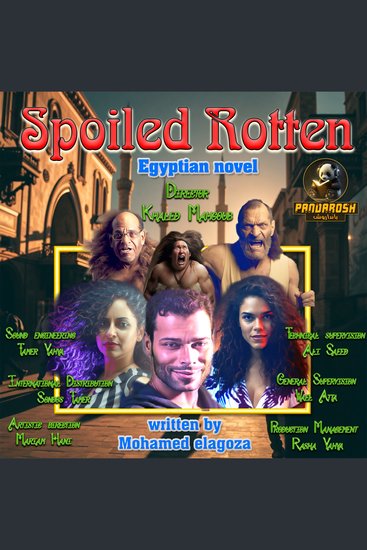
  • Spoiled Rotten - A social dramatic novel - cover

    Spoiled Rotten - A social...

    Mohamed Elagoza

    • 0
    • 0
    • 0
    Mustafa is a young man who loves a woman named Talia and sees her as his ideal life partner. Life shines in their eyes, and marriage seems like a beautiful dream. But they soon collide with the reality of married life; disagreements begin, and Mustafa finds himself drifting towards strange adventures outside of his marriage. For her part, Talia changes and emotionally distances herself from him. In the midst of these exciting events, Mustafa discovers something strange: the closer he gets to achieving what he wants, the more he finds that it does not fully understand or satisfy him. Can Mustafa and Talia face the facts and rediscover themselves?
    Show book