Join us on a literary world trip!
Add this book to bookshelf
Grey
Write a new comment Default profile 50px
Grey
Subscribe to read the full book or read the first pages for free!
All characters reduced
The Complete Short Stories of Guy de Maupassant - Masterpieces of Love Irony and Human Nature - cover

The Complete Short Stories of Guy de Maupassant - Masterpieces of Love Irony and Human Nature

Guy de Maupassant, Zenith Evergreen Literary Co.

Publisher: Zenith Evergreen Literary Co.

  • 0
  • 0
  • 0

Summary

The subtleties of the human heart—love, greed, ambition, cruelty—revealed with unmatched elegance and irony.

The Complete Short Stories of Guy de Maupassant brings together the full body of work from one of France's greatest literary craftsmen. In tales like The Necklace, Boule de Suif, The Horla, and many others, Maupassant captures the complexities of human emotion, the ironies of fate, and the raw edges of society with piercing realism and profound insight.

His compact, impactful storytelling laid the foundation for the modern short story, influencing writers like Anton Chekhov, Ernest Hemingway, and Kate Chopin.

💬 "Maupassant's stories shimmer with the beautiful and brutal truths of everyday life."

✨ Why Readers Adore Maupassant:
Includes all major and lesser-known short stories—over 300 works

Perfect for fans of Anton Chekhov, Leo Tolstoy, Edgar Allan Poe, and Nathaniel Hawthorne

Essential for students of realist literature, 19th-century fiction, and short story craft

📣 Feel the Irony. Witness the Tragedy. Marvel at the Mastery.
Buy The Complete Short Stories of Guy de Maupassant today and experience some of the finest short fiction ever written.
Available since: 04/29/2025.
Print length: 1835 pages.
Other books that might interest you

  • Mesmeric Revelation - cover

    Mesmeric Revelation

    Sampi Books, Edgar Allan Poe

    • 0
    • 0
    • 0
    "Mesmeric Revelation" is a short story by Edgar Allan Poe that explores a dialogue between a hypnotist and his dying patient. Through hypnosis, they discuss profound themes about the nature of the soul, the existence of God and the universe, revealing transcendent perspectives on life and death.
    Show book
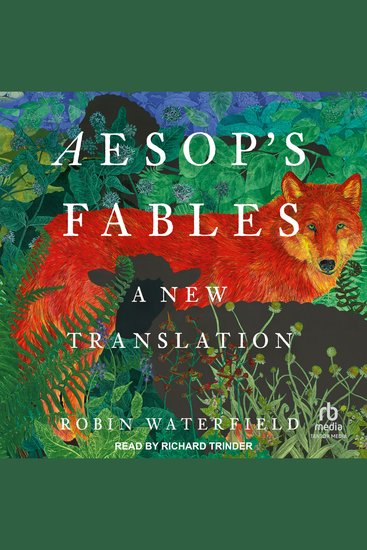
  • Aesop's Fables - A New Translation - cover

    Aesop's Fables - A New Translation

    Aesop Aesop, Robin Waterfield

    • 0
    • 0
    • 0
    From a renowned scholar and translator, the definitive translation of Aesop's Fables 


    Aesop's fables are among the most familiar and best-loved stories in the world. Tales like "The Tortoise and the Hare," "The Dog in the Manger," and "Sour Grapes" have captivated us for generations. The fables delight us and teach timeless truths. Aesop's tales offer us a world fundamentally simpler to ours—one with clear good and plain evil—but nonetheless one that is marked by political nuance and literary complexity. 


    Newly translated and annotated by renowned scholar Robin Waterfield, this definitive translation shines a new light on four hundred of Aesop's most enduring fables.
    Show book
  • Hide And Seek - From their pens to your ears genius in every story - cover

    Hide And Seek - From their pens...

    Fyodor Sologub

    • 0
    • 0
    • 0
    Fyodor Kuzmich Teternikov was born on 1st March 1863 in St. Petersburg into the family of a poor tailor.  When his father died of tuberculosis in 1867, his illiterate mother was forced to become a servant in the home of an aristocrat, where Sologub and his younger sister grew up.  
    Seeing how difficult his mother's life was, Sologub was determined to rescue her from it, and after graduating from the St. Petersburg Teachers' Institute in 1882 he took his mother and sister with him to his first teaching post in Kresttsy.  It was here he began his literary career in 1884 with his poem ‘The Fox and the Hedgehog’ under the name Te-rnikov. 
    It would be another decade before he could escape his various jobs to move to Moscow and begin his literary career on what would be his most famous novel, ‘The Petty Demon’.  It was now suggested that he use a pseudonym and so Sologub became his new identity. 
    In 1896 he published a book of poems, a collection of short stories, and his first novel, ‘Bad Dreams’, which is considered one of the first decadent Russian novels. 
    In 1905 ‘The Petty Demon’, was published, initially in serial form. But life was still difficult unrewarding jobs, little time to write and a small, cramped apartment lightened only by gatherings of friends, poets and writers. 
    By the October Revolution his work was becoming popular and with the novel of ‘The Petty Demon’, finally published as a book, he now had a growing income. 
    His sister's tuberculosis could now be more easily treated with treatments in proper sanitoria, even as far away as Finland, but in June 1907 she passed. 
    He returned to St. Petersburg and retired.  The following year he married the translator Anastasia Chebotarevskaya who reordered his life.  A big new apartment was rented, small gilt chairs were bought, and the walls of the large cold office were decorated with paintings. 
    Sologub continued to write and publish poems, plays, and translations and in 1914 he started a magazine, Writers' Journals, but the outbreak of World War I put an end to it.  
    The October Revolution, with publishing under Bolshevik control, ensured he now had no outlets for his writing and could only lecture. 
    His wife’s suicide in September 1921, mainly due to deprivation and uncertainty, as they prepared for a new life abroad, grieved him for the rest of his life. 
    In May 1927 Sologub became seriously ill, and by summer he could leave his bed only rarely.  
    After a long struggle, Fyodor Sologub died on 5th December 1927 in Leningrad.  He was 64.
    Show book
  • The Story of Doctor Dolittle - cover

    The Story of Doctor Dolittle

    Hugh Lofting

    • 0
    • 0
    • 0
    Have you ever wished you could talk to animals? Doctor John Dolittle, a cheerful physician from Puddleby-on-the-Marsh, can!
    
    Follow the kind doctor on his very first great adventure. After learning animal language from his clever parrot, Polynesia, Doctor Dolittle gives up treating people to become the world's first true animal doctor. When a deadly plague strikes the monkeys of Africa, Dolittle, along with his menagerie of loyal pets—including Chee-Chee the monkey, Dab-Dab the duck, and the Pushmi-Pullyu—sails off on a thrilling, transatlantic voyage. They face shipwrecks, pirates, and royal troubles, all to fulfill their mission.
    
    This delightful book, first published in the early twentieth century, remains a treasured masterpiece of children's literature that celebrates kindness, exploration, and the magic of friendship. It is the perfect read-aloud adventure for young readers and a nostalgic favorite for adults.
    
    Join the journey and discover the world through the eyes of the animals! Click "Buy Now" for this unforgettable classic.
    Show book
  • A Christmas Carol - cover

    A Christmas Carol

    Charles Dickens

    • 0
    • 0
    • 0
    A Christmas Carol by Charles Dickens tells the story of Ebenezer Scrooge, a miserly man who transforms after being visited by the spirits of Christmas Past, Present, and Yet to Come. A moving tale of redemption, generosity, and the Christmas spirit.
    Show book
  • Plated Article A (Unabridged) - cover

    Plated Article A (Unabridged)

    Charles Dickens

    • 0
    • 0
    • 0
    Charles Dickens was a writer and social critic who created some of the world's best-known fictional characters and is regarded as the greatest novelist of the Victorian era. His works enjoyed unprecedented popularity during his lifetime, and by the twentieth century critics and scholars had recognised him as a literary genius. His novels and short stories enjoy lasting popularity.
    A PLATED ARTICLE: Putting up for the night in one of the chiefest towns of Staffordshire, I find it to be by no means a lively town. In fact, it is as dull and dead a town as any one could desire not to see. It seems as if its whole population might be imprisoned in its Railway Station. The Refreshment Room at that Station is a vortex of dissipation compared with the extinct town-inn, the Dodo, in the dull High Street.
    Show book