¡Acompáñanos a viajar por el mundo de los libros!
Añadir este libro a la estantería
Grey
Escribe un nuevo comentario Default profile 50px
Grey
Suscríbete para leer el libro completo o lee las primeras páginas gratis.
All characters reduced
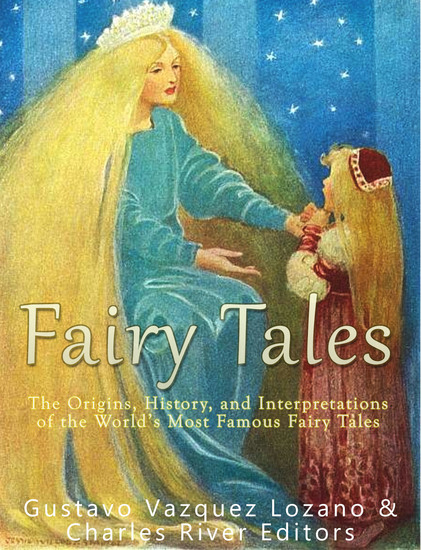
Fairy Tales - The Origins History and Interpretations of the World’s Most Famous Fairy Tales - cover

Fairy Tales - The Origins History and Interpretations of the World’s Most Famous Fairy Tales

Gustavo Vazquez-Lozano

Editorial: Charles River Editors

  • 0
  • 0
  • 0

Sinopsis

In the early 16th century, when Europe was coming out of the Middle Ages and Germany was divided into several kingdom states, a girl named Margaretha von Waldeck was born in Hesse, a region of the German Empire covered by thick forests. Margaretha was the daughter of Philip IV of Waldeck, a nobleman marginally remembered in history books for advancing the Protestant Reformation in his domains. The Count had a daughter with Margaret of Frisia, but as in any era, wealth and a good name were not a guarantee of happiness: the Waldeck family owned copper mines (where misshapen and malnourished children worked; people called them "dwarfs"), but Philip's wife died four years after giving birth, leaving behind her daughter Margaretha. The child was breathtakingly beautiful according to testimonies of the time.


Shortly after being widowed, Count Philip married again, this time to Katharina of Hatzfeld, whose portrait is still preserved. The red-haired woman had short curly hair and —at least in the portrait that is available— a nasty grimace in her slightly off-centered mouth. And she hated the girl. At 16 she forced her to go to Belgium, where Margaretha met and fell in love with the son of the king of Spain, the future King Philip II, who was captivated by her beauty. The Spanish prince was six years older than Margaretha. When they began their brief romance, he was 22 and she was 16. The fairy tale ended in 1554 when Margaretha was poisoned by Spanish agents, who saw the impending marriage and considered that politically she had nothing to offer to Spain. The same year of Margaretha´s death, Philip ascended the throne. Proof that the girl was poisoned, writes German historian Eckhard Sander, can be seen in her testament, written hastily with shaky handwriting, as if she were trembling in agony.


Dense forests, evil stepmother, beautiful girl, dwarfs in mines, a prince and, eventually, poisoning (in that order). Sound familiar? Most will recognize the basic plot of Snow White and the Seven Dwarfs, one of the most popular fairy tales in history. Even if the passing of time (and Disney) embellished it with a thousand details, in particular the happy ending, this and other tales reflect the Sitz im Leben or setting in life in which fairy tales emerged. The stories, which were transmitted orally during the Middle Ages, are like fogged windows to the way of life, the kind of people and social conditions of the regions where they took their final shape. In some instances, such as Snow White and the Seven Dwarfs, they may be echoing historical facts. And the poisoned apple? Sander thinks that the lethal fruit was added later, during the stage of oral transmission, in remembrance of a man who really existed in Germany and was arrested for giving poisoned apples to children because he thought they were stealing from him.


For centuries, beautifully illustrated fairy tale volumes have rested innocently on kids´ night tables around the world, long ago relegated to the dubious honor of being branded as "children's literature." But every story is a file packed with information, and Cinderella, Snow White, Puss in Boots and Bluebeard have always intimated that perhaps they have more to tell besides "beautiful" stories, the same ones that animated the minds of several generations of children. Whether or not they had peaceful dreams is another matter, because even in their current versions, sterilized and with their original contents doctored, classic fairy tales are far from innocent stories for five year old children. Snow White, Cinderella, Sleeping Beauty and Rapunzel are full of violent jealousy between mothers and daughters, families so poor that they have nothing to put in their mouths, infanticide, tedious work, illicit sex, and traces of old religions. It is no wonder that fairy tales were originally collected without children in mind.  
Disponible desde: 20/06/2025.
Longitud de impresión: 45 páginas.

Otros libros que te pueden interesar

  • Chiropractor Career Planning Audio Book Bundle - 3 in 1 Career Development Plan Box Set - cover

    Chiropractor Career Planning...

    Brian Mahoney

    • 0
    • 0
    • 0
    End Money Worries! 
    Chiropractor Career Planning Audio Book Bundle Career Planning Audio Book Bundle 
    3 in 1 Career Development Plan Box Set 
    Discover... 
    * What a Chiropractor does  * How to Become a Chiropractor * What is the salary of a Chiropractor   
    * What is the Chiropractor Work Environment like * What is the future Job outlook for a Chiropractor   
    * How long does it take to become a Chiropractor * How to Prepare for Your Job Interview 
    * Tips the pros use to Ace their Job Interview  * You'll be confident with the best answers for the toughest job interview questions 
    The knowledge & ability to change your life all for less than the cost of 1 movie ticket! 
     If you are ready to get started & want the knowledge, help & motivation to change your life now!... 
    How to start a YouTube Channel & Make Money 
    Discover... 
    * Why YouTube is Essential for Business Marketing * Creating a YouTube Marketing Strategy 
    *Creating Engaging Video Content *Optimizing Your YouTube Channel  
    *Monetizing your YouTube Channel *Measuring your YouTube Marketing Success 
    *YouTube Shorts Video & Channel Promotion 
    So take advantage of this chance for a lifetime passive income stream from YouTube! 
    Goal Setting Mastery: A Action Plan to Achieving Your Dreams 
    Now you you can take advantage of this goal setting audio book & discover how to achieve success in all aspects of your life: 
    * Understanding the Power of Goal Setting * How to set meaningful goals using the SMART Method 
    * Creating a Action Plan * Reviewing & adjusting your Goals  * Using Goal Setting in all areas of Your life 
    So Don't wait. You'll wait your life away...
    Ver libro
  • George and Marina - Duke and Duchess of Kent - cover

    George and Marina - Duke and...

    Christopher Warwick

    • 0
    • 1
    • 0
    For eight brief years, before he was tragically killed in a mysterious air crash during the Second World War, Prince George, Duke of Kent, son of King George V and Queen Mary, and his beautiful wife, Princess Marina of Greece and Denmark, were the British monarchy's, indeed, high society's, most glamorous royal couple; and as golden royal icons they are still remembered. 


    As a young man, voraciously addicted to drugs and sex, with men as much as women, marriage and parenthood for the impetuously wayward playboy prince, with his night-clubbing lifestyle and intimate liaisons, was seen as the only stabilizing influence. Enter the stylish and sophisticated Princess Marina, the cultured, artistic, and multilingual youngest daughter of Prince Nicholas of Greece and his Russian-born wife, Grand Duchess Yelena Vladimirovna. As Duke and Duchess of Kent, George and Marina were the Crown's most glittering representatives, not least in the aftermath of the abdication of George's adored elder brother, the briefly-reigned King Edward VIII; the man with whom he had not only shared both home and high-flying lifestyles, but who had helped cure him of his addiction to morphine and cocaine.
    Ver libro
  • Hannibal - The True Story of the Life & Time of the Ancient Military Leader - cover

    Hannibal - The True Story of the...

    Liam Dale

    • 0
    • 0
    • 0
    Interested in Hannibal's remarkable life but short on time for lengthy biographies? Join The History Journals for an hourly history tour. 
     
    Hannibal, the mighty Carthaginian leader who boldly marched 37 war elephants across the Alps to challenge the Roman Empire, remains an enduring inspiration. Discover the man behind the legend in this history journal. 
     
    Setting aside modern associations, Hannibal predates "Hannibal the Cannibal" and has influenced historical military leaders like Napoleon and the Duke of Wellington. 
     
    Dive into: 
    - Hannibal's life from start to finish 
    - His use of war elephants 
    - How he inspired leaders like Napoleon 
    - Carthaginian prowess in war and trade 
    - His role in the Punic Wars 
     
    Explore the fascinating life of Hannibal, a military genius whose legacy endures.
    Ver libro
  • Comma Sense - Your Guide to Grammar Victory - cover

    Comma Sense - Your Guide to...

    Ellen Sue Feld

    • 0
    • 0
    • 0
    Guide for Grammar, Voice, and Sentence Structure“If you're going to have one grammar book on your shelf, make it this one!”  —Dani Alcorn, COO at Writing Academy and cofounder of Writer's Secret Sauce#1 New Release in Writing, Research & Publishing Guides, Composition and Language, Grammar Reference, Semantics, Vocabulary Books, Study & Teaching Reference, Reading Skills, and editingComma Sense by Ellen Feld is a style guide for all things grammar. Learn the rules of adverbs, punctuation, abbreviations, prepositions, and much more. Feld shows you how to write technically, professionally, and personally.Grammar for everyone. Master English grammar with Ellen Feld. Comma Sense goes above and beyond the average grammar book. Professional writers, students, novices, and experts can benefit from learning or relearning the basics of grammar and beyond: em dashes, parentheticals and parallelism, diction and logic, run-on sentences and sentence fragments, and more. Become  a master of capitalization and punctuation, subjects and predicates, and contractions and possessives.Test Your Knowledge. After every chapter, take a quiz to practice your new grammatical skills in this great grammar workbook. At the end of the book, a comprehensive test allows you to utilize all you have learned.Inside, you’ll find:The basics of grammar and beyondTips for better writingTerrific supplementary resourcesReaders who enjoyed The Elements of Style; Actually, the Comma Goes Here; The Blue Book of Grammar and Punctuation; or The Perfect English Grammar Workbook will love Comma Sense: A Guide to Grammar Victory. Workbook will love Comma Sense: Your Guide to Grammar Victory.
    Ver libro
  • How to Deal with Difficult People - An Essential Guide of Simple Strategies to Deal with Difficult People at Work and Life in General - cover

    How to Deal with Difficult...

    John Munford

    • 0
    • 0
    • 0
    We’ve all dealt with other people’s disruptive behavior in our lives. Whether it’s a demanding customer, a friend who constantly lies, or a coworker who keeps complaining, these things add to the stress of an already hectic lifestyle. That said, true to their name, difficult people are hard to handle even if you’re extremely calm before they approach you. However, there is always a reason for their behavior - and this book will help you reveal it. Likewise, understanding why they act the way they do may also help you answer another question. You’ll learn why it is so difficult to deal with them. After all, people with different socioeconomic backgrounds, cultural beliefs, and cognitive tools can get along just fine most of the time. So, why can’t you do the same with difficult people? 
    One of the reasons it may be so challenging to handle difficult people is the lack of a clear definition of what this term really means. Because of this, there isn’t a unified classification of traits. The number of difficult personalities varies depending on the definition. For the sake of simplicity, you’ll find them sorted into six universal categories. These are gas lighters, toxic people, narcissists, energy vampires, manipulators, and aggressive people. This book explains how each type is generally defined, its characteristics, and how to identify it.
    Ver libro
  • The Swedish Famine of 1867-1869 - A Nordic Tragedy - cover

    The Swedish Famine of 1867-1869...

    Sarah Willards

    • 0
    • 0
    • 0
    In the years leading up to the Swedish Famine of 1867–1869, the Kingdom of Sweden stood at a crossroads between tradition and transformation. The mid-19th century was a period of great change, with emerging industrialization in urban areas clashing with the deep-rooted agrarian lifestyle that still defined the countryside. A vast majority of Swedes lived in rural regions, relying heavily on subsistence farming and small-scale agriculture. This dependence on crop yields, particularly barley, rye, and potatoes, made the rural population extremely vulnerable to climatic changes and poor harvests. 
    Despite some gradual modernization efforts, Sweden’s agricultural systems remained underdeveloped and highly sensitive to weather conditions. Farming techniques were largely traditional, and the infrastructure for food storage and distribution was limited. There was little to cushion communities in the event of failed crops. In a nation where most people lived off what they could grow or trade locally, a single bad season could spell hardship. Several parts of the country had endured minor food shortages in prior decades, but none on the scale that would soon descend upon the nation. 
    Adding to this vulnerability were the unusual weather patterns beginning to emerge in the mid-1860s. Winters grew colder and longer, and summers were often too short or too wet for successful harvesting. These anomalies were not yet fully understood at the time, and meteorological science was in its infancy. Farmers, used to working in rhythm with the natural seasons, found themselves unprepared for the climatic disruptions that lay ahead. The winter of 1867 would prove to be particularly devastating, marking the beginning of a three-year catastrophe.
    Ver libro