Rejoignez-nous pour un voyage dans le monde des livres!
Ajouter ce livre à l'électronique
Grey
Ecrivez un nouveau commentaire Default profile 50px
Grey
Abonnez-vous pour lire le livre complet ou lisez les premières pages gratuitement!
All characters reduced
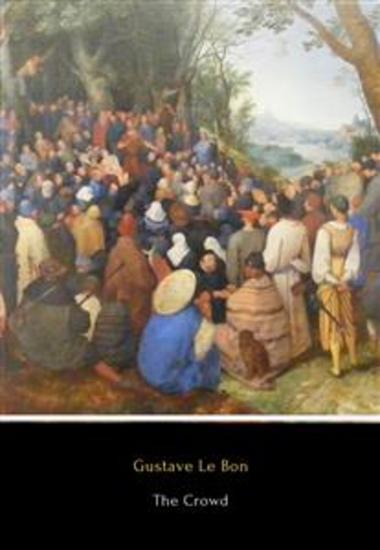
The Crowd - A Study of the Popular Mind - cover

The Crowd - A Study of the Popular Mind

Gustave Le Bon

Maison d'édition: Logos

  • 0
  • 0
  • 0

Synopsis

In The Crowd, Gustave Le Bon posits that with the rise of democracy and industrialization, it’s the unreasoning crowds who will control the affairs of the people, not kings or the elite; and these crowds are largely irrational in action, conservative in thought, violent both in act and in speech, and easily hypnotized by individuals with prestige but not intelligence.Le Bon is ultimately cynical in how he views this development in human affairs. Individuals in crowds feel anonymous and powerful, leading to destruction and violence; and the susceptibility of crowds to pure charisma means that they’re easily dominated by thuggish men of action, not wise men of foresight. People in a crowd are “a grain of sand amid other grains of sand, which the wind stirs up at will.”His conclusion is that the increasing relevance and power of crowds in modern society will lead to negative outcomes in the long term. In his view, democracy can only lead to more and more violent crowds, who demand charismatic figureheads to give them meaning.As one of the earliest examples of the study of crowd psychology, The Crowd was a direct influence on many titanic figures in 20th century history, including Theodore Roosevelt, Freud, Mussolini, Lenin, and Hitler.
Disponible depuis: 09/02/2024.
Longueur d'impression: 189 pages.

D'autres livres qui pourraient vous intéresser

  • Who Pays for Diversity? - Why Programs Fail at Racial Equity and What to Do about It - cover

    Who Pays for Diversity? - Why...

    Oneya Fennell Okuwobi

    • 0
    • 0
    • 0
    How diversity initiatives harm employees of color by turning them into workplace commodities. 
      
    Diversity programs are under attack. Should those interested in racial justice fight to keep them, or might there be another way forward? Who Pays for Diversity? reveals the costs that employees of color pay under current programs by having their racial identities commodified to benefit white people and institutions. Oneya Fennell Okuwobi proposes fresh and thoughtful ways to reorient these initiatives, move beyond tokenism, and authentically center marginalized employees. 
      
    Drawing on accounts of employees from across the workplace spectrum, from corporations to churches to universities, Who Pays for Diversity? details how the optics of diversity programs undermine employees' competence while diminishing their well-being and workplace productivity. Okuwobi argues that diversity programs have been a costly detour on the path to racial justice, and getting back on track requires solutions that provide equity, dignity, and agency to all employees, instead of defending the status quo.  
      
    "Oneya Fennell Okuwobi brilliantly uncovers the hidden costs of diversity initiatives, challenging the superficiality of such programs and the burdens they place on people of color within so-called 'diverse' environments with a powerful, evidence-backed critique. This book is an essential read for anyone committed to creating genuine racial equity in workplaces and institutions."—Mary Murphy, Herman B. Wells Endowed Professor, Indiana University
    Voir livre
  • How to: Master 10 Sentence Patterns in Chinese - Learning Chinese through massive practice - cover

    How to: Master 10 Sentence...

    Letitia Wu

    • 0
    • 0
    • 0
    Welcome to How to: Master 10 Sentence Patterns in Chinese! This is an audio version of the same-named video course.Your dedication to learning a new language, which I admire as your instructor, is greatly appreciated!!When it comes to learning Chinese, this course is ideal for those who are completely new to the language, or those who have learned a few basic phrases like "ni hao (Hello)."What is the most critical aspect of mastering a foreign language?It all comes down to practice!Massive practice is the best way to learn Chinese. This is what we'll be doing in this course, as well.* You will practice saying the new words and expressions over and over again until you are confident in your ability to pronounce them correctly in our course.* In order to make sure you fully understand the sentence patterns, you'll have plenty of opportunities to put what you've learned to use right away. As a result, you'll know if you've grasped the information correctly.* We'll do a lot of testing to make sure you've mastered all of the vocabulary and expressions.After learning this course:* You will master ten common Chinese sentence patterns.* You will have a good understanding of the fundamental structure of Chinese sentences.* You will be able to correctly pronounce and use Chinese words and expressions.So if you are a complete beginner in Chinese, get the course right away, and I will be there to help you.
    Voir livre
  • A Rare Recording of Cultural Anthropologist Margaret Mead - cover

    A Rare Recording of Cultural...

    Margaret Mead

    • 0
    • 0
    • 0
    Margaret Mead (December 16, 1901 - November 15, 1978) was an American cultural anthropologist, author and speaker, who appeared frequently in the mass media in the 1960s and 70s. She earned her bachelor's degree at Barnard College and her M.A. and Ph.D. degrees from Columbia. Mead served as president of the American Association for the Advancement of Science in 1975. Mead was a communicator of anthropology in modern American and Western culture and was often controversial as an academic. Her reports detailing the attitudes towards sex in South Pacific and Southeast Asian traditional cultures influenced the 1960s sexual revolution. She was a proponent of broadening sexual conventions within the context of Western cultural traditions. The following recording is from a 1959 tv interview.
    Voir livre
  • Hypnosis diet for losing weight forever - A guided meditation - DST Hypno with Stu Newman - cover

    Hypnosis diet for losing weight...

    Stuart Newman

    • 0
    • 0
    • 0
    If you are looking for a safe, effective and permanent way to lose weight, then the DST Hypno with Stu Newman is an excellent choice.  
    This hypnosis diet program offers a unique approach to losing weight that works with your subconscious mind.  
    It helps you break unhealthy habits and replace them with positive ones so that you can achieve long-term success in maintaining your ideal bodyweight.  
    The sessions are designed to be both enjoyable and comfortable, making it easier for anyone who wants to make lasting changes in their lifestyle without having the stress of counting calories or following strict diets.  
    With this program, there's no need to worry about yo-yo dieting or feeling deprived - just trust yourself and let Stu Newman guide you on your journey towards achieving sustainable results!
    Voir livre
  • The Mystique of Opium - cover

    The Mystique of Opium

    Donald Wigal

    • 0
    • 0
    • 0
    Opium used to have the same importance in international economy and state-led strategies as petrol has today. It became the basis for trade with isolationist China as soon as the Opium Wars obtained trading rights for Western Companies. International strategies for personal reveries… 19th-century European writers were to begin praising this “midnight fairy”. This book offers a tastefully illustrated history of this toxic substance, its paraphernalia and era.
    Voir livre
  • The Cultural Revolution - A Captivating Guide to a Decade-Long Upheaval in China Unleashed by Mao Zedong to Preserve Chinese Communism - cover

    The Cultural Revolution - A...

    Captivating History

    • 0
    • 0
    • 0
    If you want to discover the captivating history of the Cultural Revolution, then keep reading...
    
    The Cultural Revolution, known in full as the "Great Proletarian Cultural Revolution," was launched by Mao Zedong, the chairman of the Communist Party of China, as a means of quashing capitalism in China. He wanted to ensure that the desire for a communist government would remain strong in the country long after his death. Like other previous leaders who attempted to continue to rule after their death, his attempt did not work out quite the way he had planned. Over the course of a decade, from the summer of 1966 to 1976, Mao Zedong implemented a number of changes that have led him to be known as one of the most brutal tyrants of the modern age. It is estimated that between 500,000 to two million Chinese people, although numbers can go as high as twenty million, died as a direct result of Zedong's Cultural Revolution. It also resulted in millions of people being imprisoned, displaced, and tortured in an attempt to cement Mao Zedong's reputation as the leader of the communist world.
    In The Cultural Revolution:  A Captivating Guide to a Decade-Long Upheaval in China Unleashed by Mao Zedong to Preserve Chinese Communism, you will discover topics such as:
    
    -  Mao Zedong's Early Life, Rise to Power, and the Government Upheaval That Changed China during the First Half of the 20th Century 
    -  The Suspicion Behind the United Face 
    -  The Five-Year Plan, the Great Leap Forward, and the Events Leading to the Cultural Revolution 
    -  fighting the Capitalism of the West 
    -  The Introduction of Revolution 
    -  The Red Guards 
    -  July 20th Incident 
    -  Border Clashes with the Communist Soviets 
    -  Lin Biao – The Successor and Opponent 
    -  Health Issues and Slipping Grip on the Revolution 
    -  The 10th Congress and the Shifting of Power 
    -  Mass Killings in China and Devastation in Northern China 
    -  End of the Cultural Revolution 
    -  Lasting Effects 
    -  And much, much more! 
     So if you want to learn more about the Cultural Revolution, scroll up and click the "add to cart" button! 
    Voir livre