Join us on a literary world trip!
Add this book to bookshelf
Grey
Write a new comment Default profile 50px
Grey
Subscribe to read the full book or read the first pages for free!
All characters reduced
How to Appreciate Music - cover

How to Appreciate Music

Gustav Kobbé

Publisher: DigiCat

  • 0
  • 0
  • 0

Summary

In "How to Appreciate Music," Gustav Kobbé artfully guides readers through the intricate landscape of music, blending a deep historical context with a personal, accessible style. Written during the early 20th century, the book serves as an essential primer, demystifying musical terminology and theory for the layperson. Kobbé's analysis spans various genres, illustrating not only the technical aspects of music but also its emotional depth and cultural significance, offering insights that resonate with both novice listeners and seasoned aficionados alike. Gustav Kobbé, renowned for his contributions to musical criticism and education, was motivated by his passion for making music accessible to all. His extensive background in musicology and personal connections with notable composers of his time enriched his perspective, enabling him to convey complex concepts in a relatable manner. Kobbé's desire to foster a deeper appreciation for music is palpable throughout the text, reflecting his belief in the transformative power of musical experience. This indispensable guide is highly recommended for anyone seeking to deepen their understanding of music. Kobbé's engaging prose invites readers to explore melodies and harmonies with fresh ears, enhancing their listening experience and opening up a world of musical enjoyment.
Available since: 09/16/2022.
Print length: 167 pages.


Other books that might interest you

  • Life Belongs to the Loud - cover

    Life Belongs to the Loud

    Forrest Lonefight

    • 0
    • 0
    • 0
    Azul Morgan, a young Native / Indigenous woman is the next rock star to break. Trapped in M-town, Iowa during the "Next Seattle" Midwest Music Scene explosion during the aftermath of 9/11, she takes her guitar named, Mocha, & her composition notebook, The Bastard Chronicle, to write the greatest songs ever & form the perfect band. 
    Through the chaos she finds her tribe outside her native tribal roots in two amazing dudes, Rick, a womanizing drummer/singer, and Jesus, a cross-dressing guitarist. The three find the musical chemistry they've been looking for. Their unique new band are poised to take over the world-at-war. Azul writes about it all in The Bastard Chronicle, in her hilarious voice, as her past, present, & future collide in a coming-of-age story never told before in an era of the music scene when anything was possible. 
    This is author Forrest Lonefight's debut novel.
    Show book
  • The Amazing Adventures of a Marginally Successful Musician - cover

    The Amazing Adventures of a...

    Bill Cinque

    • 0
    • 0
    • 0
    5000 GIGS.  
    400+ FILM AND TV PLACEMENTS.  
    45 YEARS IN MUSIC. 
    These are some of the bullet points in the resume of author/musician Bill Cinque. THE AMAZING ADVENTURES OF A MARGINALLY SUCCESSFUL MUSICIAN is an educational and entertaining look at the world of music. 
      
    Honest, insightful and often humorously brutal, Cinque speaks to the beginner, the seasoned pro and the non-musician “civilian” in a unique and refreshing voice about the rehearsals, recordings and rejections in the life of a self-described “blue collar, working class musician.” 
      
    "I live on a strict diet of pizza and Rockford Files reruns. For the sake of time and energy, I’ll answer all the other pertinent questions that anyone might have in short order. Briefs, not boxers. Mary Ann, not Ginger. Yankees, not Mets. Giants, not Jets. Tea, not coffee."
    Show book
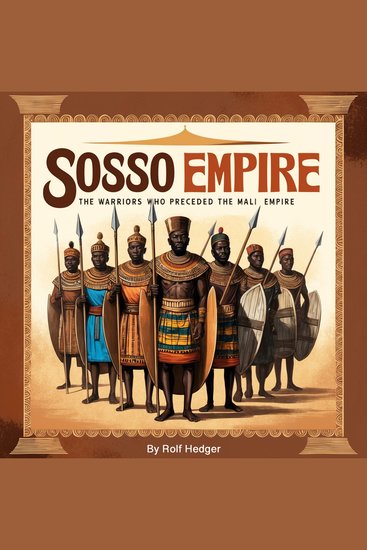
  • Sosso Empire - The Warriors Who Preceded the Mali Empire - cover

    Sosso Empire - The Warriors Who...

    Rolf Hedger

    • 0
    • 0
    • 0
    The Sosso Empire emerged during a period of great upheaval in West Africa, following the decline of the once-powerful Ghana Empire. The Sosso people, a group of warriors and rulers, capitalized on the weakening of Ghana to establish their dominance in the region. Their rise was marked by military aggression, strategic leadership, and a desire to control the lucrative trade routes that had long been the backbone of West African wealth. 
    The origins of the Sosso people remain somewhat obscure, but they were likely a subgroup within the greater Soninke-speaking population that had once formed the core of the Ghana Empire. As Ghana’s power waned due to external invasions and internal struggles, smaller states sought to assert their independence. The Sosso, led by a series of ambitious leaders, were among the most successful in carving out a new political and military identity for themselves. 
    One of the most defining moments in the rise of the Sosso Empire was the ascent of Sumanguru Kanté, a warrior-king whose leadership transformed Sosso into a dominant force. Sumanguru’s reputation as a ruthless and determined leader spread quickly. He capitalized on the disintegration of Ghana by taking control of its former capital, Koumbi Saleh, and imposing his rule over the surrounding regions. His conquest of Ghana marked a shift in power, with Sosso assuming the role of the dominant state in the region.
    Show book
  • Franklinland - cover

    Franklinland

    Lloyd Suh

    • 0
    • 0
    • 0
    This modern, comic take on the American Revolution puts the spotlight on the relationship between the brilliant and domineering Ben Franklin and his son William. As Ben plants the seeds of a new republic, King George III appoints William as Royal Governor of New Jersey - a change in affairs that creates a revolutionary family rift. 
     
    Includes a conversation with playwright Lloyd Suh. 
     
    Recorded at The Invisible Studios, West Hollywood in November 2021. 
     
    Franklinland is part of L.A. Theatre Works’ Relativity Series of science-themed plays. Lead funding for the Relativity Series is provided by the Alfred P. Sloan Foundation, bridging science and the arts in the modern world. 
     
    Directed by Anna Lyse Erikson 
    Producing Director: Susan Albert Loewenberg 
     
    An L.A. Theatre Works full-cast recording starring: 
    Gregory Harrison as Benjamin Franklin 
    Larry Powell as William Franklin 
    Kurt Kanazawa as William Temple Franklin 
     
    Senior Producer: Anna Lyse Erikson 
    Prepared for audio by Mark Holden for The Invisible Studios, West Hollywood 
    Recording Engineer, Editor and Mixer: Charles Carroll. 
    Sound Design: Charles Carroll and Austin Haltermann 
    Senior Radio Producer: Ronn Lipkin 
    Foley Artist: Jeff Gardner
    Show book
  • Medieval Japan - Samurai and Shoguns - cover

    Medieval Japan - Samurai and...

    Harris Ropes

    • 0
    • 0
    • 0
    The rise of feudal Japan marked a significant turning point in the nation's political and social history. Beginning in the late 8th to early 9th centuries, the centralized power of the imperial court in Kyoto began to wane. As emperors became more ceremonial figures, real power shifted into the hands of powerful landowning families and military clans in the provinces. These regional lords, or daimyo, started to assert control over their own territories, gradually weakening the authority of the imperial government. 
    This period of decentralization gave birth to a new system where local warlords governed through a network of vassals and military retainers. In return for loyalty and service, these retainers were granted land or a share in the profits from agricultural production. This land-based reward system laid the foundation for the feudal structure that would define medieval Japan for centuries to come. Unlike in Europe, where feudalism was based on strict legal contracts, Japan’s version emphasized personal loyalty and honor, often backed by military strength. 
    The emergence of powerful clans such as the Minamoto and Taira further accelerated the move toward feudal governance. Their rivalry culminated in the Genpei War (1180–1185), a brutal conflict that ultimately led to the downfall of the Taira clan and the rise of the Minamoto. In 1192, Minamoto no Yoritomo was appointed Seii Taishogun, or Shogun, by the emperor, establishing the first shogunate in Kamakura. This event marked the formal beginning of military rule in Japan and the creation of a dual-government system, where the emperor remained as a symbolic figure while the shogun held actual power.
    Show book
  • Johann Sebastian Bach - Music Album & Biography - The Violin Concerto in A minor BWV 1041 - cover

    Johann Sebastian Bach - Music...

    Herbert Francis Peyser

    • 0
    • 0
    • 0
    Johann Sebastian Bach - Music & Biography 
     
     
    Track List 
     
    1) Violin Concerto in A minor, BWV 1041 - Complete Performance 
    The Alsace Baroque Orchestra 
     
    2) J.S Bach - Concerto En La Mineur - I. Allegro 
    European Archive 
     
    3) J.S Bach - Concerto En La Mineur - II. Andante 
    European Archive 
     
    4) J.S Bach - Concerto En La Mineur - III. Allegro assai 
    European Archive 
     
    5) Foreword 
     
    06) Part 1: Opening; Son Of A Court Musician; Early Years In School; Student At Lueneburg; Organist At Arnstadt 
     
    07) Part 2: Inspiration From The Master, Buxtehude; Year At Muehlhausen; Weimer 
     
    08) Part 3: Kapellmeister With Prince Leopold; Leipzig And The St. John Passion; Bach’s Greater Work; St. Matthew Passion And B MinorMass; Visit To Frederick The Great And Later Works; Death
    Show book