Join us on a literary world trip!
Add this book to bookshelf
Grey
Write a new comment Default profile 50px
Grey
Subscribe to read the full book or read the first pages for free!
All characters reduced
Works and Customs in Palestine Volume III - From Harvest to Flour Harvesting Threshing Winnowing Sifting Storing Grinding - cover

Works and Customs in Palestine Volume III - From Harvest to Flour Harvesting Threshing Winnowing Sifting Storing Grinding

Gustaf Dalman

Translator Robert Schick

Publisher: Al Nasher Technical Services

  • 0
  • 0
  • 0

Summary

Volume III, continues where Volume II left off, with the harvest up to the milling and storing of the flour. It starts with the harvest weather, the human work force, the various harvest tools, continues with the work on the threshing floor, the threshing tools, the production of flour and groats together with the tools used, as well as the different kinds of storage equipment.
Available since: 05/16/2024.
Print length: 476 pages.

Other books that might interest you

  • Money - The Shaper of Civilisation - cover

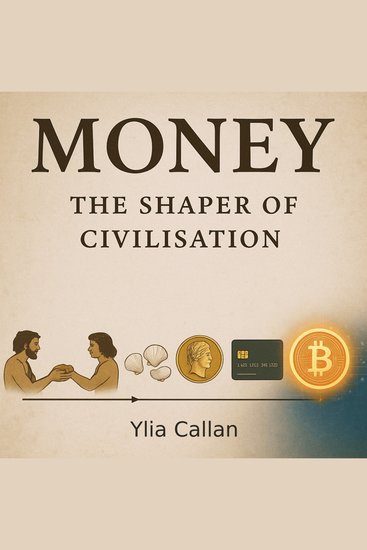
    Money - The Shaper of Civilisation

    Ylia Callan

    • 0
    • 0
    • 0
    This audiobook is narrated by an AI Voice.   
    Money – The Shaper of Civilisation takes listeners on a sweeping journey through the history, power, and future of money. From the ancient days of barter and shells as tokens of exchange, to the dominance of gold and silver, and the revolutionary rise of paper banking systems, this audiobook reveals how money has shaped societies, economies, and even empires. 
    Uncover the hidden forces behind debt, war, and the end of the gold standard, and explore how inflation reshapes our perception of wealth. Step into the digital age with a clear-eyed look at global currencies, the promise and pitfalls of Bitcoin and crypto, and the uncertain but fascinating future of money in an increasingly interconnected world. 
    Whether you’re a history enthusiast, an economics student or simply curious about the forces shaping modern civilisation, this audiobook offers both insight and foresight into humanity’s most powerful invention: money itself.
    Show book
  • Disaster Nationalism - The Downfall of Liberal Civilization - cover

    Disaster Nationalism - The...

    Richard Seymour

    • 0
    • 1
    • 0
    The rise of the new far right has left the world grappling with a profound misunderstanding. While the spotlight often shines on the actions of charismatic leaders, the true peril lies elsewhere. Defeating these people will not stem the tide driving them forward. They are merely the embodiment of profound forces that are rarely understood. Propelled through the vast networks of social media and fueled by far-right influencers, enthralled by images of disaster and fantasies of doom, they have emerged from a reservoir of societal despair, fear, and isolation. Within this seething cauldron, we witness not only the surge of far-right political movements but also the sparks of individual and collective violence against perceived enemies, from 'lone wolf' killers to terrifying pogroms. Should a new fascism emerge, it will coalesce from these very elements. This is disaster nationalism. 


    Richard Seymour delves deep into this alarming development in world politics, dissecting its roots, its influencers, and the threats it poses. With meticulous analysis and compelling storytelling, Seymour offers a stark warning. The battle against disaster nationalism is not just political; it is a struggle for our collective soul and the future of civilization itself. Unless we understand the deeper forces propelling the far-right resurgence, we have little chance of stopping it.
    Show book
  • Chinese Civil War - Nationalists vs Communists and the Birth of Modern China (1927–1950) - cover

    Chinese Civil War - Nationalists...

    Daniel Wrinn

    • 0
    • 0
    • 0
    The Chinese Civil War was a decades-long battle between the Nationalists and Communists that not only reshaped China but also sent shockwaves across the world. 
    In this compelling audiobook, you'll be guided through the war’s pivotal early battles, the devastating impact of the Japanese invasion during World War II, and the final confrontation that forced Chiang Kai-shek to retreat to Taiwan. Through concise yet thorough narration, you'll explore the ideologies, strategies, and global consequences of this monumental conflict, which became a defining moment in Cold War history. 
    In this audiobook, you will discover:The political and social upheaval that led to the fall of the Qing Dynasty.The rise of the Kuomintang and the Chinese Communist Party.The Long March and Mao Zedong’s rise to power.The impact of foreign intervention from Japan, the Soviet Union, and the United States.The decisive battles and the founding of the People’s Republic of China.The enduring impact on global politics, particularly the tension between China and Taiwan. 
    Whether you're a history enthusiast or curious about the complex forces that shaped modern China, this audiobook provides an insightful journey through a conflict that continues to shape global relations today.
    Show book
  • German Made Easy - Beginner - Volume 2 of 3 - cover

    German Made Easy - Beginner -...

    Lingo Wave

    • 0
    • 0
    • 0
    We broke our new series on learning German down into different learning stages. Start with the "Lower Beginner" books followed by the "Beginner" and "Upper Beginner" books. Next, progress to the "Intermediate" series, then test and reinforce your knowledge with the "Conversations" series. 
    This audiobook is divided into units.While it provides different learning patterns and accommodates various needs, this audiobook focuses on helping you improve your ability to understand, speak, and memorise German. The sample will give you a taste of what you can look forward to. 
    In Unit 1 you will hear German decoded with each syllable spoken very slowly and clearly with repetition. Immediately before each sentence is spoken, you will hear the translation, so you will always understand what is being said. 
    Unit 2 focuses solely on increasing your listening ability, which will improve your abilities to engage in dialogue with a native German speaker. This chapter requires you to listen very carefully to nuances in the language. 
    By Unit 3 you will already notice progress in your abilities to speak and understand German. The spoken translation is followed by two repetitions in German at a completely natural speed. While you are learning to process naturally spoken German, Units 3 and 4 will help you memorise new vocabulary and full sentences. 
    In Unit 5 you can test yourself on how much you have learned. If you are having difficulties, we suggest you revisit the listening, speaking, or memorisation section of Units 1, 2 3 or 4, according to what you need more help with. 
    Topics covered in this book: 
    1. Asking about family 
    2. Asking about relationship status 
    3. Expressing frequency 
    4. Talking about spare time activities and hobbies 
    5. Using quantifiers/determiners 
    6. Talking about preference 
    7. Talking about abilities 
    8. Talking about location of places 
    9. Describing appearance 
    ...
    Show book
  • The Power of Cute - cover

    The Power of Cute

    Anonymous

    • 0
    • 0
    • 0
    This audiobook narrated by acclaimed British actor Anthony Head explores cuteness and its immense hold on us, from emojis and fluffy puppies to its more uncanny, subversive expressions
    
    Cuteness has taken the planet by storm. Global sensations Hello Kitty and Pokémon, the works of artists Takashi Murakami and Jeff Koons, Heidi the cross-eyed opossum and E.T.—all reflect its gathering power. But what does "cute" mean, as a sensibility and style? Why is it so pervasive? Is it all infantile fluff, or is there something more uncanny and even menacing going on—in a lighthearted way? In The Power of Cute, Simon May provides nuanced and surprising answers.
    
    We usually see the cute as merely diminutive, harmless, and helpless. May challenges this prevailing perspective, investigating everything from Mickey Mouse to Kim Jong-il to argue that cuteness is not restricted to such sweet qualities but also beguiles us by transforming or distorting them into something of playfully indeterminate power, gender, age, morality, and even species. May grapples with cuteness's dark and unpindownable side—unnerving, artful, knowing, apprehensive—elements that have fascinated since ancient times through mythical figures, especially hybrids like the hermaphrodite and the sphinx. He argues that cuteness is an addictive antidote to today's pressured expectations of knowing our purpose, being in charge, and appearing predictable, transparent, and sincere. Instead, it frivolously expresses the uncertainty that these norms deny: the ineliminable uncertainty of who we are; of how much we can control and know; of who, in our relations with others, really has power; indeed, of the very value and purpose of power.
    The Power of Cute delves into a phenomenon that speaks with strange force to our age.
    Show book

  • Germany Between the World Wars: The History and Legacy of the Weimar Republic and Nazi Germany in the Interwar Period - cover

    Germany Between the World Wars:...

    Editors Charles River

    • 0
    • 0
    • 0
    The Weimar Republic has become a byword for a failed, tragic, political experiment. The official period of its existence, 1919-1933, marked the inter-war years in Germany and their related uncertainty, chaos and the state’s ultimate collapse. Historians have found the roots of Nazism embedded in the Weimar years and that in the final analysis, Weimar politicians voluntarily handed over power to the man who wrought destruction on an epic scale, Adolf Hitler. Yet the Weimar era encapsulated a number of trends and fissures within German society, as well as the international community. The Weimar Republic was a prisoner of events and in the long run had little power to shape them. Historians are fond of interpreting the past as a tension between human agency, that is to say decision-making, and structural developments that evade individual choices. Both these interpretations are crucial when examining the tumultuous years of Germany’s Weimar Republic. 
    The early 1930s were a tumultuous period for German politics, even in comparison to the ongoing transition to the modern era that caused various forms of chaos throughout the rest of the world. In the United States, reliance on the outdated gold standard and an absurdly parsimonious monetary policy helped bring about the Great Depression. Meanwhile, the Empire of Japan began its ultimately fatal adventurism with the invasion of Manchuria, alienating the rest of the world with the atrocities it committed.  
    It was in Germany, however, that the strongest seeds of future tragedy were sown. The struggling Weimar Republic had become a breeding ground for extremist politics, including two opposed and powerful authoritarian entities: the right-wing National Socialists and the left-wing KPD Communist Party. As the 1930s dawned, these two totalitarian groups held one another in a temporary stalemate, enabling the fragile ghost of democracy to continue a largely illusory survival for a few more years.
    Show book