Join us on a literary world trip!
Add this book to bookshelf
Grey
Write a new comment Default profile 50px
Grey
Subscribe to read the full book or read the first pages for free!
All characters reduced
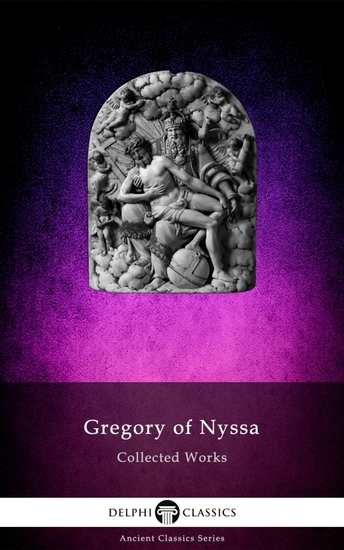
Delphi Collected Works of Gregory of Nyssa Illustrated - cover

Delphi Collected Works of Gregory of Nyssa Illustrated

Gregory of Nyssa

Publisher: Delphi Publishing Ltd

  • 0
  • 0
  • 0

Summary

A fourth century Byzantine philosopher and theologian, Gregory of Nyssa was the leader of the orthodox party in controversies over the doctrine of the Trinity. First and foremost a scholar, he composed numerous theological, mystical and monastic works in which he balanced Platonic and Christian traditions. Gregory, his elder brother Basil of Caesarea and their friend Gregory of Nazianzus are collectively known as the Cappadocian Fathers. Delphi’s Ancient Classics series provides eReaders with the wisdom of the Classical world, offering both English translations and the original Greek texts.  This eBook presents Gregory’s collected works, with illustrations, informative introductions and the usual Delphi bonus material. (Version 1)

 
* Beautifully illustrated with images relating to Gregory's life and works* Features the collected works of Gregory, in both English translation and the original Greek* Concise introductions to the author* Includes William Moore’s translations previously appearing in the Nicene and Post-Nicene Fathers: Series II, 1885* Features Moore’s hyperlinked footnotes* Also includes W. K. Lowther’s scarce 1916 translation of ‘Life of Saint Macrina’* Excellent formatting of the texts* Easily locate the sections you want to read with individual contents tables* Provides a special dual English and Greek text of three major works, allowing readers to compare the sections paragraph by paragraph — ideal for students* Features two bonus biographies — discover Gregory's ancient world

 
CONTENTS:

 
The TranslationsBrief Introduction: St Gregory of Nyssa (1911)Against EunomiusAnswer to Eunomius’ Second BookOn the Holy SpiritOn the Holy Trinity, and of the Godhead of the Holy SpiritOn ‘Not Three Gods’On the FaithOn VirginityOn Infants’ Early DeathsOn PilgrimagesThe Making of ManOn the SoulThe Great CatechismFuneral Oration on MeletiusOn the Baptism of ChristLettersLife of Saint Macrina

 
The Greek TextsList of Greek Texts

 
The Dual TextsDual Greek and English Texts

 
The BiographiesThe Life and Writings of Gregory of Nyssa (1885) by William MooreSaint Gregory of Nyssa (1913) by Henri Leclercq
Available since: 03/14/2025.
Print length: 3609 pages.

Other books that might interest you

  • Iron Brigade and Stonewall Brigade The: The History of the Civil War’s Most Famous Brigades - cover

    Iron Brigade and Stonewall...

    Editors Charles River

    • 0
    • 0
    • 0
    The Eastern Theater of the Civil War saw the bloodiest and most famous battles, as well as the biggest losses, giving the Iron Brigade a chance to demonstrate its mettle during legendary confrontations with Robert E. Lee’s Army of Northern Virginia, particularly at the battles of Second Bull Run, South Mountain, Antietam, and Gettysburg. In fact, the brigade suffered the highest percentage of casualties of any brigade in the Civil War, rendering it almost incapable of maintaining a fighting force by June 1864, during the middle of Ulysses S. Grant’s Overland Campaign. 
    General Thomas Jonathan Jackson and his brigade earned the nickname “Stonewall” at First Manassas by turning the tide of that battle, and they would become known as the legendary foot cavalry by bottling up 3 different Union armies in the Shenandoah Valley in 1862. Although Stonewall Jackson and the Stonewall Brigade may share the most famous nickname to come out of the Civil War, it’s still unclear whether Barnard Bee, the general who provided the legendary name at First Manassas, meant it as a complaint that they were not moving or as a compliment for standing resolute in the heat of battle. 
    Regardless, the Stonewall Brigade went on to fight in every major battle in the Eastern theater of the American Civil War, to the extent that of the 6,000 men who fought with the brigade over the course of four years, less than 200 remained by the time General Robert E. Lee surrendered at Appomattox Courthouse on April 9, 1865. They were organized, trained, and mentored by one of the most revered military leaders in American history, and they made a decisive impact on battles like First Manassas, the 1862 Valley Campaign, and Chancellorsville. The brigade was virtually a spent force by the end of the Battle of Spotsylvania Courthouse in May 1864, which took place nearly a year after Stonewall Jackson himself had been mortally wounded at Chancellorsville.
    Show book
  • Enough - A Woman's Journey to Self-Empowerment and Wealth - cover

    Enough - A Woman's Journey to...

    Olivia Jaras

    • 0
    • 0
    • 0
    If you or a woman you know isn’t being fairly compensated for her hard work, you’ve come to the right place because mediocre isn’t good enough. Forget the career ladder. Let’s hop on the career elevator and immediately begin to achieve your professional potential.
    Show book
  • Ordinary People Extraordinary Choices: Inside Poland’s Hidden Horrors - "Unlock the gripping tales of Ordinary People Extraordinary Choices with immersive audio lessons that captivate and inspire!" - cover

    Ordinary People Extraordinary...

    Alden Merrick

    • 0
    • 0
    • 0
    Ordinary People, Extraordinary Choices: Inside Poland’s Hidden Horrors 
    ⭐⭐ Simplified Guide & Explanations Included ⭐⭐   
    Are you eager to advance in your understanding and solidify your insights into the hidden horrors of Poland’s history?   
    Looking for a comprehensive resource that covers everything necessary to grasp the profound stories of resilience amidst adversity?   
    Your search ends here!   
    This guide serves as your ultimate companion for deepening your understanding, applying your insights, and engaging in meaningful explorations. With this, you're set for an enlightening journey.   
    Updated for the latest exploration of Poland’s hidden narratives.   
    Key features of this enriched guide:   
    - Profound insights into Poland’s hidden history   
    - Detailed explanations of resilience in adversity   
    - Effective strategies for understanding and engaging with the material   
    Our guide stands out with its thorough coverage, vital for a profound comprehension of the subject. Concepts aren’t just briefly touched upon; they are explored with depth and clarity.   
    Designed with clarity and straightforward language, our guide ensures seamless transitions between topics. Say farewell to complex jargon and embrace clear, precise, and informative content.   
    So, why wait? Click the BUY NOW button, secure your guide, and commence your journey into the extraordinary stories of resilience and human choice!  
    Show book
  • Autoportrait - cover

    Autoportrait

    Jesse Ball

    • 0
    • 0
    • 0
    Jesse Ball has produced fourteen acclaimed works of deeply empathetic absurdism in poetry and fiction. Now, he offers listeners his first memoir, one that showcases his "humane curiosity" (James Wood) and invites the listener into a raw and personal account of love, grief, and memory. Inspired by the memoir Édouard Levé put to paper shortly before his death, Autoportrait is an extraordinarily frank and intimate work from one of America's most brilliant young authors. 


    The subtle power of Ball's voice conjures the richness of everyday life. In each chapter, half-remembered moments are woven together with the joys and triumphs—and the mistakes and humiliations, too—that somehow tell us who we are, why we are here. Held at the same height as tragic accounts of illness or death are moments of startling beauty, banality, or humor: "I wake in the morning, I sit, I walk long distances. If there is somewhere to swim, I may swim. If I have a bicycle, I will ride it, especially to meet someone. There is no more preparing for me to do, other than preparing for death, and I do that by laughing. Not laughing at death, of course. Laughing at myself." 


    An extraordinary memoir that reminds us what is possible, Autoportrait will leave you feeling utterly invigorated, inspired, and a little afraid.
    Show book
  • Rise of Classical Greece The: The History of the People and Events that Brought Ancient Greece to the Peak of Its Power - cover

    Rise of Classical Greece The:...

    Editors Charles River

    • 0
    • 0
    • 0
    When people think of ancient Greece, images of philosophers such as Plato or Socrates often come to mind, as do great warriors like Pericles and Alexander the Great, but hundreds of years before Athens became a city, a Greek culture flourished and spread its tentacles throughout the western Mediterranean region via trade and warfare. Scholars have termed this pre-Classical Greek culture the Mycenaean culture, which existed from about 2000-1200 B.C., when Greece, along with much of the eastern Mediterranean, was thrust into a centuries long Dark Ages. Before the Mycenaean culture collapsed, it was a vital part of the late Bronze Age Mediterranean system and stood on equal footing with some of the great powers of the region, such as the Egyptians and Hittites. 
    If anything, the collapse of the Mycenaeans was a drawn-out affair, and while the early centuries of the Dark Ages might be seen as a continuation of this trend, even in the worst years, there was a degree of continuity and even some innovations. These changes including the beginnings of the use of iron as an alternative to bronze and some religious practices that continued to be observed. Furthermore, enough remained to form the basis of a recovery in economic, cultural, and artistic aspects of life in the later stage of the era, and in the political sphere, changes necessitated by the collapse in the economic system certainly paved the way for the rise of the polis 
    During the Greek Renaissance of the 8th century the Greek alphabet developed and the earliest surviving Greek literature was composed, while in terms of art and architecture, sculptures and red-figure pottery began. Warfare changed significantly as well when the hoplite became the core infantry. Put simply, none of these developments could have occurred if the basis for these changes had not been secured during what came to be known as the Greek Renaissance.
    Show book
  • Farewell Address Oval Office - cover

    Farewell Address Oval Office

    Ronald Reagan

    • 0
    • 0
    • 0
    On January 11, 1989, Reagan gave the following farewell address to the nation from the Oval Office. The two things I’m proudest of are the economic recovery which created 19 million new jobs and that America is respected again in the world.  
    In 1980 pundits said our economic policies would cause inflation and collapse while our foreign policies would lead to war. Instead, tax cuts created “the longest peacetime expansion in our history” and “an explosion in research and new technology.” We knocked “down protectionist walls abroad instead of erecting them at home.” 
    We rebuilt our defenses and saw a new peacefulness around the globe. “Countries across the globe are turning to free markets and free speech and turning away from the ideologies of the past.” 
    I went into politics to protect something precious. “Our Constitution is a document in which ‘We the People’ tell the government what it is allowed to do. In the 1960s the government was taking our freedom with rules and regulations and confiscatory taxes.  
    People are “not free unless government is limited. There's a clear cause and effect here that is as neat and predictable as a law of physics: As government expands, liberty contracts.” 
    Are “we doing a good enough job teaching our children what America is and what she represents in the long history of the world?” “America is freedom -- freedom of speech, freedom of religion, freedom of enterprise. And freedom is special and rare.” Let’s start with more attention to American history. 
    I see America as a “shining city upon a hill” teeming with all kinds of people living in harmony, with ports humming with commerce, with doors open to anyone with the will to get here, a beacon and magnet for all who must have freedom. 
    Audio recording courtesy of the Ronald Reagan Presidential Library. 
    AspenLeafMedia.com
    Show book