Join us on a literary world trip!
Add this book to bookshelf
Grey
Write a new comment Default profile 50px
Grey
Subscribe to read the full book or read the first pages for free!
All characters reduced
The Falklands Saga - Volume 3 - cover

The Falklands Saga - Volume 3

Graham Pascoe

Publisher: Grosvenor House Publishing

  • 0
  • 0
  • 0

Summary

The Falklands Saga presents abundant evidence from hundreds of pages of documents in archives and libraries in Buenos Aires, La Plata, Montevideo, London, Cambridge, Stanley, Paris, Munich and Washington DC, some never printed before, many printed here for the first time, in English and, where different, in their original languages, Spanish, French, German, Italian, Latin or Dutch. It provides the facts to correct the fallacies and distortions in accounts by earlier authors.
It reveals persuasive evidence that the Falklands were discovered by a Portuguese expedition at the latest around 1518-19, and not by Vespucci or Magellan.
It demonstrates conclusively that the Anglo-Spanish agreement of 1771 did not contain a reservation of Spanish rights, that Britain did not make a secret promise to abandon the islands, and that the Nootka Sound Convention of 1790 did not restrict Britain's rights in the Falklands, but greatly extended them at the expense of Spain.
For the first time ever, the despairing letters from the Falklands written in German in 1824 to Louis Vernet by his brother Emilio are printed here in full, in both the original German and in English translation, revealing the total chaos of the abortive 1824 Argentine expedition to the islands.
This book reveals how tiny the Argentine settlement in the islands was in 1826-33. In April 1829 there were only 52 people, and there was a constant turnover of population; many people stayed only a few months, and the population reached its maximum of 128 only for a few weeks in mid-1831 before declining to 37 people at the beginning of 1833.
This work also refutes the falsehood that Britain expelled an Argentine population from the Falklands in 1833. That myth has been Argentina's principal propaganda weapon since the 1960s in its attempts to undermine Falkland Islanders' right to self-determination. In fact Britain encouraged the residents to stay, and only a handful left the islands.
A crucial document printed here is the 1850 Convention of Peace between Argentina and Britain. At Argentina's insistence, this was a comprehensive peace treaty which restored "perfect friendship" between the two countries. Critical exchanges between the Argentine and British negotiators are printed here in detail, which show that Argentina dropped its claim to the Falklands and accepted that the islands are British. That, and the many later acts by Argentina described here, definitively ended any Argentine title to the islands.
The islands' history is placed in its world context, with detailed accounts of the First Falklands Crisis of 1764-71, the Second Falklands Crisis of 1831-3, the Years of Confusion (1811-1850), and the Third Falklands Crisis of 1982 (the Falklands War), as well as a Falklands perspective on the First and Second World Wars, including the Battle of the Falklands (1914) and the Battle of the River Plate (1939), with extensive details and texts from German sources.
The legal status of the Falklands is analysed by reference to legal works, to United Nations resolutions on decolonisation, and to rulings by the International Court of Justice, which together demonstrate conclusively that the islands are British territory in international law and that the Falkland Islanders, who have now (2024) lived in their country for over 180 years and for nine generations, are a unique people who are holders of territorial sovereignty with the full right of external self-determination.
Available since: 02/15/2024.
Print length: 733 pages.

Other books that might interest you

  • Digital Liberty - Power Wealth and the Influence Machine - cover

    Digital Liberty - Power Wealth...

    Matt Stroud

    • 1
    • 1
    • 0
    Digital Liberty explores the imminent convergence of three pivotal themes: data, artificial intelligence and society's intricate social graph, and wars of a looming crisis that threatens to challenge the very foundations of liberal democracies.
    Show book
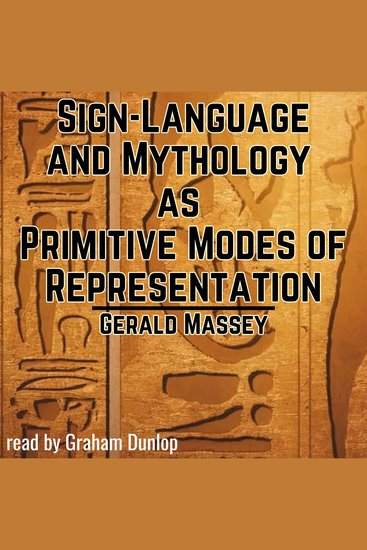
  • Sign-Language and Mythology as Primitive Modes of Representation - Ancient Egypt the Light of the World Book 1 - cover

    Sign-Language and Mythology as...

    Gerald Massey

    • 0
    • 0
    • 0
    “Myth-making Man” did not create the Gods in his own image. The primary divinities of Egypt, such as Sut, Sebek, and Shu, three of the earliest, were represented in the likeness of the Hippopotamus, the Crocodile, and the Lion; whilst Hapi was imaged as an Ape, Anup as a Jackal, Ptah as a Beetle, Taht as an Ibis, Seb as a Goose. So it was the Goddesses. They are the likenesses of powers that were super-human, not human…. A huge mistake has hitherto been made in assuming that the Myth-Makers began by fashioning the Nature-Powers in their own human likeness. –from “Sign Language and Mythology as Primitive Modes of Representation” It goes unappreciated by modern Egyptologists, but it is embraced by those who savor the concept of a “hidden history” of humanity, and those who approach all human knowledge from the perspective of the esoteric. Gerard Massey’s massive Ancient Egypt: The Light of the World–first published in 1907 and the crowning achievement of the self-taught scholar–redefines the roots of Christianity via Egypt, proposing that Egyptian mythology was the basis for Jewish and Christian beliefs. Here, Cosimo proudly presents Book 1 of Ancient Egypt, in which Massey argues that “primitive man” found no human agency in the phenomena of the natural world, which led to a woeful misinterpretation of Egyptian hieroglyphics by the Greeks and Romans as well as a misunderstanding of the essence of Egyptian mythology. As a consequence, Massey contends, a deep fount of wisdom of the ancients has been lost, and he goes on to reveal how it can be rediscovered. Peculiar and profound, this work will intrigue and delight readers of history, religion, and mythology. British author GERALD MASSEY (1828-1907) published works of poetry, spiritualism, Shakespearean criticism, and theology, but his best-known works are in the realm of Egyptology, including A Book of the Beginnings and The Natural Genesis.
    Show book
  • Bag of Tricks - Mixed Stories of Life as a San Francisco Punk in the early 80’s - cover

    Bag of Tricks - Mixed Stories of...

    Ruby Dee Philippa

    • 0
    • 0
    • 0
    Bag of Tricks by Ruby Dee Philippa 
    Mixed Stories of Life as a San Francisco Punk in the early 80’s 
    BOOK ONE OF A PUNK TRILOGY 
      
    BAG OF TRICKS is a compilation of short stories about San Francisco punks in the early 80’s. 
    These vignettes stand alone yet bleed into one another. Meet the band The Shits, their groupies The Clits, and an array of colourful characters who populate these streets, squats and punk shows. With them, we cop drugs, shoot up, dumpster dive, trip around The City, go to punk shows and slip between the cracks of society. 
    Most of the stories are true, although some of the details may or may not have happened...
    Show book
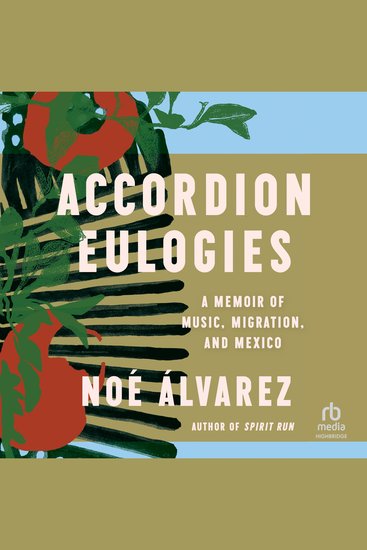
  • Accordion Eulogies - A Memoir of Music Migration and Mexico - cover

    Accordion Eulogies - A Memoir of...

    Noé Álvarez

    • 0
    • 0
    • 0
    Searching, propulsive, and deeply spiritual, Accordion Eulogies is an odyssey to repair a severed family lineage, told through the surprising history of a musical instrument 


    Growing up in Yakima, Washington, Noé Álvarez never knew his grandfather. Stories swirled around this mythologized, larger-than-life figure: That he had abandoned his family, and had possibly done something awful that put a curse on his descendants. About his grandfather, young Noé was sure of only one thing: That he had played the accordion. Now an adult, reckoning with the legacy of silence surrounding his family's migration from Mexico, Álvarez resolves both to take up the instrument and to journey into Mexico to discover the grandfather he never knew. 


    Álvarez travels across the US with his accordion, meeting makers and players in cities that range from San Antonio to Boston. He uncovers the story of an instrument that's been central to classic American genres, but also played a critical role in indigenous Mexican history. Like the accordion itself, Álvarez feels trapped between his roots in Mexico and the US. As he tries to make sense of his place in the world—as a father, a son, a musician—he gets closer to uncovering the mystery of his origins.
    Show book
  • Rest Is Resistance - Group Discussion - cover

    Rest Is Resistance - Group...

    Vines Graener

    • 0
    • 0
    • 0
    The work we do doesn’t define our worth. Imagine a world where justice includes space for rest and leisure, away from the relentless grind created by capitalism, white supremacy, and other oppressive forces. For centuries, these systems have exploited bodies for production, leading to destruction and harm by denying the inherent divinity in every human being. But now, people are waking up to this manipulation, and they’re starting to prioritize rest and healing. 
    America was built on the labor of Black and Indigenous people, whose right to rest was denied. The capitalist system grew out of violence and the theft of labor on plantations. These oppressive systems view human bodies as property, not as divine beings. We've been conditioned to believe we must work endlessly or risk falling into poverty. But there’s more beyond this narrow view.
    Show book
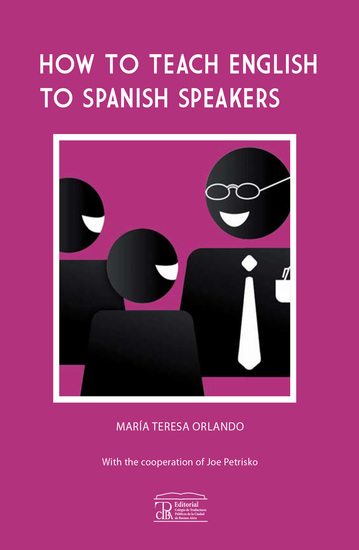
  • How to teach english to spanish speakers - cover

    How to teach english to spanish...

    María Teresa Orlando

    • 0
    • 0
    • 0
    Although there are several teaching methodology books for teachers on the market, there is little if anything specifically focused on how to teach English to Spanish speakers.  The large and growing Hispanic community in the United States that wants and needs to learn English along with the daily-increasing demand for English classes in Latin American countries underline the need for an instructional text such as this one.
     "How to Teach English to Spanish Speakers" is a comprehensive introduction to teaching . English to students with Spanish-language backgrounds.  It provides practical step-by-step guidance for new teachers and offers fresh ideas for more experienced teachers.  It is also ideal for English translators and native English speakers who wish to give English classes.  his resource book examines straightforward teaching procedures, underlying pedagogy and fundamental principles of teaching English, and includes a considerable variety of classroom and research approaches for language instruction.  It suggests practical pedagogic options while exploring various teaching methodologies, comprehensive strategies and effective methods for teaching and developing one's own distinctive teaching style.  It analyzes the crucially important qualities of an effective English teacher.  
    The most critical reason for this book is to look into what we teach, whom we teach, where we teach and, above all, how we can most successfully teach.  Through valuable insights and personal experiences of working with different learning styles, predominant intelligences and different ways of building confidence, it discusses teaching and the learning process, classroom management and different ways to improve learners' listening, speaking, reading and writing skills.  It also provides clear explanations as well as examples of class observations, lesson and unit plans, and offers reliable procedures, practical tips and activities  for teaching Spanish-speaking children, adolescents and adults from beginning to advanced language levels.------------------------------------------------------------------------------------------------
    
    Aunque hay varios libros sobre metodología de enseñanza para profesores en el mercado, hay poco o nada que esté enfocado específicamente en cómo enseñar inglés a los hispanohablantes. La numerosa y creciente comunidad hispana en los Estados Unidos que quiere y necesita aprender inglés, junto con la demanda cada vez mayor de clases de inglés en los países de América Latina, incrementan la necesidad de este práctico texto. "Cómo enseñar inglés a los Hispanohablantes" es una introducción accesible para los estudiantes de habla hispana que quieren enseñar inglés; proporciona una guía práctica paso a paso para los docentes que recién se inician y ofrece nuevas ideas para los profesores con más experiencia. También es ideal para los traductores de inglés y los nativos de dicho idioma que quieran ejercer la docencia. Este libro de consulta examina los procedimientos, la pedagogía y los principios fundamentales de los diferentes métodos e incluye una variedad considerable de enfoques de investigación para la enseñanza/aprendizaje de la lengua. Sugiere opciones pedagógicas prácticas mientras explora diversas metodologías de enseñanza, estrategias integrales y herramientas efectivas tanto para desarrollar como para aplicar el estilo propio de cada docente. También analiza las habilidades indispensables para ser un profesor de inglés eficiente y eficaz. El propósito crucial de este libro no es solamente analizar qué, a quién, dónde y para qué enseñamos, sino sobre todo, cómo podemos enseñar con más éxito . Se abarcan todos los niveles, desde principiantes hasta avanzados, para el aprendizaje de niños, adolescentes y adultos de habla hispana.
    Show book