Join us on a literary world trip!
Add this book to bookshelf
Grey
Write a new comment Default profile 50px
Grey
Subscribe to read the full book or read the first pages for free!
All characters reduced
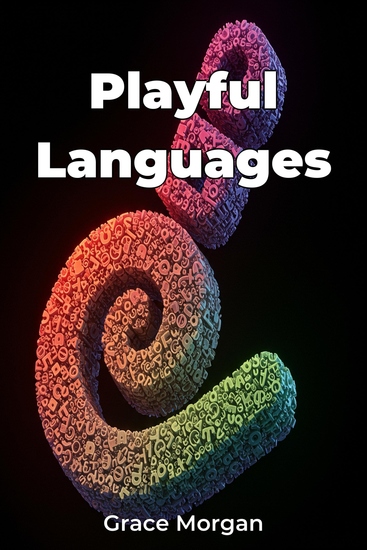
Playful Languages - cover

Playful Languages

Grace Morgan

Translator A Ai

Publisher: Publifye

  • 0
  • 0
  • 0

Summary

Playful Languages explores the fascinating intersection of language and humor, revealing how jokes, puns, and wordplay vary across cultures. The book demonstrates that humor is not universal but shaped by linguistic nuances and cultural values. For example, tongue twisters, seemingly simple, present unique phonetic challenges that tickle our funny bone, while tricky words create opportunities for comedic misunderstandings. Understanding linguistic humor enriches our appreciation for the flexibility of language and the complexities of intercultural communication.

 
The book systematically explores linguistic humor. It begins with the basics of phonetics and semantics, then examines tongue twisters, tricky words, and culturally unique jokes. By analyzing comedic expressions, the book illuminates how humor reflects societal norms and cognitive processes. The research draws from linguistic analyses, comparative studies, and experimental data. It connects to cognitive science, cultural studies, and translation studies, offering insights for language learning and bridging cultural gaps.

 
Ultimately, Playful Languages argues that studying linguistic humor enhances language acquisition and intercultural understanding. The book adopts a conversational yet informative tone, making it accessible to students of linguistics, foreign languages, and anyone intrigued by the interplay of language, humor, and culture. It shows how linguistic humor offers a playful yet profound way to explore the world.
Available since: 03/06/2025.
Print length: 74 pages.
Other books that might interest you

  • Why Intelligent People Do Stupid Things - The Paradox of Smart Decision-Making - cover

    Why Intelligent People Do Stupid...

    John Harpoon

    • 0
    • 0
    • 0
    Intelligence is often seen as the key to making sound decisions, yet many highly intelligent individuals find themselves making choices that defy logic and reason. This paradox is at the heart of why even the smartest people can sometimes act in ways that are seemingly irrational. Despite possessing vast knowledge, sharp problem-solving skills, and an ability to think critically, intelligent people often fall victim to cognitive biases, emotional triggers, and societal pressures that lead them to make poor decisions. Understanding why this happens requires an exploration into the intricate relationship between intelligence and decision-making. 
      
    At the core of this paradox lies the idea that rationality and intelligence do not always go hand in hand. While intelligence may increase the ability to process information and analyze complex scenarios, it does not always shield individuals from the cognitive biases that distort perception and judgement. In fact, many intelligent individuals are even more susceptible to these biases because they rely heavily on their analytical skills, assuming that their logic will always lead them to the right conclusion. However, this overreliance can blind them to the emotional and social factors that influence decision-making, causing them to overlook key details or make choices based on faulty assumptions. 
      
    Furthermore, decision-making is not solely a rational process; emotions play a crucial role in guiding our actions, and they can often override logic. Intelligent individuals are not immune to emotional influences such as stress, fear, or the desire for instant gratification. These emotions can cloud judgement, leading to impulsive decisions or the failure to consider long-term consequences. This is particularly true in high-pressure situations where the stakes are high, and the need to make quick decisions can push even the most intelligent person into making mistakes.
    Show book
  • The Planning Fallacy - Underestimating the Time and Costs Required for Tasks - cover

    The Planning Fallacy -...

    William Rands

    • 0
    • 0
    • 0
    The allure of optimism has been a driving force behind humanity’s greatest achievements. It propels innovation, inspires ambition, and fosters resilience in the face of adversity. Yet, this same optimism can lead us astray, particularly when it comes to planning and executing tasks. The belief that everything will unfold as envisioned, without significant setbacks or challenges, is an enticing illusion. This overconfidence, while comforting, often masks the reality of time and resource constraints, resulting in a phenomenon known as the planning fallacy. 
    At its core, the planning fallacy arises from our tendency to underestimate the time, effort, and costs required to complete tasks, regardless of past experiences. Even seasoned professionals and experienced teams are not immune to this bias, often succumbing to unrealistic timelines and budgets. The hidden costs of this fallacy ripple through personal lives, businesses, and large-scale projects, leaving behind missed deadlines, financial overruns, and unmet expectations. 
    On an individual level, the planning fallacy can manifest in simple daily scenarios. People frequently underestimate how long it will take to commute, complete errands, or prepare for events. This miscalculation leads to stress, frustration, and a constant feeling of being behind. In professional settings, it becomes even more pronounced, as teams juggle complex projects with high stakes. Unrealistic deadlines can push employees to their limits, fostering burnout and reducing overall productivity.
    Show book
  • Arabic Made Easy - Lower beginner - Volume 1 of 3 - cover

    Arabic Made Easy - Lower...

    Lingo Wave

    • 0
    • 0
    • 0
    We broke our new series on learning Arabic down into different learning stages. Start with the “Lower Beginner” books followed by the “Beginner” and “Upper Beginner” books. Next, progress to the “Intermediate” series, then test and reinforce your knowledge with the “Conversations” series.  
    This audiobook is divided into units. While it provides different learning patterns and accommodates various needs, this audiobook focuses on helping you improve your ability to understand, speak, and memorise Arabic. The sample will give you a taste of what you can look forward to.  
    In Unit 1 you will hear Arabic decoded with each syllable spoken very slowly and clearly with repetition. Immediately before each sentence is spoken, you will hear the translation, so you will always understand what is being said. Unit 2 focuses solely on increasing your listening ability, which will improve your abilities to engage in dialogue with a native Arabic speaker. This chapter requires you to listen very carefully to nuances in the language.  
    By Unit 3 you will already notice progress in your abilities to speak and understand Arabic. The spoken translation is followed by two repetitions in Arabic at a completely natural speed. While you are learning to process naturally spoken Arabic, Units 3 and 4 will help you memorise new vocabulary and full sentences. In Unit 5 you can test yourself on how much you have learned. If you are having difficulties, we suggest you revisit the listening, speaking, or memorisation section of Units 1, 2 3 or 4, according to what you need more help with. 
    Topics covered in this book: 
    - Greeting 
    - Asking personal information 
    - Asking about people or things 
    - Talking about the current time and date 
    - Talking about the location of things 
    - Describing things  
    - Likes and dislikes 
    - Talking about abilities 
    - Talking about appearance 
    - Talking about personality 
    - Talking about the weather 
    - Talking about food 
    - Talking about the house
    Show book
  • The Dunning-Kruger Effect - Why Incompetent Individuals Overestimate Their Abilities - cover

    The Dunning-Kruger Effect - Why...

    William Rands

    • 0
    • 0
    • 0
    The Dunning-Kruger effect is a cognitive bias that leads individuals with limited knowledge or ability in a particular area to overestimate their competence. Named after psychologists David Dunning and Justin Kruger, who first identified this phenomenon in 1999, the effect reveals a paradox in human cognition: the less people know, the more likely they are to believe they know everything. Conversely, experts in a field tend to underestimate their abilities, assuming that others possess the same level of expertise. This bias is not only fascinating from a psychological standpoint but also carries significant implications for personal, professional, and societal development. 
    At the core of the Dunning-Kruger effect is the misjudgment of one’s capabilities, which stems from a lack of metacognitive awareness—the ability to assess one’s own knowledge and skills accurately. Incompetent individuals, lacking the expertise required to recognize their deficiencies, are unable to discern how little they know. This lack of insight leads them to overestimate their abilities and make decisions based on flawed reasoning. As a result, they may unknowingly engage in behaviors that exacerbate their incompetence, further reinforcing their false sense of expertise. 
    One of the most compelling aspects of the Dunning-Kruger effect is its broad applicability across various fields. From everyday social interactions to high-stakes decision-making in professional environments, this cognitive bias affects people at all levels. In the workplace, for example, leaders with limited knowledge in a specific domain may make decisions that negatively impact their teams, while employees with expertise may remain silent or defer to those who appear more confident. In education, students and teachers alike may fall victim to this effect, with the former believing they fully understand a topic despite limited comprehension, and the latter overestimating their teaching efficacy.
    Show book
  • Today's Authors Series: A Discussion between Katherine Kellgren and LA Meyer - Today's Authors Series - cover

    Today's Authors Series: A...

    L. A. Meyer

    • 0
    • 0
    • 0
    Enjoy this fascinating twenty-four minute-long discussion between two artists at the top of their craft—LA Meyer, author and creator of the Bloody Jack series of novels, and narrator extraordinaire Katherine Kellgren, who voices the entire audiobook series. At last count, the Bloody Jack audiobooks have won three Odyssey Honor awards, four Audie Awards, and have made numerous 'Best of' lists.
    Show book
  • Learn Afrikaans With Music - cover

    Learn Afrikaans With Music

    Innovative Language Learning, ...

    • 0
    • 0
    • 0
    Can learning Afrikaans be as simple as listening to music?


    And as easy as remembering song lyrics?


    Just think. You remember song lyrics because lyrics are catchy, repeated throughout the song, and go with the music, right? Now, if you stuck in Afrikaans, you'd easily learn Afrikaans words and phrases the same way!


    So, yes, learning Afrikaans is as easy as listening to music' with the Learn Afrikaans With Music Audiobook.


    Just press play, and you'll hear Afrikaans words and phrases repeated to the beat of upbeat and cheerful music. And' follow along!


    You'll learn 180+ most common Afrikaans words and phrases' while relaxing at home, or while driving to work.


    Learn Afrikaans With Music is the easiest way to start learning Afrikaans.. without getting overwhelmed by complicated explanations. Perfect for new learners with little to no language learning experience.


    What will you learn?
     
    180+ Words & Phrases Including...
     
    - Basic Greetings
     
    - Numbers
     
    - Common Questions and Answers
     
    - Parts of the Body & Talking About Your Wellbeing
     
    - Common Hobbies
     
    - And much more


    Learn Afrikaans With Music includes...
     
    - 15 Songs/Lessons Inside (Each is about 7 minutes long)
     
    - Fast-Paced Review Section at the End of Each Lesson
     
    - 1 Hour 50 Minutes in Total
     
    - Accompanying PDF eBook with the Words, Phrases and Translations


    Download the PDF and read along
    Show book