
Join us on a literary world trip!
Add this book to bookshelf
Grey
Write a new comment Default profile 50px
Grey
Subscribe to read the full book or read the first pages for free!
All characters reduced
Summary of The Menopause Brain by Lisa Mosconi PhD and Maria Shriver - New Science Empowers Women to Navigate the Pivotal Transition with Knowledge and Confidence - cover

Summary of The Menopause Brain by Lisa Mosconi PhD and Maria Shriver - New Science Empowers Women to Navigate the Pivotal Transition with Knowledge and Confidence

GP SUMMARY

Publisher: BookRix

  • 0
  • 0
  • 0

Summary

DISCLAIMER

This book does not in any capacity mean to replace the original book but to serve as a vast summary of the original book.

Summary of The Menopause Brain by Lisa Mosconi PhD and Maria Shriver: New Science Empowers Women to Navigate the Pivotal Transition with Knowledge and Confidence

IN THIS SUMMARIZED BOOK, YOU WILL GET:

	Chapter provides an astute outline of the main contents.
	Fast & simple understanding of the content analysis.
	Exceptionally summarized content that you may skip in the original book

Dr. Mosconi, a leading neuroscientist and women's brain health specialist, explains that menopause is a hormonal show affecting the brain, affecting body temperature, mood, and memory. She suggests using hormone replacement therapies, hormonal contraception, and lifestyle changes to overcome these challenges. She also dispels the myth that menopause signifies an end, stating that if women take care of themselves during menopause, they can emerge with a renewed, enhanced brain.
Available since: 03/17/2024.
Print length: 68 pages.

Other books that might interest you

  • Jiwan Dareya - cover

    Jiwan Dareya

    Anokh Singh Virk

    • 0
    • 0
    • 0
    Jiwan Dareya by Anokh Singh Virk is a heartfelt journey through the author’s real-life experiences. With 20 years in the military and 15 years in the Punjab Police, the writer shares personal moments—both joyful and painful—that shaped his life. The book reflects deep thoughts on society’s challenges, offering wisdom drawn from a life of service, discipline, and reflection. It’s an inspiring story of courage, struggle, and the search for peace and purpose.
    Show book
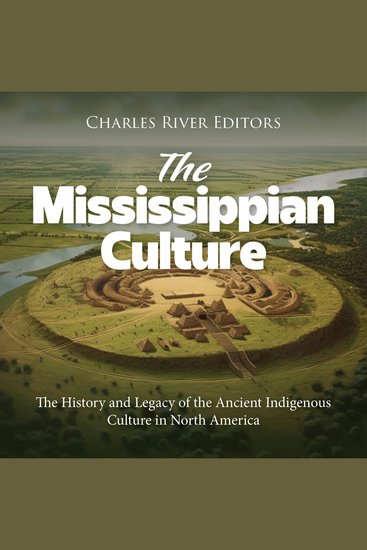
  • Mississippian Culture The: The History and Legacy of the Ancient Indigenous Culture in North America - cover

    Mississippian Culture The: The...

    Editors Charles River

    • 0
    • 0
    • 0
    When most people think of “ancient American civilizations,” the Aztec, Maya, or Inca cultures probably come to mind immediately, because the societies in Mesoamerica have left behind permanent structures for millions of visitors from around the world to see each year. At the same time, however, from about 1000-1500 CE, an equally complex culture formed along the banks of the Mississippi, Missouri, and Ohio Rivers. From Red Wing, Minnesota to Greenhouse, Louisiana, and from Spiro, Oklahoma to Macon, Georgia, societies built impressive mound structures that served as ritual platforms, burial sites, and residences for the elites. These mounds also served as the focal points of urban areas of varying sizes that were connected to each other through trade and ideology, forming a culture that modern historians have since designated the “Mississippian culture.”  
    	It has only been recently that modern archaeological, anthropological, and historical methods were utilized to create a somewhat accurate image of the Mississippian culture’s reach and importance in the wider contexts of American and world history. Today, historians have a much better understanding of many aspects of Mississippian culture, including its chronology, the religion of the people, urbanization, and how the people lived, and the fact that there were fully functioning complex societies that had sophisticated forms of government and long-distance trade networks. 	The mounds they made, which continue to serve as standing testaments to their extraordinary accomplishments, continue to be studied by experts who still have plenty of questions about the societies that produced them. But one thing’s for sure: with no evidence of a written language and a high probability that the groups spoke different languages (based on the earliest lingual patterns encountered from each region), what the Mississippian culture accomplished in the span of a few centuries is nothing short of phenomenal. 
    Show book
  • Schools of the Future - A Paradigm shift in education and society - cover

    Schools of the Future - A...

    B. Mich. Grosch

    • 0
    • 0
    • 0
    About this book: 
    The schools of the future are undergoing profound change, shaped by technological innovations, social challenges and new pedagogical approaches. Digital technologies such as AI and virtual reality enable personalized learning paths and targeted support. 
    Teachers develop into mentors who support individual and collaborative learning. Inclusion and equal opportunities become central goals, as does competency-based performance assessment instead of traditional grades. Holistic education increasingly focuses on emotional intelligence and ethical values. 
    In addition, international cooperation is becoming increasingly important in order to make education globally accessible and comparable. This transformation requires close cooperation from all those involved, as education is increasingly seen as a task for society as a whole. (Contains A I-generated texts). 
    Read by: Rosa Smith, James Miller (A.I.)
    Show book
  • The Constitution of the Confederate States of America - cover

    The Constitution of the...

    Founding Fathers

    • 0
    • 0
    • 0
    The book containing the Constitution of the Confederate States of America serves as a pivotal historical document, encapsulating the legal and governmental framework intended to govern the Confederacy during the American Civil War (1861-1865). Crafted in 1861 by representatives from states that seceded from the Union, this Constitution mirrors the U.S. Constitution in many aspects but with notable divergences, particularly its explicit protection of the institution of slavery and states' rights. It outlines the structure of the Confederate government, detailing the legislative, executive, and judicial branches, while also embedding the ideologies and socio-political ethos of the Confederacy. This document not only sheds light on the political landscape of the time but also offers insight into the ideological rifts that led to one of the most tumultuous and defining periods in American history. As a book, it serves both as a historical artifact and a tool for understanding the complexities of governance, sectionalism, and the enduring impact of these issues on the fabric of the United States.
    Show book
  • The Secret of Mental Efficiency - cover

    The Secret of Mental Efficiency

    Warren Hilton

    • 0
    • 0
    • 0
    "The Secret of Mental Efficiency" by Warren Hilton explores methods to enhance mental performance and efficiency. It delves into techniques for improving focus, concentration, and decision-making, providing valuable insights for personal development and increased productivity. Hilton's book is a guide to unlocking one's mental potential for a more efficient and successful life. Read in English, unabridged.
    Show book
  • On Writing and Failure - Or the Peculiar Perseverance Required to Endure the Life of a Writer - cover

    On Writing and Failure - Or the...

    Stephen Marche

    • 0
    • 0
    • 0
    Writing is, and always will be, an act defined by failure. The best plan is to just get used to it.
    		 
    Failure is a topic discussed in every creative writing department in the world, but this is the book every beginning writer should have on their shelf to prepare them. Less a guide to writing and more a guide to what you need to continue existing as a writer, On Writing and Failure: Or, On the Peculiar Perseverance Required to Endure the Life of a Writer describes the defining role played by rejection in literary endeavors and contemplates failure as the essence of the writer’s life. Along with his own history of rejection, Marche offers stories from the history of writerly failure, from Ovid’s exile and Dostoevsky’s mock execution to James Baldwin's advice just to endure, where living with the struggle and the pointlessness of writing is the point.
    Show book