Join us on a literary world trip!
Add this book to bookshelf
Grey
Write a new comment Default profile 50px
Grey
Subscribe to read the full book or read the first pages for free!
All characters reduced
Summary of Mao's America by Xi Van Fleet: A Survivor's Warning - cover

Summary of Mao's America by Xi Van Fleet: A Survivor's Warning

GP SUMMARY

Publisher: BookRix

  • 0
  • 0
  • 0

Summary

DISCLAIMER 
  
This book does not in any capacity mean to replace the original book but to serve as a vast summary of the original book. 
  
Summary of Mao's America by Xi Van Fleet: A Survivor's Warning 
  
IN THIS SUMMARIZED BOOK, YOU WILL GET: 
 Chapter astute outline of the main contents.Fast & simple understanding of the content analysis.Exceptionally summarized content that you may skip in the original book 
  
Xi Van Fleet, a survivor of Mao's Cultural Revolution in China, warns that the Woke Revolution is eerily repeating itself in America. She shares her personal story of escaping communism and finding freedom in America, but now sees signs of Cultural Marxism threatening her home. Using personal stories and extensive research, Xi reveals the similarities between the two revolutions, revealing that they use Marxist tactics, destroy traditional culture, weaponize youth, achieve absolute power, and lead to totalitarian rule. Xi now devotes her life to educating the American public on these similarities, as only then will they resist the communist takeover of America.
Available since: 12/21/2023.
Print length: 59 pages.

Other books that might interest you

  • Conversational Phrases Arabic Audiobook - Level 1 - Absolute Beginner - cover

    Conversational Phrases Arabic...

    ArabicPod101.com, Innovative...

    • 0
    • 0
    • 0
    Are you trying to learn Arabic…but having trouble speaking?
     
    Do you struggle coming up with your own Arabic sentences?
     
    Are you tired of not understanding how Arabic grammar works?


    If you answered yes to any of these questions, …


    ...then the Conversational Phrases Audiobook, Level 1 - Absolute Beginner is for you!


    In this beginner-level Audiobook, you will master over 25 common sentence patterns across 25 simple lessons. By the end, you’ll be able to ask common questions and answer them in your own way, all while acquiring over 100 Arabic words. 


    Most importantly, you’ll be able to have real conversations in various social situations.


    How, you may ask? Each lesson introduces a new conversation reflecting a real-world situation, including casual chats between friends as well as dialogues in more formal settings. Learning is made easy with three simple steps:


    1. Get familiar: First, you get a sample conversation and its translation.
     
    2. Understand: Then, we explain an underlying sentence pattern, so you can grasp the grammar and actually understand how the Arabic works.
     
    3. Practice: Lastly, you create your own responses… and start speaking Arabic!


    Lessons in this audiobook include:
     
    - Going Sightseeing
     
    - Going to a Restaurant
     
    - Giving Directions
     
    - Going to the Movies
     
    - Renting an Apartment
     
    And much more!


    Conversational Phrases Audiobook, Level 1 - Absolute Beginner contains:
     
    - 25 Lessons 
     
    - 4 Hours+ of Content
     
    - 1 Core Pattern Per Lesson
     
    - 100+ Arabic Vocabulary Words
     
    - 28 Page Accompanying PDF eBook


    Download the PDF and read along
    Show book
  • The Politics of Urban Development - Power Policy and Planning - cover

    The Politics of Urban...

    Lyric Vale

    • 0
    • 0
    • 0
    Urban development has long been a critical component of economic and social growth worldwide. As populations continue to increase and cities expand, the planning, management, and policies surrounding urban spaces become ever more complex. Urban development encompasses the physical, economic, and social transformation of cities, focusing on housing, infrastructure, transportation, and public spaces, while also addressing broader issues such as economic disparity, environmental sustainability, and social justice. 
    Historically, urbanization has been driven by industrialization, technological advancements, and shifts in global economic patterns. The migration of people from rural to urban areas in search of better job opportunities and living conditions has accelerated this process. As a result, cities have grown in both size and importance, becoming hubs for innovation, culture, and commerce. However, this growth has not come without challenges. Rapid urbanization often leads to overcrowded living conditions, increased pollution, traffic congestion, and the strain of public services. 
    At the heart of urban development is the relationship between power, policy, and planning. Political decisions and governmental priorities often shape the trajectory of cities, influencing everything from zoning laws and land use to infrastructure development and housing affordability. In this context, urban planning becomes not just a technical exercise, but a deeply political one, with differing interests—ranging from developers and business leaders to community groups and activists—competing for influence. The way these decisions are made can either foster inclusivity and equity or exacerbate social inequalities.
    Show book
  • Ancient Rome’s Provinces: The History of the Foreign Lands Ruled by the Roman Empire in Antiquity - cover

    Ancient Rome’s Provinces: The...

    Editors Charles River

    • 0
    • 0
    • 0
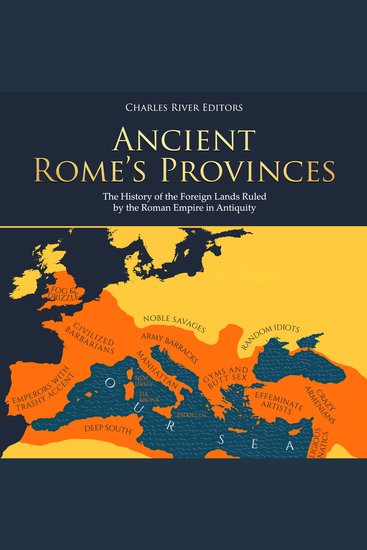
    It can be argued that Roman culture was, indeed, Graeco-Roman rather than Roman. It was the Greek language that served as the lingua franca in the Eastern Empire and much of the west including Italy. Many Greek intellectuals, including Galen, were based in Rome and the Roman aristocracy more and more came to embrace Greek literature and philosophy. Homer’s epics inspired Virgil’s Aeneid and Seneca wrote in Greek. Earlier, Scipio Africanus (236 – 183 B.C.), the epitome of the Roman martial hero, studied Greek philosophy and regarded Greek culture as the benchmark against which all others had to be judged. The Roman poet and philosopher Horace studied in Athens during the Principate and, in common with many of his class, saw that city as the intellectual centre of the world. 
    In the minds of most people today, Gaul equates to modern France. However, the vast geographical area that Caesar named Gaul, in fact, was made up of a number of very distinct regions and covered, in addition to modern-day France, Belgium, Luxembourg, parts of the Netherlands, Germany, Switzerland and Northern Italy. The Romans called the northern area of the Italian peninsula, which is now part of modern Italy, Cisalpine Gaul, or Gaul on this side of the Alps. Early Romans did not even consider this region as part of Italy and repeated incursions southwards, and the sacking of Rome itself in 390 B.C., resulted in Rome taking full control of the area in 221 B.C. and thoroughly Romanizing it to the extent that even the Celtic language totally disappeared and was replaced by Latin. The region was initially a province but by the beginning of the 1st century B.C., it had become fully integrated into the Roman heartland and became an administrative region of Italy rather than a province. 
    Show book
  • Urban Environment and Health - Sustaining Life in the City (3 in 1) - cover

    Urban Environment and Health -...

    Lyric Vale

    • 0
    • 0
    • 0
    In the rapidly urbanizing world of the 21st century, cities have emerged as the defining habitat for human existence—complex ecosystems where built environments, natural systems, social dynamics, and human health are inextricably intertwined. As urban populations continue to expand globally, the relationship between metropolitan environments and human wellbeing has become one of the most critical frontiers in our collective pursuit of sustainable, equitable development. This comprehensive exploration delves into the multifaceted domains of Urban Environmental Studies, Urban Health, and City Livability—examining how the physical, social, and ecological dimensions of urban spaces fundamentally shape population health outcomes, quality of life, and environmental sustainability. 
    The narrative of urban environmental health transcends traditional disciplinary boundaries; it encompasses the intricate connections between urban design, ecological systems, public health infrastructure, and social determinants that collectively define the healthfulness of city living. By examining the complex interplay between environmental exposures, built environment characteristics, healthcare access, and community resilience, this book illuminates how cities can function either as amplifiers of health inequities or as platforms for promoting wellbeing across diverse populations. Readers will journey through the multidimensional landscapes where urban health manifests—from the microscale of indoor air quality and neighborhood walkability to the macroscale of urban heat islands and metropolitan food systems—while exploring innovative approaches that cities worldwide are adopting to create more livable, healthy, and environmentally sustainable urban futures.
    Show book
  • Enchantment: Part VI - Deceive (Yaoi Erotic MM Romance) - cover

    Enchantment: Part VI - Deceive...

    Kai Aubrey

    • 0
    • 0
    • 0
    The vault lies deep beneath the palace. 
    Alric, the Elran dancer, opens the immense stone door, guiding Heath and Caio into the vast chamber. 
    “The ancient inhabitants of this desert imbued items with a great number of dark powers. Some of these enchantments were distinctly...sexual.” 
    Caio’s pale cheeks flush deep pink as he realizes what kind of objects are locked away here. 
    The young dancer runs his fingertips over an ominous, silver-trimmed black box, its obsidian surface glittering temptingly in the torchlight. 
    “They say it houses a spirit. A creature that can provide endless pleasure.” Alric lowers his voice. “But only a powerful mage can open it...someone like you.” 
    ***CONTAINS EXPLICIT GAY SEXUAL CONTENT*** 
    Written by Kai Aubrey. Narrated by Arcadian Audios. 
    For more content, visit www.KaiAubrey.com.
    Show book
  • Julio-Claudian Dynasty The: The History and Legacy of the First Family to Rule the Ancient Roman Empire - cover

    Julio-Claudian Dynasty The: The...

    Editors Charles River

    • 0
    • 0
    • 0
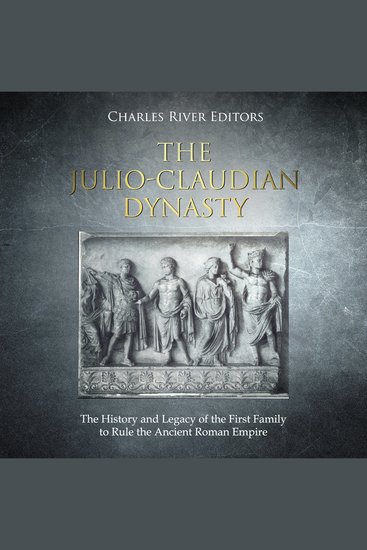
    The importance of Gaius Julius Caesar Augustus (or as he was known from birth, Gaius Octavius “Octavian” Thurinus) to the course of Western history is hard to overstate. His life, his rise to power, his political, and his social and military achievements all laid the foundations for the creation of an empire which would endure for almost five centuries, and whose traditions, laws, architecture and art continue to influence much of Europe and the world today. Octavian was the first true Roman Emperor, and the first man since the Etruscan Tarquins five centuries earlier to establish a successful hereditary ruling dynasty in what had been a proud Republic for over half a millennium.  
    Tiberius’s life soon became caught up with Augustus’s as the emperor worked to found and establish a dynasty, but it is unclear if Tiberius ever really wanted to be part of Augustus’s plans or inherit imperial power - Tiberius was known as a man who schemed and planned, but he was also a scholar and showed a marked desire throughout his life to retreat and escape the demands of power.  
    All of Rome’s poor rulers pale in comparison to Gaius Julius Caesar Augustus Germanicus, a young man remembered by posterity as Caligula. Given how bad some of Rome’s emperors were, it’s a testament to just how insane and reviled Caligula was that he is still remembered nearly 2,000 years later as the epitome of everything that could be wrong with a tyrant.  
    What makes Claudius such a surprisingly effective emperor, aside from his strange route to power, was that he was considered physically and mentally incompetent for political life. At the same time, Claudius managed to take the throne against the will of the Senate thanks to the support of the Praetorian Guard. 
    Claudius’s successor, Nero, ranks among the very worst of the Caesars, alongside the likes of mad Caligula, slothful Commodus, and paranoid Domitian.
    Show book