Join us on a literary world trip!
Add this book to bookshelf
Grey
Write a new comment Default profile 50px
Grey
Subscribe to read the full book or read the first pages for free!
All characters reduced
Summary of Check & Mate by Ali Hazelwood - cover

Summary of Check & Mate by Ali Hazelwood

GP SUMMARY

Publisher: BookRix

  • 0
  • 0
  • 0

Summary

DISCLAIMER
 
This book does not in any capacity mean to replace the original book but to serve as a vast summary of the original book.
 
Summary of Check & Mate by Ali Hazelwood
 
IN THIS SUMMARIZED BOOK, YOU WILL GET:
 

- Chapter astute outline of the main contents.
- Fast & simple understanding of the content analysis.
- Exceptionally summarized content that you may skip in the original book 
 
Mallory Greenleaf, a chess player who lost her family to the sport four years ago, is drawn to the enigmatic strategist, Nolan Sawyer. She wins a charity tournament and becomes the world champion, but struggles to keep her family safe. As she climbs the ranks, she realizes the games aren't just on the board, the spotlight is brighter, and competition can be fierce and attractive. The novel explores the heart-wrenching nature of chess and the challenges faced by rival players.
Available since: 11/11/2023.
Print length: 86 pages.
Other books that might interest you

  • A Confession - cover

    A Confession

    Leo Tolstoy

    • 0
    • 0
    • 0
    "Is there any meaning in my life that the inevitable death awaiting me does not destroy?"
    
    This poignant and candid autobiographical work uncovers the inner turmoil of a man struggling with a mid-life existential crisis. At the height of his literary fame and faced with the inevitability of death and the stark realities of existence, Leo Tolstoy found himself searching for answers to the ultimate philosophical questions about the meaning of life. Haunted by questions of mortality, purpose, and faith, A Confession, chronicles his spiritual journey through faith and towards self-discovery.
    Leo Tolstoy (1828–1910) was a Russian novelist, philosopher, and social reformer, widely regarded as one of the greatest writers of all time. He is best known for his epic novels War and Peace and Anna Karenina, both celebrated for their intricate character development and profound exploration of moral dilemmas and human nature. In his later years, Tolstoy experienced a spiritual awakening which led him to reject materialism and embrace a life of simplicity, seeking to align his life with his beliefs about non-violence and compassion. Tolstoy's legacy endures not only through his literary masterpieces but also through his profound impact on literature and philosophy.
    Show book
  • The Making of Modern New Zealand - From Colonization to Sovereignty - cover

    The Making of Modern New Zealand...

    Lillian Brooks

    • 0
    • 0
    • 0
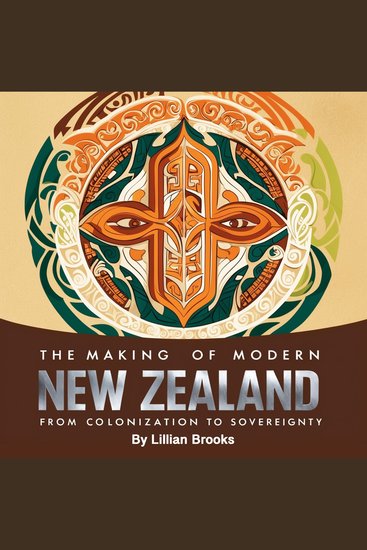
    Before the arrival of Europeans, New Zealand, or Aotearoa, was inhabited solely by the Māori people, who had arrived from Polynesia over a thousand years earlier. Their ancestors navigated vast distances across the Pacific Ocean, using their advanced knowledge of stars, winds, and ocean currents. They eventually settled in Aotearoa, forming distinct tribal communities known as iwi, each with its own territory, social structures, and traditions. 
    The Māori society was organized around iwi (tribes), hapū (sub-tribes), and whānau (families). Each iwi had a paramount chief, or rangatira, who was responsible for making decisions that affected the entire tribe. The rangatira was supported by a council of elders, or kaumatua, who provided guidance based on wisdom and experience. The hapū, made up of extended families, was the primary unit of Māori society, with a strong emphasis on kinship and collective responsibility. 
    Māori were deeply connected to the land, or whenua, and believed that their ancestors, the atua, or gods, imbued the earth, sea, and sky with sacred energy. This connection formed the foundation of Māori spiritual beliefs, which revolved around whakapapa (genealogy), mana (spiritual power or authority), and tapu (sacredness). Their spiritual worldview tied their identity to the land and natural resources, and they saw themselves as stewards, responsible for the care and preservation of the environment.
    Show book
  • Chameleon Mindset - Creative Ways to Embrace Change And Build Mental Resilience To Transform Your Career and Life - cover

    Chameleon Mindset - Creative...

    Nikki Green

    • 0
    • 0
    • 0
    Change is challenging, whether it’s forced on us or we create it. But you’re not stuck in your situation. You can transform your mindset and adapt to change. 
      
    When Life and Business Resiliency Expert Nikki Green left a career of 20 years, her methodology for adjusting made her more flexible. She wrote Chameleon Mindset for others seeking clarity while acclimating to new situations. This entertaining, research-based guide to transitions will give you strategies for moving forward. 
      
    You will: 
     ·      C.R.E.A.T.E. the life you desire with five philosophies for change 
    ·      Become a Master of Change as you work through Karate Kid- style exercises 
    ·      Keep coming back to level up your life using an interactive journalMove from resistance to resilience by assessing and adjusting your risk toleranceImprove relationships when you learn to have difficult conversations 
      
    The practical lessons in Chameleon Mindset will shift your mindset, sharpen your skills, and help you overcome your obstacles to dealing with change. Read it and embrace change!
    Show book
  • TV Lobotomy The Scientific Truth About the Effects of Television - cover

    TV Lobotomy The Scientific Truth...

    Michel Desmurget

    • 0
    • 0
    • 0
    "TV unleashes the imagination and feeds intelligence." • "A child deprived of TV risks social isolation." • "TV dumbs you down." • "TV makes you obese." It seems that everything—and its opposite—has already been said about TV. But what is it really? How can we distinguish between the radical "No TV" of some and the supposedly entertaining virtues touted by others? Michel Desmurget, a doctor in neuroscience, has sifted through and synthesized thousands of research articles published over the last fifty years in the most rigorous international journals. The conclusion is unequivocal—we must stop watching television for good, whatever the program. All content, even that meant to teach, can never come close to any other learning method. The data is clear—television viewing is detrimental to school performance. For a child in elementary school, for example, every hour spent daily watching television increases the likelihood that he or she will one day leave the school system without any qualifications. For specialists, there is no doubt that television has a negative influence, not only on intellectual development but also on behavior. Thus, certain eating disorders (anorexia, bulimia) are related to a frantic consumption of—television programs! In short, watching television has an impact on our life expectancy. However, the harmful impact of this risk is largely underestimated, because of the large sector of the public exposed to television (more than 85% of Western households have at least one television set), and because of a debate on the subject that has become inaudible and confused. Moreover, the results of the research initiated by the big media groups on the subject remain "proprietary," i.e., closed to the general public. Believing that we is facing a real public health problem, Michel Desmurget wants to act as a responsible scientist—with a clear, concise and rigorously referenced book, the message cannot go unnoticed. Michel Desmurget is a doctor of neuropsychology. He attended several major American universities (MIT, Emory, UCSF) and is now a research director at INSERM in cognitive neuroscience. He is particularly interested in the problems of brain organization and plasticity. He is the author of the book TV Lobotomy (Max Milo, 2022), which is based in part on his personal history. Exasperated by having to constantly justify the choice not to have television at home—and to prevent his children from having access to it—and not to be seen as a sociopath in the eyes of those around him, he has done a massive job to argue his point. 
    This audiobook is read by a synthesized voice.
    Show book
  • How to Convert to Islam and Become Muslim - What You Need to Know Believe and Practice After Submitting to Your Creator - cover

    How to Convert to Islam and...

    The Sincere Seeker Collection

    • 0
    • 0
    • 0
    Discover the Path to Islam: Your Comprehensive Guide to Embracing the Faith 
    Discover the essentials of submitting to your Creator and converting to Islam in this concise, easy-to-understand guide. Whether you're curious about Islam, ready to convert, or have already taken the step, this book is the perfect companion to guide you through your spiritual journey. It covers everything from fundamental Islamic beliefs to practical steps in living as a faithful follower of Islam. 
    🕌 What's Inside:Explanation of Islamic core beliefs and practicesStep-by-step guide on how to convert to IslamInsights into the nature of Allah and His communication with humanityPractical advice for life after conversionIntroduction to the Five Pillars of IslamGuidance on building a strong relationship with your Creator 
    🌟 Perfect For:Individuals exploring Islam and considering conversionNew Muslims seeking guidance on their faith journeyNon-Muslims curious about Islamic beliefs and practicesAnyone looking to deepen their understanding of Islam 
     👉 Embark on Your Spiritual Journey Today! 🕋 
    Whether you're curious about Islam, ready to convert, or have already taken your shahada, this guide will provide the knowledge and guidance you need to embrace the faith confidently. 
    Join the global community of over two billion Muslims and discover your life's purpose and peace with submission to Allah. 
    Click "Add to Cart" to begin your journey towards a deeper connection with your Creator and a more fulfilling spiritual life!
    Show book
  • Apollo and Artemis: The Origins and History of the Twin Deities in Ancient Greek Mythology - cover

    Apollo and Artemis: The Origins...

    Editors Charles River

    • 0
    • 0
    • 0
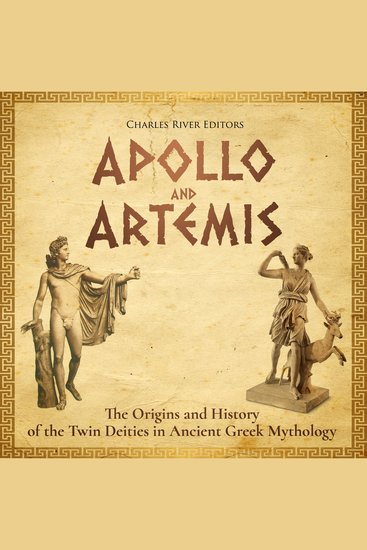
    “Apollo’s history is a confusing one,” said the renowned poet and mythologist Robert Graves. This notion is also illustrated in the above quote from the 6th century BCE Homeric Hymn to Apollo, which gives the reader a brief glimpse into the confusion surrounding Apollo’s multi-faceted nature. The quote comes from the end of an episode in which Apollo is traversing the known world, looking for a place to build a temple to himself. Once he lands upon a place of his liking, however, he realizes that he needs to populate it with priests who would ‘guard’ and care for its ceremonies. Rather than depend upon those ‘glorious tribes’ to supply his temple with sycophants, Apollo has no patience for chance, and flies down to a Cretan merchant ship, landing on it in the form of a timber-shaking dolphin. After terrifying the merchants, he tells them that their lives in the sea trade are over, and they are to be priests at his temple from then on. Cautioning the merchants to eschew piracy and ‘keep righteousness’ in their hearts, while simultaneously confronting and sequestering them captures the youthful god’s capricious character quite well. 
    Artemis had one of the most widespread cults in the Greek world, perhaps due to her connection to nature, which can be a ubiquitous antagonist or boon-giver. Her association with nature may also explain why she was one of the oldest deities in the Greek pantheon, although her appearance in the Mycenaean Linear B script is still contested. Etymology often gives modern readers a better idea of the earliest form of a deity, but Artemis's is confusing. She is often associated with mythic qualities (such as "maidenhood" and "purity") and even non-Greek origins. The latter is as unsurprising as the former, since Artemis had a large following throughout Greece and across Asia Minor, where her most famous temple, one of the Seven Wonders of the World, resided. It was in the Near East where Artemis represented wilder characteristics.
    Show book