Join us on a literary world trip!
Add this book to bookshelf
Grey
Write a new comment Default profile 50px
Grey
Subscribe to read the full book or read the first pages for free!
All characters reduced
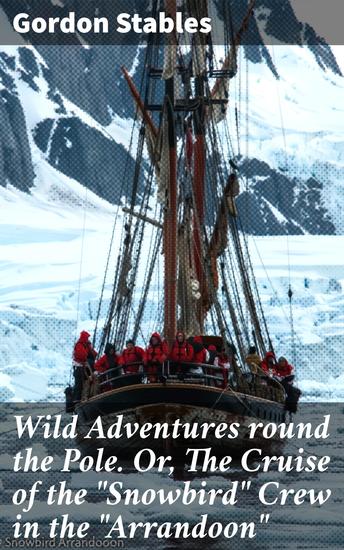
Wild Adventures round the Pole Or The Cruise of the "Snowbird" Crew in the "Arrandoon" - Arctic Expedition: A Thrilling Journey into the Icy Wilderness - cover

Wild Adventures round the Pole Or The Cruise of the "Snowbird" Crew in the "Arrandoon" - Arctic Expedition: A Thrilling Journey into the Icy Wilderness

Gordon Stables

Publisher: Good Press

  • 0
  • 0
  • 0

Summary

In "Wild Adventures round the Pole. Or, The Cruise of the 'Snowbird' Crew in the 'Arrandoon'," Gordon Stables embarks on a thrilling narrative that fuses elements of adventure fiction with vivid natural description. Set during the era of polar exploration, the text is characterized by Stables'Äô exuberant prose and an enthusiasm for the great outdoors. Through his lively storytelling, Stables invites readers aboard the fictional vessel 'Arrandoon,' wherein a crew faces treacherous weather, encounters with wildlife, and the challenges of icy landscapes, all of which serve as a reflection of the human spirit's quest for exploration amid adversity. The literary style evokes the romantic ideals of adventure while grounded in the realities of 19th-century Arctic expeditions, mirroring the zeitgeist that captivated audiences of that time. Gordon Stables, a prolific Victorian writer and a trained surgeon with a profound passion for adventure, was significantly influenced by his own explorations and experiences. His background allowed him to portray the intricacies of survival in harsh environments authentically. Stables'Äô admiration for nature and the indomitable spirit of his contemporaries is deeply embedded in his narratives, including this work, which showcases his belief in the importance of adventure and our connection to nature. I highly recommend "Wild Adventures round the Pole" to readers seeking an exhilarating escape into the world of exploration and discovery. Stables'Äô unique blend of adventure and vivid imagery not only entertains but also inspires a sense of wonder about the mysteries still left in our world. This book is an essential addition to the library of any history enthusiast or adventure aficionado.
Available since: 09/18/2023.
Print length: 248 pages.

Other books that might interest you

  • A Portrait of the Artist as a Young Man - cover

    A Portrait of the Artist as a...

    James Joyce

    • 0
    • 0
    • 0
    A Portrait of the Artist as a Young Man is the first novel of Irish writer James Joyce.    A Künstlerroman in a modernist style, it traces the religious and intellectual awakening of young Stephen Dedalus, a fictional alter ego of Joyce and an allusion to Daedalus, the consummate craftsman of Greek mythology. Stephen questions and rebels against the Catholic and Irish conventions under which he has grown, culminating in his self-exile from Ireland to Europe. The work uses techniques that Joyce developed more fully in Ulysses and Finnegans Wake.    A Portrait began life in 1903 as Stephen Hero--a projected 63-chapter autobiographical novel in a realistic style. After 25 chapters, Joyce abandoned Stephen Hero in 1907 and set to reworking its themes and protagonist into a condensed five-chapter novel, dispensing with strict realism and making extensive use of free indirect speech that allows the reader to peer into Stephen's developing consciousness. American modernist poet Ezra Pound had the novel serialised in the English literary magazine The Egoist in 1914 and 1915, and published as a book in 1916 by B. W. Huebsch of New York. The publication of A Portrait and the short story collection Dubliners (1914) earned Joyce a place at the forefront of literary modernism.
    Show book
  • Complete Works of H P Lovecraft The (Volume 3) (Unabridged) - cover

    Complete Works of H P Lovecraft...

    H. P. Lovecraft

    • 0
    • 0
    • 0
    "The Complete Works of H.P. Lovecraft contains all the original stories which Lovecraft wrote as an adult. It begins in 1917 with "The Tomb" and ends in 1935 with his last original work "The Haunter of the Dark." The book is ordered chronologically by the date the story was written.
    Show book
  • Sphinx Without a Secret The (Unabridged) - cover

    Sphinx Without a Secret The...

    Oscar Wilde

    • 0
    • 0
    • 0
    "The Sphinx Without a Secret" This very short story was first published in The World, in May 1887. In the story, Lord Murchison recounts to his old friend a strange tale of a woman he had loved and intended to marry, but was now dead. She had always been very secretive and mysterious, and he one day followed her to see where she went, discovering her stealthily going to a boarding house. He suspected there was another man, and confronted her the next day. She confessed to having been there, but said nothing happened. He did not believe her and left; she died some time later.
    Show book
  • The Cloak - cover

    The Cloak

    Nikolai Gogol

    • 0
    • 0
    • 0
    "The Cloak" (sometimes translated as "Overcoat") is a short story by Russian author Nikolai Gogol, published in 1842. The story and its author have had great influence on Russian literature, as expressed in a quote attributed to Fyodor Dostoyevsky: "We all come out from Gogol's 'Overcoat'." The story narrates the life and death of titular councillor Akaky Akakievich Bashmachkin, an impoverished government clerk and copyist in the Russian capital of St. Petersburg. Akaky is dedicated to his job, though little recognized in his department for his hard work. Instead, the younger clerks tease him and attempt to distract him whenever they can. His threadbare overcoat is often the butt of their jokes. Akaky decides it is necessary to have the coat repaired, so he takes it to his tailor, Petrovich, who declares the coat irreparable, telling Akaky he must buy a new overcoat.
    The cost of a new overcoat is beyond Akaky's meager salary, so he forces himself to live within a strict budget to save sufficient money to buy the new overcoat. Meanwhile, he and Petrovich frequently meet to discuss the style of the new coat. During that time, Akaky's zeal for copying is replaced with excitement about his new overcoat, to the point that he thinks of little else. Finally, with the addition of an unexpectedly large holiday salary bonus, Akaky has saved enough money to buy a new overcoat.
    Show book
  • The Mill on the Floss - cover

    The Mill on the Floss

    George Eliot, (Mary Ann Evans)

    • 0
    • 0
    • 0
    "The Mill on the Floss," published in 1860, is a novel by George Eliot (the pen name of Mary Ann Evans). It is a poignant portrayal of Victorian England and captures the complexities of family dynamics, societal expectations, and personal aspirations. The story centers on Maggie Tulliver, a passionate and intelligent woman struggling to satisfy her emotional needs in the rigid provincial community of St. Ogg's. Her relationship with her brother, Tom, and their conflicts with family and society form the crux of the narrative. The novel explores themes of gender norms, education, and the tension between individual desires and social conventions.
    Show book
  • The Merchant of Venice - cover

    The Merchant of Venice

    William Shakespeare

    • 0
    • 3
    • 0
    A conflict between a nobleman and a moneylender drives this suspenseful comedy filled with twists and turns.Bassanio, a Venetian nobleman and reckless spender, has found himself in financial straits, making it difficult for him to court the woman he loves, Portia. His wealthy friend who usually bails him out, Antonio, will not have funds available until his merchant ships come in. Borrowing from Shylock, the Jewish moneylender, and using Antonio as a guarantor, appears to be Bassanio’s only option if he wants to win Portia’s hand. Shylock, at first reluctant to get involved with the anti-Semitic Antonio, finally offers to waive interest on the loan—if he can take a pound of Antonio’s flesh should the money not be repaid on time. But when Bassanio’s ships are reported lost at sea, danger awaits, in this masterpiece by the Bard, William Shakespeare.
    Show book