Join us on a literary world trip!
Add this book to bookshelf
Grey
Write a new comment Default profile 50px
Grey
Subscribe to read the full book or read the first pages for free!
All characters reduced
Impure thoughts - cover

Impure thoughts

Golnoosh Nour

Publisher: Verve Poetry Press

  • 0
  • 0
  • 0

Summary

Riotous and fizzing with language, the poetry of Golnoosh Nour boldly explores what it is to be utterly alive and ecstatically, yet complicatedly, in desire. –Richard Scott
Impure Thoughts is a dizzying dance through impurity's several selves. Half bal masqué, half Grand Guignol, Nour confronts the limits of desire with an almost uncanny intensity of focus. Even at their most tender and elegiac these poems tremble with the white-hot heat of libidinal energy and gleam with oracular fury. –Fran Lock
Available since: 05/11/2023.
Print length: 36 pages.

Other books that might interest you

  • A Woman's Voice - An Anthology of short stories by Ugandan Women - cover

    A Woman's Voice - An Anthology...

    Hilda Twongyeirwe, Lillian...

    • 0
    • 0
    • 0
    A Woman's Voice is a compelling collection of twelve short stories which talk of human relationships, courage and social injustices. The collection offers a variety of readable material based on real, if sometimes controversial and provocative experiences.
    Show book
  • The Poetry of Samuel Taylor Coleridge - Hugely influential co-founder of the Romantic movement in England - cover

    The Poetry of Samuel Taylor...

    Samuel Taylor Coleridge

    • 0
    • 0
    • 0
    Samuel Taylor Coleridge was born on October 21st, 1772 in Ottery St Mary in Devon. 
    As a child he was an early and devoted reader and, after being schooled at Christ's Hospital, a charity school, he attended, from 1791, Jesus College, Cambridge and the following year won the Browne Gold Medal for an ode on the slave trade. 
    He was great friends with the poet Robert Southey, indeed they formed a plan, soon abandoned, in 1795, to found a utopian commune-like society, called Pantisocracy, in the wilds of Pennsylvania. But the same year the two friends married sisters Sarah and Edith Fricker and, of course, went on to be part of the Lake Poets movement along with Wordsworth. 
    In 1798, Coleridge and Wordsworth published a joint volume of poetry, Lyrical Ballads, which proved to be the starting point for the English romantic age. 
    In the autumn he and Wordsworth left for a stay in Germany; Coleridge soon went his own way immersing himself in both German philosophy and the language, which later proved invaluable for his translations. 
    In 1800, he returned to England and settled with his family at Keswick in the Lake District, near to where Wordsworth had moved. Soon, however, he was beset by marital problems, illnesses, a growing opium dependency, tensions with Wordsworth, and a lack of confidence in his poetic powers, all of which fuelled the composition of Dejection: An Ode and an intensification of his philosophical studies. He abandoned his family to Southey's care and departed on new travels. 
    Between 1810 and 1820, this "giant among dwarfs", as he was often considered, gave a series of lectures in London and Bristol. Much of Coleridge's reputation as a literary critic is founded on the lectures from the winter of 1810–11 a series on Shakespeare and Milton. Although he rarely prepared anything other than loose notes and was inclined to digress, these lectures were a huge literary event and success. 
    By this time Coleridge was dependent on opium and by 1817 his solution was to live in Highgate under the watchful eye of physician James Gillman where his dependency was somewhat controlled and his output of work could continue.  These included his 23 volume Biographia Literaria, Sibylline Leaves (1817), Aids to Reflection (1825), and Church and State (1826). 
    He died in Highgate, London on 25 July 1834 as a result of heart failure and a lung disorder together with the long term effects of opium. 
    This volume comes to you from Portable Poetry, a specialized imprint from Deadtree Publishing.  Our range is large and growing and covers single poets, themes, and many compilations.
    Show book

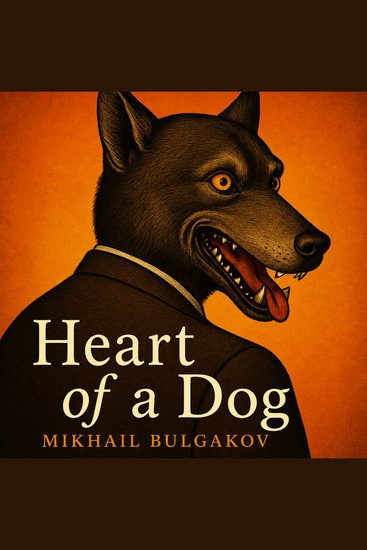
  • Heart of a Dog - cover

    Heart of a Dog

    Mikhail Bulgakov

    • 0
    • 0
    • 0
    Originally published in 1925, ‘Heart of a Dog’ by Russian author and playwright Mikhail Bulgakov, is a dark, fantastical satire of the failures inherent in the dream of a Communist utopia. 
    When a respected surgeon decides to transplant human body parts into a stray dog, he creates a monster—drunken, profligate, aggressive, and selfish. It seems the worst aspects of the donor have been transplanted as well. As his previously well-regulated home descends into riotous chaos, the doctor realizes he will have to try to reverse the operation, but the dog isn’t so keen. Wild, uproarious, and deliriously comic, Bulgakov’s short novel is at once a comment on the problems of 1920s Russia and a lasting satire on human nature. 
    Both a nod to the Frankenstein myth and a vicious critique of the Soviet government’s attempts to reshape and redefine personhood during and after the Russian Revolution, it was rejected for publication by censors in 1925, but was circulated via samizdat—the clandestine production and distribution of literature that had been banned by the state—for years until it was translated into English in 1968. 
    To this day, the book remains one of Bulgakov’s most highly regarded works.
    Show book
  • Lara A Tale - cover

    Lara A Tale

    Lord Byron

    • 0
    • 0
    • 0
    This powerful poem narrates the fateful return of Count Lara to the British Isles after spending years abroad traveling the orient.Returning to his patrimony with a retinue consisting of one foreign-born page, Count Lara resumes the management of his landed estates. Lara's first efforts are crowned with success: only to be undermined by the jealousy and envy of his his peers. After a successful duel to defend his honour, the count becomes inexorably caught up in local blood-feuds; which quickly escalate to open warfare between his own followers and the private armies of his enemies.- Count Lara remains a bold and skillful leader: is he strong enough to triumph yet over adverse fortune?- And what is the secret of his mysterious foreign page: who left kindred and homeland behind in order to follow Count Lara to the uttermost ends of the earth?(Introduction by Godsend)
    Show book
  • The Secrets of Catspraddle Village - cover

    The Secrets of Catspraddle Village

    Callie Browning

    • 0
    • 0
    • 0
    A grisly murder without a suspect. A bizarre love triangle. A philosopher moonlighting as a garbage man who gets a gun put to his head every Tuesday morning. 
    These are the secret lives of the residents of Catspraddle Village, a fictional district in the Caribbean island of Barbados. This collection of award-winning short stories by author Callie Browning is filled with hilarious banter, crazy escapades and thought-provoking events that tell The Secrets of Catspraddle Village. This one-hour literary fiction short story anthology by award-winning author, Callie Browning, will give you a front-row seat to all of the drama that can happen in a tiny Bajan village.
    Show book
  • Orange - Elfchen Poems - cover

    Orange - Elfchen Poems

    Pushpa R Menon

    • 0
    • 0
    • 0
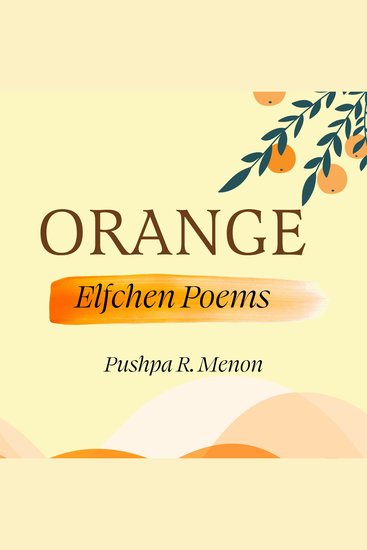
    Orange is a curated collection of poems written in the Elfchen form — a poetic form of five lines with a 1-2-3-4-1-word count structure. It was born from a desire to say less, but feel more, and began as a quiet and joy-filled exercise in observing the world. ‘Elfchen’ in German means diminutive of eleven. With its strict five-line and minimal word count of eleven, it offered both a challenge and a quiet joy. It taught me to trim language down to its essence, to listen to the spaces between words, and to notice the poetry hiding in the ordinary. The poems explore the way certain words lean into each other, everyday objects, emotions, and metaphors. They include themes of nature, survival, silence, conflict and liberation. Devices like personification and contrast are used to provoke emotional and philosophical engagement. The intersection of word and image offers room for contemplation. This poetic form lends itself to brevity, clarity, and restraint. The illustration that is paired with each poem is designed to enhance the meditative quality of the book. Each image becomes a metaphor, each poem a mirror to hold up a thought, memory, or mood.
    Show book