Join us on a literary world trip!
Add this book to bookshelf
Grey
Write a new comment Default profile 50px
Grey
Subscribe to read the full book or read the first pages for free!
All characters reduced
Social Connections - cover

Social Connections

Glen Perslow

Translator A AI

Publisher: Publifye

  • 0
  • 0
  • 0

Summary

Social Connections explores the vital role relationships play in our health and happiness, revealing that strong social bonds are as crucial as diet and exercise for overall well-being. It examines the science behind our need for connection, delving into how our brains and bodies are wired for social interaction and how these connections impact us at a cellular level. Did you know that social isolation can contribute to chronic stress and inflammation, increasing the risk of disease? The book emphasizes that in today's disconnected world, understanding and nurturing our social ties is more important than ever.

 
The book presents a comprehensive, evidence-based synthesis of research on social connection, integrating insights from neuroscience, psychology, and sociology. Beginning with an introduction to core concepts like social network theory and attachment theory, it progresses through the evolutionary roots of social connection, neurobiological mechanisms, and the effects of social isolation. Ultimately, it provides practical strategies for cultivating stronger relationships and building more connected communities, making it a valuable resource for anyone looking to improve their social well-being.
Available since: 03/12/2025.
Print length: 77 pages.

Other books that might interest you

  • The Founding of New England - cover

    The Founding of New England

    James Truslow Adams

    • 0
    • 0
    • 0
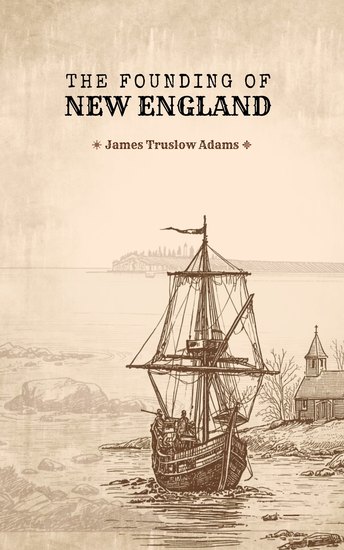
    The Founding of New England by James Truslow Adams is a detailed historical account of the early settlement and development of one of the most influential regions in American history. Drawing on extensive research, Adams examines the origins, struggles, and growth of the New England colonies, offering insight into the people, ideas, and events that shaped their foundation.
    
    The book explores the motivations of early settlers, including religious freedom, economic opportunity, and the desire to build new communities based on shared beliefs and social structures. Adams carefully traces the challenges faced by these pioneers, from harsh environmental conditions to political and cultural conflicts with Indigenous populations and European powers.
    
    Through vivid historical narrative and analysis, the author highlights the development of colonial institutions, governance systems, and cultural traditions that would later play a significant role in shaping the identity of the United States. He also considers the broader implications of New England's founding on American social and political life.
    
    Themes of settlement, colonization, cultural development, governance, religion, and identity formation run throughout the work. Adams combines scholarly research with accessible storytelling, making the history of early New England both informative and engaging.
    
    The Founding of New England remains an important contribution to American historical literature. Its thorough examination of colonial origins provides valuable context for understanding the foundations of American society and the evolution of its early institutions.
    Show book
  • Robert Frost Lectures on Poetry - cover

    Robert Frost Lectures on Poetry

    Robert Frost

    • 0
    • 0
    • 0
    Robert Lee Frost (March 26, 1874 - January 29, 1963) was an American poet who frequently wrote about settings from rural life in New England in the early 20th century, using them to examine complex social and philosophical themes. Frost is the only poet to receive four Pulitzer Prizes for Poetry. He became one of America's rare "public literary figures, almost an artistic institution," and was awarded the Congressional Gold Medal in 1960 for his poetic works. The following recording is from a 1954 lecture Frost gave on poetry and writers Charles Dickens, Henry David Thoreau, Emily Dickinson, T. S. Eliot, Theodore Dreiser, William Faulkner, Walter Savage Landor, Gerard Manley Hopkins, Ralph Waldo Emerson, Percy Shelley, and John Masefield.
    Show book
  • Little Women Podcast: Amy And Jo Two Sides Of The Same Coin - cover

    Little Women Podcast: Amy And Jo...

    Niina Niskanen, Emily Lau

    • 0
    • 0
    • 0
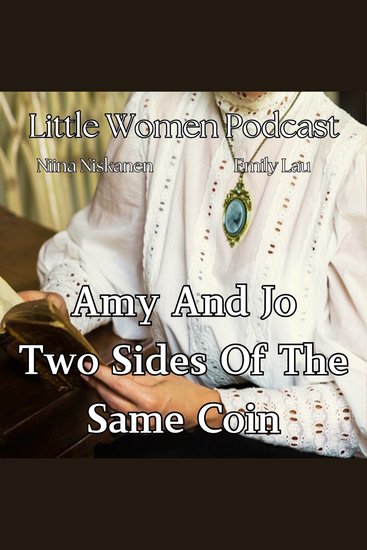
    Dive into the world of Little Women like never before with this compelling podcast audiobook episode, Amy and Jo – Two Sides of the Same Coin. Explore the nuanced relationship between Amy March and Jo March, two of Louisa May Alcott’s most beloved characters, who embody distinct yet intertwined visions of ambition, artistry, and womanhood. 
    This thought-provoking episode delves deep into their contrasting personalities: Amy, the pragmatic dreamer with a love for beauty and refinement, and Jo, the fiercely independent writer with a burning passion for creative freedom. Through insightful analysis, literary commentary, and heartfelt discussions, listeners will discover how these sisters' opposing traits complement each other, reflecting the duality of human nature and the struggles women faced during the 19th century. 
    Whether you’re a lifelong fan of Little Women or new to the classic, this episode is a must-listen for anyone interested in the complexities of sisterhood, identity, and the timeless themes that continue to resonate today. 
    Key Highlights:A detailed character study of Amy and Jo March.Insightful discussions on how their differences highlight broader themes in Little Women.Exploration of 19th-century societal expectations of women and how Amy and Jo both conform to and defy them.Perfect for fans of Louisa May Alcott, literary analysis, and heartfelt storytelling. 
    Embark on this literary journey and discover why Amy and Jo truly are two sides of the same coin. 🎧✨
    Show book
  • Find Out Why You Are Unhappy - cover

    Find Out Why You Are Unhappy

    G.D. Budhiraja

    • 0
    • 0
    • 0
    If money doesn't bring happiness, then why do people behave as though it does? It seems only natural that happiness should flow from having more money. Even if they don't admit it, people still behave as though it were true. More money means you can have what you want and do what you want. The house you dream of? It's yours. The new car you desire? Here are the keys. So the puzzle is this: why do social scientists consistently find only moderate relationships between having more money and being happy? Some have even suggested that this moderate connection might be exaggerated. In reality money might have very little to do with happiness at all. So, when people ask themselves whether money brings happiness, they immediately think of the big promotion and the big house. They conclude that because they have these things, they must be happy. In fact, people with more money and status are just more satisfied with their lives, not happier (before you scoff at this think about whether you'd rather be satisfied or happy). Through nine chapters in this book, the author gives out the causes that generate unhappiness and the means to conquer them.
    Show book
  • George Eliot - A Critical Study of Her Life Writings and Philosophy - cover

    George Eliot - A Critical Study...

    George Willis Cooke

    • 0
    • 0
    • 0
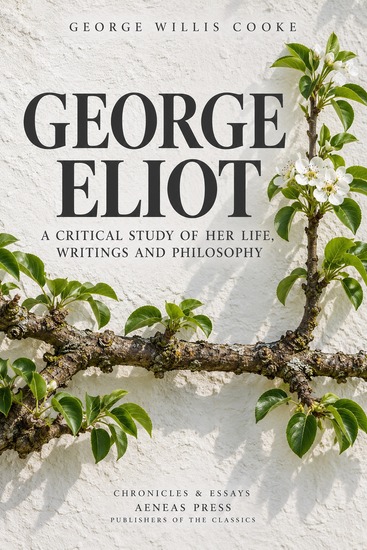
    The first substantial study of George Eliot, published three years after her death - the life, the novels and the philosophy, by an American who read her as a moralist rather than a scandal. Bound with the text are 59 plates of painting, a profile portrait of George Eliot among them, alongside English and American landscapes by Constable, Turner and Thomas Cole.
    Show book
  • The Closed Partisan Mind - A New Psychology of American Polarization - cover

    The Closed Partisan Mind - A New...

    Matthew D. Luttig

    • 0
    • 0
    • 0
    American politics today can be defined by the intense and increasingly toxic divide between Democrats and Republicans. Matthew D. Luttig explores why so many Americans have endorsed this level of political conflict. 


    Luttig illustrates how the psychological need for closure leads people, regardless of whether they identify as Democrat or Republican, to express more polarized political attitudes. This association between closed minds and partisan polarization is a new phenomenon and can be traced to broader changes in American society, such as the creation of ideologically distinct political parties and a fragmented media environment. These developments have simplified politics into a black-or-white, us-versus-them, conflict—making politics appeal to those with closed minds. 


    Today, strong partisans do not just cheer for their political party to win elections. Instead, more akin to religious true believers, strong partisans use their affiliation as a means of understanding right and wrong, friend and enemy, true and false. The Closed Partisan Mind reveals that these dynamics have manifested in both a new type of partisanship and a new type of partisan. The emergence of this new closed partisanship illustrates the dangers that polarization has wrought on society, politics, and the minds of Americans.
    Show book