Join us on a literary world trip!
Add this book to bookshelf
Grey
Write a new comment Default profile 50px
Grey
Subscribe to read the full book or read the first pages for free!
All characters reduced
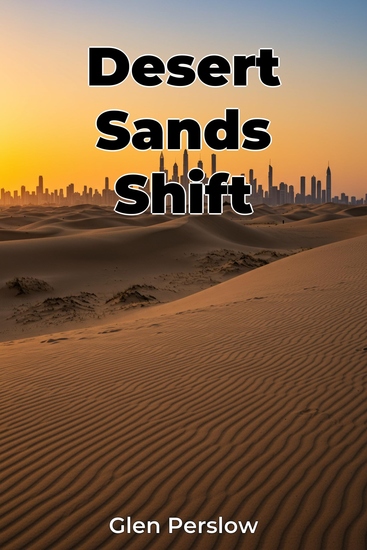
Desert Sands Shift - cover

Desert Sands Shift

Glen Perslow

Translator A AI

Publisher: Publifye

  • 0
  • 0
  • 0

Summary

"Desert Sands Shift" explores the evolving story of Bedouin communities as they navigate modernization, balancing traditional nomadic culture with the demands of urban life in the Middle East. It examines how Bedouins adapt to economic development and urbanization, challenging the notion that modernization equates to cultural loss. The book argues that Bedouins actively transform and preserve their heritage, using innovative approaches to maintain cultural identity amidst social change. For instance, while adopting new professions, they sustain tribal connections through modern technology, adapting crafts for contemporary markets.

 
The book's structure progresses logically, beginning with the historical context of Bedouin society, including tribal kinship and reliance on livestock. It then examines the catalysts of change, focusing on government policies and economic pressures that drive Bedouins to urban centers. Finally, it delves into the strategies employed to preserve cultural identity, drawing upon ethnographic fieldwork, statistical data, and policy analysis. This approach provides readers with a comprehensive understanding of Bedouin resilience, emphasizing agency and resourcefulness in the face of modernization.
Available since: 02/27/2025.
Print length: 63 pages.

Other books that might interest you

  • Revamp Your Life: Easy Steps to Stop Procrastinating and Thrive - "Revamp Your Life with easy steps to conquer procrastination and unlock your potential today!" - cover

    Revamp Your Life: Easy Steps to...

    Sullivan Carrington

    • 0
    • 0
    • 0
    Revamp Your Life: Easy Steps to Stop Procrastinating and Thrive 
    Are you eager to advance in your career and gain the knowledge needed to transform your habits, unlock your potential, and live your best life? 
    Looking for a comprehensive resource that covers everything you need to break free from procrastination and thrive? 
    Your search ends here! 
    This guide is your ultimate companion for enhancing your understanding, applying your skills, and engaging in practical exercises. With this resource, you're set up for success. 
    Updated to reflect the latest strategies and insights for 2024-2025. 
    Key features of this enhanced guide include: 
    - In-depth insights on transforming habits to achieve your goals 
    - Clear explanations of techniques to unlock your full potential 
    - Effective strategies for overcoming procrastination and thriving in your endeavors 
    What sets our guide apart is its thorough approach, critical for your success. Concepts are not just touched upon; they are examined with clarity and detail. 
    Please note that this guide is an independent resource and is not affiliated with any official organizations. 
    Crafted with a clear structure and easy-to-understand language, our guide ensures a smooth progression between topics. Say goodbye to complex jargon and embrace content that is clear, precise, and technically sound. 
    So, why wait? Click the BUY NOW button, secure your guide, and embark on your journey to transforming your life! 
    Start your journey today toward a revitalized and fulfilling life!
    Show book
  • Urban Governance and Renewal - Policy Power and Change (3 in 1) - cover

    Urban Governance and Renewal -...

    Lyric Vale

    • 0
    • 0
    • 0
    In the complex architecture of city-making, governance represents the invisible framework that shapes urban development, mediates competing interests, and determines whose voices influence the evolution of metropolitan spaces. Beyond physical infrastructure and economic dynamics, the political dimensions of urban environments—the policies, power structures, and institutional arrangements that guide development decisions—profoundly shape the trajectory of cities and the lived experiences of their inhabitants. This comprehensive exploration delves into the intricate domains of Urban Policy and Governance, The Politics of Urban Development, and Urban Renewal, examining how formal and informal power systems determine which neighborhoods flourish, which communities face displacement, and how the benefits and burdens of urban change are distributed. 
    The narrative of urban governance is fundamentally a story of contested visions, where multiple stakeholders—from elected officials and corporate interests to community organizations and marginalized populations—engage in complex negotiations over the future of shared urban spaces. By examining the historical evolution, contemporary challenges, and emerging paradigms of urban governance, this book illuminates how policy frameworks, political processes, and renewal strategies reflect deeper power dynamics and ideological perspectives about what cities should be and whom they should serve. Readers will journey through diverse urban contexts—from the boardrooms where development decisions are made to the grassroots movements that challenge established power structures—discovering how governance approaches have evolved from top-down interventions to more collaborative, participatory models that recognize the plurality of urban stakeholders.
    Show book
  • Forgiveness - Healing the Wounds of the Past - cover

    Forgiveness - Healing the Wounds...

    Esther Jameson

    • 0
    • 0
    • 0
    Forgiveness is often seen as a personal choice—a decision to let go of past hurts and allow ourselves to heal. At its core, it is the process of releasing resentment, anger, or thoughts of revenge toward someone who has wronged us. While it may seem like an act of kindness directed at others, true forgiveness is, in fact, a gift we give ourselves. By forgiving, we free ourselves from the emotional and mental weight of holding onto painful experiences. 
    It is important to recognize that forgiveness is not the same as excusing the harmful behavior. It doesn’t mean that the hurtful actions are acceptable or that we should forget about the wrongs done to us. Forgiveness is not a dismissal of pain; rather, it is a conscious choice to stop allowing that pain to control our lives. When we forgive, we are not condoning the actions of others, but instead, we are choosing to release the grip that the negative emotions tied to those actions have on us. 
    The power of forgiveness lies in its ability to release us from the shackles of negative emotions. Holding onto anger, resentment, or hurt can poison our well-being and cloud our perception of life. By forgiving, we begin the healing process, allowing ourselves to move forward rather than remain stuck in the past. Forgiveness also creates space for growth, both personally and in our relationships with others. It opens up the possibility for renewed connections and understanding.
    Show book
  • The Albigensian Crusade - Heresy and Conflict - cover

    The Albigensian Crusade - Heresy...

    Harris Ropes

    • 0
    • 0
    • 0
    The Cathars emerged as one of the most distinctive and controversial religious movements of medieval Europe, particularly in the Languedoc region of modern-day southern France. Rooted in dualist beliefs, the Cathars rejected many of the core teachings of the Catholic Church, viewing the material world as the creation of an evil force and striving for spiritual purity. Their growing influence in the 12th and 13th centuries alarmed both the Church and secular rulers, eventually leading to their violent suppression during the Albigensian Crusade. 
    The origins of Catharism can be traced to earlier dualist traditions, particularly those of the Bogomils in the Balkans. These beliefs likely spread into western Europe through trade routes and missionary activity, finding fertile ground in the tolerant and prosperous culture of Languedoc. Cathar teachings were based on a stark division between the material and spiritual realms. They believed that the physical world was ruled by a malevolent force, often associated with Satan, while the true God presided over the spiritual world. This view led them to reject the Catholic Church, which they saw as corrupt and complicit in the worship of the material. Unlike the Church, which emphasized hierarchical structure, the Cathars maintained a simpler, more egalitarian approach to religious life. 
    Cathar society was structured around two primary groups: the Perfects and the Believers. The Perfects, considered the spiritual elite, led austere lives dedicated to prayer, fasting, and celibacy. They followed strict moral codes, renouncing wealth and worldly pleasures in pursuit of spiritual enlightenment. Believers, while not held to the same rigorous standards, supported the Perfects and aspired to receive the consolamentum, a ritual that purified the soul before death. Cathars rejected many Catholic sacraments, including baptism by water, believing instead in a form of spiritual baptism.
    Show book
  • The History of Emotions - A Very Short Introduction - cover

    The History of Emotions - A Very...

    Thomas Dixon

    • 0
    • 0
    • 0
    Emotions are complex mental states that resist reduction. They are visceral reactions but also beliefs about the world. They are spontaneous outbursts but also culturally learned performances. And just as our emotions in any given moment display this complex structure, so their history is plural rather than singular. The history of emotions is where the history of ideas meets the history of the body, and where the history of subjectivity meets social and cultural history. 


    In this Very Short Introduction, Thomas Dixon traces the historical ancestries of feelings ranging from sorrow, melancholy, rage, and terror to cheerfulness, enthusiasm, sympathy, and love. The picture that emerges is a complex one, showing how the states we group together today as "the emotions" are the product of long and varied historical changes in language, culture, beliefs, and ways of life. 


    With examples from ancient, medieval, and modern cultures, this Very Short Introduction sheds new light on our emotions in the present, by looking at what historians can tell us about their past. Dixon explains the key ideas of historians of emotions as they have developed in conversation with psychology and psychiatry, with attention paid especially to ideas about basic emotions, psychological construction, and affect theory.
    Show book
  • Forgiveness after Trauma - A Path to Find Healing and Empowerment - cover

    Forgiveness after Trauma - A...

    Susannah Griffith

    • 0
    • 0
    • 0
    Susannah Griffith wishes she had spent less time thinking about forgiveness. But as a Christian minister, a biblical scholar, and a survivor of abuse, she has learned a lot about it. 


    In Forgiveness after Trauma, Griffith explores what the Bible says—and doesn't say—about the biblical call to forgive. She helps listeners understand this command in ways that are healing and restorative, framing it within broader concerns around lament, anger, accountability, release and rebirth, and reconciliation. 


    The result is what Griffith calls "trauma-informed forgiveness," which takes seriously God's forgiveness of sinners while centering survivors of abuse and aiding their healing. This view also empowers those who have been harmed in other ways by abuses of power and justice in religious institutions. 


    Listeners will resonate with Griffith's astute biblical analysis and personal reflection, which point to God's love—a love that never includes abuse and strives for justice for the vulnerable.
    Show book