Join us on a literary world trip!
Add this book to bookshelf
Grey
Write a new comment Default profile 50px
Grey
Subscribe to read the full book or read the first pages for free!
All characters reduced
Contradiction Effect Principles - cover

Contradiction Effect Principles

Glen Perslow

Translator A AI

Publisher: Publifye

  • 0
  • 0
  • 0

Summary

"Contradiction Effect Principles" explores the surprising power of mixed messages in today's communication landscape. The book delves into why contradictory information often captures more attention than straightforward messages, particularly in marketing, political messaging, and social media. It reveals that our inherent desire to resolve cognitive dissonance, the discomfort of holding conflicting ideas, drives us to engage more deeply with these messages.

 
The book also highlights how contradiction disrupts established thought patterns, demanding more cognitive processing and potentially fostering a sense of authenticity. The book begins by establishing a theoretical framework rooted in cognitive science and progresses by examining the psychology of cognitive dissonance and its practical applications.

 
Case studies and examples throughout demonstrate how contradiction is leveraged in various fields, from political discourse to social media campaigns. By understanding attention allocation, cognitive biases, and schema theory, readers will discover how strategically deployed contradiction can be a valuable tool for enhancing audience engagement and creative problem-solving, while also considering the ethical implications.
Available since: 02/27/2025.
Print length: 74 pages.

Other books that might interest you

  • Empire of Rags and Bones - Waste and War in Nazi Germany - cover

    Empire of Rags and Bones - Waste...

    Anne Berg

    • 0
    • 0
    • 0
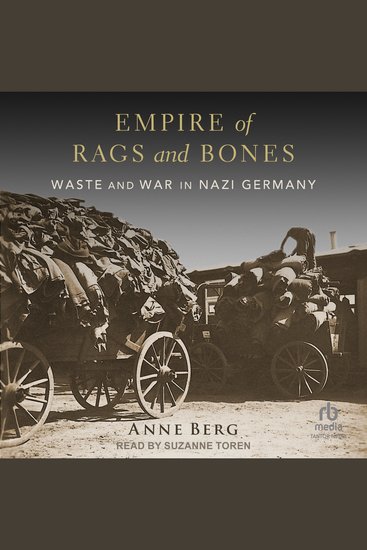
    Paper, kitchen garbage, rubber, hair, fat, rags, and bones—the Nazi empire demanded its population collect anything that could be reused. Citizens conjured up schemes to squeeze value from waste or invent new purposes for defunct or spent material, no matter the cost to people or the environment. As WWII dragged on, rescued loot—much of it waste—clogged transport routes and piled up in warehouses across Europe. 


    Historicizing the much-championed ideal of zero waste, Anne Berg shows that the management of waste was central to the politics of war and to the genesis of genocide in the Nazi Germany. Destruction and recycling were part of an overarching strategy to redress raw material shortages, procure lebensraum, and cleanse the continent of Jews and others considered undesirable. Resource extending schemes obscured the crucial political role played by virtually all German citizens to whom salvaging, scrapping, and recycling were promoted as inherently virtuous and orderly behaviors. Throughout Nazi occupied-Europe, Jews, POWs, concentration camp inmates, and enemy civilians were forced to recycle the loot, discards, and debris of the Nazi race war. In the end, the materials that were fully exploited and the people who had been bled dry were cast aside, buried, burned, or left to rot. Nonetheless, waste reclamation did not have the power to win the war.
    Show book
  • Life of Chopin - cover

    Life of Chopin

    Franz Liszt

    • 0
    • 0
    • 0
    Chopin was a romantic era Polish composer. This work is a memoir by Liszt who knew Chopin both as man and artist. This memoir gives a unique understanding to the psychological character of the compositions of Chopin. It also offers Liszt's insight into some of Chopin's polonaises, especially the grand polonaise in F sharp minor. Liszt explains the strange emotion "ZAL" which is inclosed in his compositions. Then, presents a brief sketch on the lives of other great people in Chopin's circle. After that, Liszt discusses Chopin's fame and early life. Finally, Liszt gives a detailed account on Chopin's sufferings due to ill health and the unfortunate departure of the great composer. - Summary by ?
    Show book
  • British Empire - Details of the Largest Empire in Human History - cover

    British Empire - Details of the...

    Kelly Mass

    • 0
    • 0
    • 0
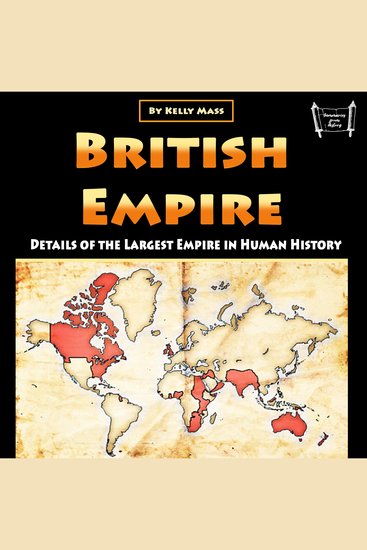
    The British Empire was an extensive network of dominions, colonies, protectorates, mandates, and territories ruled or administered by the United Kingdom and its predecessor governments. This sprawling empire evolved from England's early ventures into overseas territories and trading ports, beginning in the late 16th century and continuing through the early 18th century. The empire grew to become the largest in recorded history, dominating global affairs for more than a century. 
    The roots of the British Empire can be traced back to England’s desire to expand its economic and political influence, driven by competition with other European powers like Spain and Portugal, who were leading the Age of Exploration. These countries had established lucrative colonial empires in the Americas, Africa, and Asia, amassing great wealth and resources. Inspired by their success, England, along with France and the Netherlands, began establishing its own colonies and trading posts, particularly in North America, the Caribbean, and Asia. 
    During the 17th and 18th centuries, the British Empire grew in strength through a combination of military conquests, naval power, and strategic alliances. Following its unification with Scotland through the 1707 Act of Union, Britain emerged as a major colonial power, extending its control across vast regions. The empire's reach expanded dramatically after the series of conflicts with its rivals, including the Anglo-Dutch Wars and the long-standing hostilities with France, culminating in Britain's dominance over North America and its influence over global trade routes.
    Show book
  • A Lesbian's Story - cover

    A Lesbian's Story

    Carol East

    • 0
    • 0
    • 0
    Everyone has to go through their first time, it's kind of a right of passage. Sometimes it's because of a strong connection and other's because of blind luck. Whenever it happens, it is, I believe, destiny that you find the right person. If it turns out to be a soul mate then it was meant to be. This is one such story.I've added a bonus story to this one called: The Sweetest LesbianThis tale is graphic in nature and is intended for adults only. All characters depicted are eighteen or older. 
    Show book
  • Medieval England: The History of England from the Fall of Rome to the Rise of the Tudor Dynasty - cover

    Medieval England: The History of...

    Editors Charles River

    • 0
    • 0
    • 0
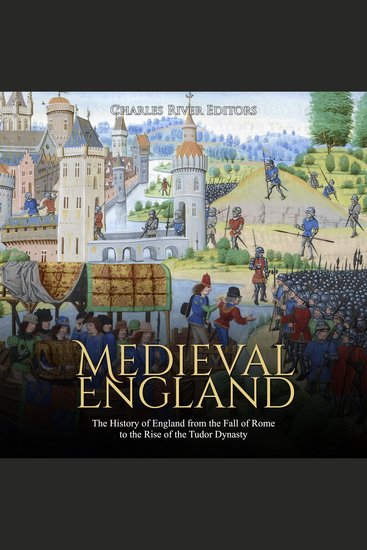
    As the Western Roman Empire collapsed in the late 5th century, Hadrian’s Wall was abandoned and Roman control of the area broke down. Little is known of this period of British history, but soon the Anglo-Saxons – who had been harassing the Saxon Shore as pirates – showed up and began to settle the land, creating a patchwork of little kingdoms and starting a new era of British history. Several early medieval historians, writing well after the events, said the Anglo-Saxons were invited to Britain to defend the region from the northern tribes and ended up taking over. The Venerable Bede (672 or 673-735) said in his Historia ecclesiastica gentis Anglorum (“Ecclesiastical History of the English People”) that in the year 449, “The British consulted what was to be done and where they should seek assistance to prevent or repel the cruel and frequent incursions of the northern nations. They all agreed with their king Vortigern to call over to their aid, from the parts beyond the sea, the Saxon nation. … The two first commanders are said to have been Hengist and Horsa.” 
    However they came to control most of England, the Anglo-Saxons became the dominant power in the region for nearly 500 years, and the strength of their cultural influence could be felt even after William the Conqueror won the Battle of Hastings and became the first Norman ruler on the island. The efforts to consolidate his rule in England were complicated from the start, both due to external enemies and those jockeying for his position while he was still alive, but the Normans would manage just barely to cling to power over England, and William remains the last foreign conqueror of the island.
    Show book
  • The Future Starts Now - Expert Insights into the Future of Business Technology and Society - cover

    The Future Starts Now - Expert...

    Theo Priestley, Bronwyn Williams

    • 0
    • 0
    • 0
    Featuring contributions from an international array of futurists, The Future Starts Now provides fascinating insights and guidance into how society and business will transform in the years to come. 


    The future is an uncertain, uncomfortable prospect for employees, employers, and society at large. A flurry of unprecedented events have proven that, despite what some politicians and economists may tell us, the future is not set in stone. In light of this uncertainty, The Future Starts Now looks toward the various innovations and technologies that may shape our future. Authors Theo Priestley and Bronwyn Williams have brought together the world's leading futurists to articulate and clarify the current trajectories in technology, economics, politics, and business. 


    This is a comprehensive history of tomorrow, exploring groundbreaking topics such as AI, privacy, education, and the future of work. While the guidance, insight, and predictions are fascinating for anyone curious about what the future may hold, the book also functions as an invaluable guide for business professionals looking to steer their career or their organization with foresight and confidence.
    Show book