Begleiten Sie uns auf eine literarische Weltreise!
Buch zum Bücherregal hinzufügen
Grey
Einen neuen Kommentar schreiben Default profile 50px
Grey
Jetzt das ganze Buch im Abo oder die ersten Seiten gratis lesen!
All characters reduced
Eugenics and Other Evils - cover

Eugenics and Other Evils

G.K. Chesterton

Verlag: DigiCat

  • 0
  • 0
  • 0

Beschreibung

In "Eugenics and Other Evils," G. K. Chesterton presents a fervent critique of the early 20th-century eugenics movement, meticulously dissecting its philosophical foundations and socio-political ramifications. Employing his characteristic wit and incisive logic, Chesterton explores the dangers of applying mechanical principles to human life, advocating for the intrinsic value of individuality over collectivist ideologies. This polemic not only situates itself within the historical context of a burgeoning eugenics discourse but also stands as a timeless reflection on the moral complexities inherent in social engineering and the commodification of human potential. G. K. Chesterton, a prolific writer and thinker, drew from his diverse experiences as a journalist, theologian, and philosopher to craft this incisive work. His deep-rooted beliefs in Christianity and human dignity fuel his arguments against eugenics, as he posits that humanity's worth transcends mere biological determinism. Having witnessed the socio-economic turmoil and ideological extremities of his time, Chesterton was compelled to champion the cause of the marginalized, emphasizing the dire consequences of dehumanization and mechanistic thinking. "Eugenics and Other Evils" is an essential read for those who seek to understand the moral implications of societal frameworks on human life. Chesterton's provocative insights offer valuable lessons in safeguarding human dignity against the encroaching shadows of reductionism and utilitarianism. This book is a clarion call for an ethical examination of our approaches to societal progress, making it indispensable for scholars, ethicists, and anyone concerned with the future of humanity.
Verfügbar seit: 04.09.2022.
Drucklänge: 119 Seiten.

Weitere Bücher, die Sie mögen werden

  • The Wealth of Nations Book 5 - cover

    The Wealth of Nations Book 5

    Adam Smith

    • 0
    • 0
    • 0
    An Inquiry into the Nature and Causes of the Wealth of Nations is the magnum opus of the Scottish economist Adam Smith, published on March 9, 1776 during the Scottish Enlightenment. It is a clearly written account of political economy at the dawn of the Industrial Revolution, and is widely considered to be the first modern work in the field of economics. (Introduction from Wikipedia)This project was proof listened by mim@can, Betty M., and Barry Eads.
    Zum Buch
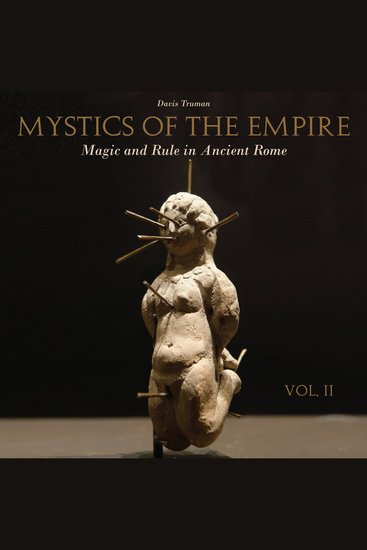
  • Mystics of the Empire - Magic and Rule in Ancient Rome - Volume 2 - cover

    Mystics of the Empire - Magic...

    Davis Truman

    • 0
    • 0
    • 0
    In Mystics of the Empire, this groundbreaking study delves into the often-overlooked relationship between Roman emperors and magic, offering a fresh perspective on how sorcery and power intersected in the ancient world. While the lives and reigns of emperors have long captivated scholars, the fascinating role of magic in their rule remains a largely unexplored area of historical inquiry. This book examines how emperors were depicted as patrons of magical practices and as victims and persecutors of sorcery, revealing the complex political, social, and religious ramifications of magic in the Roman Empire. 
    From the mystical associations of the early emperors to the later, more controversial reigns of figures like Elagabalus, Mystics of the Empire analyzes the twofold nature of magic’s role — whether it was used as a tool for imperial authority or as a threat to Roman stability. The book explores how emperors employed magicians for their purposes and how their engagement with magic could be a source of political intrigue and downfall. Drawing on ancient sources and case studies, the narrative illuminates how these magical associations shaped the representation of emperors while also addressing the motivations behind these portrayals. 
    By offering a detailed examination of the magical context from the establishment of the Principate to the end of the Severan dynasty, Mystics of the Empire reveals the intricate interplay between the mystical and the political in ancient Rome. This work challenges traditional understandings of Roman governance, providing readers with a deeper appreciation of how magic was used as a tool of power, control, and subversion in one of history’s most enduring empires.
    Zum Buch
  • The PMP Project Management Professional Certification Exam Study Guide PMBOK Seventh 7th Edition - The Complete Exam Prep With Practice Tests and Insider Tips & Tricks For a 98% Pass Rate on Your First Attempt - cover

    The PMP Project Management...

    Aces5

    • 0
    • 0
    • 0
    Dear Future PMP Certified Professional, 
    Do you dream of holding that globally respected PMP certification, having doors of opportunity swing wide open, and commanding respect in the project management world? It's closer than you think. 
    For 30 long years, we've crafted the perfect map, a guiding star, to scale this mountain. we present to you a study guide that's not just informative - it's TRANSFORMATIVE. 
    Navigating the path to PMP certification can often seem like a Herculean endeavor. For 30 years, we've seen countless students grapple with the vastness and intricacies of the exam. Distilling those three decades of expertise, we've crafted a study guide that is not only comprehensive but exceptionally intuitive. 
    Benefits: 
    Masterful Coverage: Dive deep into every topic that the PMP exam covers, ensuring no surprises on exam day. 
    Tried and Tested Strategies: Leveraging 30 years of experience, we bring you strategies that have been proven to work, time and time again. 
    Mock Tests with Real-life Scenarios: Practice with real-world problems, preparing you to tackle the challenging situational questions of the exam. 
    Time-saving Study Plans: Whether you have 6 months or 6 weeks, our guide offers customizable study plans tailored to your schedule. 
    Interactive Elements: Engage with dynamic charts, mind maps, and infographics to make your study sessions more interactive and productive. 
    Continuous Updates: PMP standards evolve, and so does our guide. Rest assured, you're always studying the most up-to-date material. 
    And so on... Scroll Up to Click Download to Get Started.
    Zum Buch
  • Life in a Mediaeval City Illustrated by York in the XVth Century - cover

    Life in a Mediaeval City...

    Edwin Benson

    • 0
    • 0
    • 0
    A short and gentle overview of mediaeval life in a large city. It lightly covers the class structure of society, local government, guilds, pageantry and punishment. The author has an easy, rhythmic style which leaves the reader wanting to find out more. (Summary by Peter Yearsley)
    Zum Buch
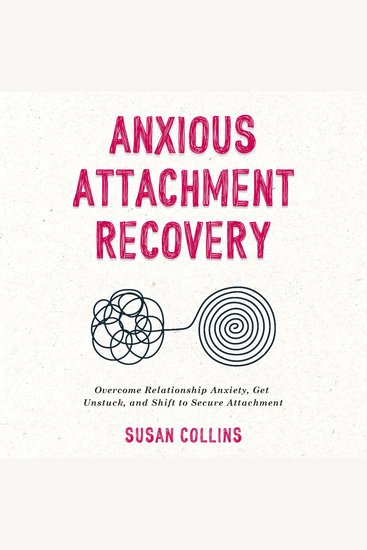
  • Anxious Attachment Recovery - Overcome Relationship Anxiety Get Unstuck and Shift to Secure Attachment - cover

    Anxious Attachment Recovery -...

    Susan Collins

    • 0
    • 0
    • 0
    Does the fear of abandonment haunt you, even in the happiest moments? Have you tried to change, but the grip of anxiety and insecurity holds you back? 
    Are you tired of feeling insecure, always needing reassurance, yet never quite believing it? 
    Do you find yourself constantly anxious about your relationships? 
    I know that pain, the silent battles waged within the walls of the mind, the echoes of doubt drowning out every whisper of assurance. I’ve been there. You are not alone, and I understand the silent storm that rages within you. 
    But first a warning: 
    This book is not a quick fix for those looking for instant solutions without effort. If you want a magical remedy that requires no work, this is not the book for you. Real, lasting change comes from being honest with yourself and committing to personal growth over time. If you’re ready to put in the effort, this book will guide you to a secure and confident self. 
    Here's a little sneak preview of what you’ll get: 
    - Five Crucial Questions Before Reconciling 
    - How Does An Anxious Attachment Style Develop? 
    - 10 Signs You May Have An Anxious Attachment Style 
    - Why The Anxious Attachment Style Fears Intimacy and How to Fix It 
    - The Five Key Qualities for Greater Resilience 
    - Understanding Triggers 
    - Strategies for Separating Past from Present 
    - Recognizing Body Signals 
    - The Blindspot That Keeps You Repeating The Same Relationship Mistakes 
    - Building a Solid Identity and Healthy Boundaries 
    - Communication Strategies for the Anxious Partner 
    - Strategies for Personal and Relational Growth 
    - The Four Phases That Transform Your Attachment 
    - From Anxious to Secure in 10 StepsTake the first step towards a confident and secure you. Don’t let anxiety and insecurity control your life any longer. 
    Zum Buch
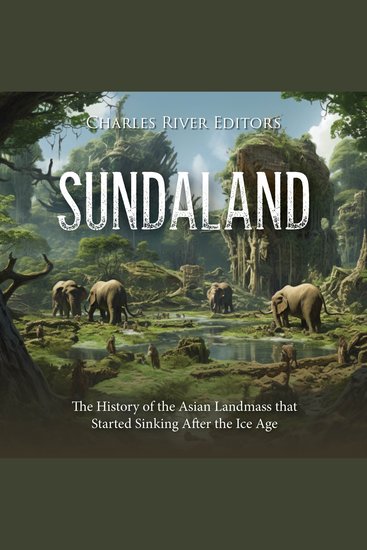
  • Sundaland: The History of the Asian Landmass that Started Sinking After the Ice Age - cover

    Sundaland: The History of the...

    Editors Charles River

    • 0
    • 0
    • 0
    By the time the Pleistocene Epoch ended around 12,000 years ago, Homo sapiens had become one of the most significant species on the planet. 	It was also near the end of that period of time that modern humans began to gradually populate what would become Europe, Asia, and the Americas, eventually becoming the inheritors of the Paleolithic era and the only human species to make it into the Neolithic era. The process was long and difficult, and the survival of the species only happened through a combination of human tenacity and a fair amount of luck. As much as humans evolved during the Pleistocene, the topography, geography, and environment changed even more. 
    The cold Pleistocene temperatures lowered water levels across the planet, exposing land that was not there before or after the period. At the same time, significant regions of the planet were very different during the Pleistocene, including Southeast Asia, particularly the modern islands of Bali, Borneo, Sumatra, and the Malay Peninsula, roughly equivalent to parts of Indonesia, Malaysia, Myanmar, and Thailand. This region, which modern scholars refer to as Sunda or Sundaland, was unique because all of it was connected by land, meaning today’s islands were once part of a contiguous subcontinent, and in terms of the people, flora, and fauna, it was very different than it is today. If a modern traveler could somehow transport back to the Pleistocene, Sundaland would look nothing like modern Southeast Asia and would resemble as much of a lost world as something out of a science fiction novel.  
    Although much is still unknown about Sundaland, researchers have uncovered plenty of evidence bringing this lost world to life. As anthropologists and archaeologists developed new models and discovered ancient material culture, they learned that Sundaland played a significant role in the development of Neolithic Southeast Asia in many ways. 
    Zum Buch