Join us on a literary world trip!
Add this book to bookshelf
Grey
Write a new comment Default profile 50px
Grey
Subscribe to read the full book or read the first pages for free!
All characters reduced
The Decameron (Day 6 to Day 10) - Containing an hundred pleasant Novels - cover

The Decameron (Day 6 to Day 10) - Containing an hundred pleasant Novels

Giovanni Boccaccio

Translator John Florio

Publisher: DigiCat

  • 0
  • 0
  • 0

Summary

Giovanni Boccaccio's "The Decameron," particularly Days 6 to 10, serves as a profound exploration of human experience through a series of interlinked narratives set against the backdrop of the Black Death. This collection, characterized by its vernacular Italian prose and a rich tapestry of styles ranging from comedic to tragic, delves into themes of love, wit, and morality, revealing the complexities of relationships and societal norms in 14th century Italy. Here, Boccaccio masterfully employs storytelling as a means of both escapism and social critique, presenting a microcosm of a society grappling with despair while celebrating the resilience of the human spirit. Boccaccio, a key figure in Renaissance literature, was deeply influenced by the tumultuous events of his time, including the ravages of the plague. His formative years in Florence, a city at the crossroads of culture and commerce, exposed him to diverse intellectual movements and humanist ideals that shaped his approach to storytelling. "The Decameron" draws heavily on his experiences, personal observations, and the oral traditions of the era, showcasing his ability to blend the everyday with the extraordinary. Engaging and insightful, this volume of "The Decameron" is recommended for readers interested in understanding the human condition through the lens of historical fiction. Boccaccio's intricate narratives are not only entertaining but also provoke reflection on timeless issues of love, mortality, and ethical dilemmas, making this text a relevant and enriching addition to any literary collection.
Available since: 09/04/2022.
Print length: 415 pages.

Other books that might interest you

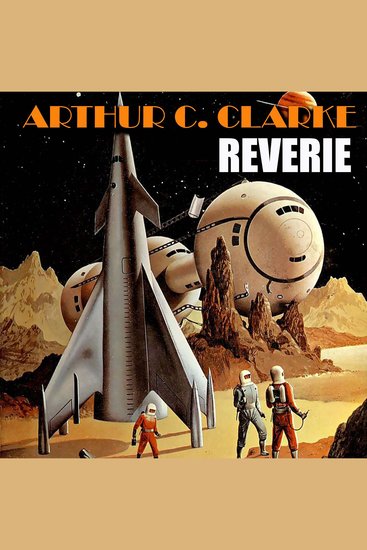
  • Reverie - cover

    Reverie

    Arthur C. Clarke

    • 0
    • 0
    • 0
    "Reverie" is a 1992 short story by Arthur C. Clarke, not a novel. It's a part of the collection "The Stories of Arthur C. Clarke" and is not as well-known as his other works like "Childhood's End" or "Rendezvous with Rama". The story involves the encounter with a giant, apparently abandoned, alien ship, and the subsequent exploration of its mysteries by a group of human astronauts.
    Show book
  • The Old Man and The Sea - cover

    The Old Man and The Sea

    Ernest Hemingway

    • 0
    • 0
    • 0
    The Old Man and the Sea is a 1952 novella by the American author Ernest Hemingway. Written between December 1950 and February 1951, it was the last major fictional work Hemingway published during his lifetime. It tells the story of Santiago, an aging fisherman, and his long struggle to catch a giant marlin. The novella was highly anticipated and was released to record sales; the initial critical reception was equally positive, but attitudes have varied significantly since then.
    Show book
  • Pride and Prejudice - cover

    Pride and Prejudice

    Anonymous

    • 0
    • 0
    • 0
    This audiobook is narrated by an AI Voice.   
    Jane Austen’s Pride and Prejudice comes to life in this unabridged audiobook, bringing you directly into the witty, romantic, and sharply observed world of the Bennet family. Follow Elizabeth Bennet as she navigates social expectations, family pressures, and her own first impressions of the seemingly proud Mr. Darcy—only to discover that neither people nor reputations are quite what they appear. 
    This audio edition preserves Austen’s original language while making it easy and enjoyable to follow, whether you’re rediscovering a favorite classic or listening for the very first time. The narration highlights the dry humor, sharp dialogue, and emotional undercurrents that have made Pride and Prejudice one of the most beloved novels of all time. 
    Perfect for relaxed evening listening, commutes, or study support, this audiobook offers a rich, immersive way to experience Austen’s timeless story of love, class, and second chances—whenever and wherever you press play.
    Show book
  • The Schoolboy's Story - cover

    The Schoolboy's Story

    Charles Dickens

    • 0
    • 0
    • 0
    The Schoolboy's Story is a short stories by Charles Dickens. Charles John Huffam Dickens (7 February 1812 – 9 June 1870) was an English writer and social critic. He created some of the world's most memorable fictional characters and is generally regarded as the greatest novelist of the Victorian period. During his life, his works enjoyed unprecedented fame, and by the twentieth century his literary genius was broadly acknowledged by critics and scholars. His novels and short stories continue to be widely popular. Born in Portsmouth, England, Dickens was forced to leave school to work in a factory when his father was thrown into debtors' prison.
    Being rather young at present--I am getting on in years, but still I am rather young--I have no particular adventures of my own to fall back upon. It wouldn't much interest anybody here, I suppose, to know what a screw the Reverend is, or what a griffin SHE is, or how they do stick it into parents--particularly hair-cutting, and medical attendance. One of our fellows was charged in his half's account twelve and sixpence for two pills--tolerably profitable at six and threepence a-piece, I should think--and he never took them either, but put them up the sleeve of his jacket.
    Show book
  • Top 10 Short Stories The - Men 1920s - The top ten Short Stories of the 1920's written by male authors - cover

    Top 10 Short Stories The - Men...

    D H Lawrence, F. Scott...

    • 0
    • 0
    • 0
    Short stories have always been a sort of instant access into an author’s brain, their soul and heart.  A few pages can lift our lives into locations, people and experiences with a sweep of landscape, narration, feelings and emotions that is difficult to achieve elsewhere. 
     
    In this series we try to offer up tried and trusted ‘Top Tens’ across many different themes and authors. But any anthology will immediately throw up the questions – Why that story? Why that author?  
     
    The theme itself will form the boundaries for our stories which range from well-known classics, newly told, to stories that modern times have overlooked but perfectly exemplify the theme.  Throughout the volume our authors whether of instant recognition or new to you are all leviathans of literature. 
     
    Some you may disagree with but they will get you thinking; about our choices and about those you would have made.  If this volume takes you on a path to discover more of these miniature masterpieces then we have all gained something. 
     
    War has ruined Nations and peoples.  Revolution has followed in some.  In the aftermath society slowly picks itself up, unaware that collapse is already beginning to ferment in its economic bastions.  The authors of this decade are purposeful with their prose, describing and detailing with stories the brazen nature of this decade.     
     
    1 - The Top 10 - The 1920's - The Men - An Introduction 
    2 - The Rocking Horse Winner by D H Lawrence 
    3 - Bernice Bobs Her Hair by F Scott Fitzgerald 
    4 - The Color Out of Space by H P Lovecraft 
    5 - A Hunger Artist by Franz Kafka 
    6 - The Burial of the Rats by Bram Stoker 
    7 - Brothers by Sherwood Anderson 
    8 - Rats by M R James 
    9 - The Great Slave by Zane Grey 
    10 - The Loathly Opposite by John Buchan 
    11 - The Most Dangerous Game by Richard Connell
    Show book
  • George Silverman's Explanation - cover

    George Silverman's Explanation

    Charles Dickens, Dominic Gerrard

    • 0
    • 0
    • 0
    George Silverman’s Explanation (published in The Atlantic in 1868) is one of Charles Dickens’ rarer short stories. Here the author immerses himself entirely in his character of George Silverman: addressing the reader in a dramatic monologue in which he is reticent, perhaps even unwilling to open up to us, but at the same time compelled to unburden his heart.  
    So deeply does Dickens embody the role of Silverman that in a letter to an editor he writes that: 'I feel as if I had read something (by somebody else) which I should never get out of my head …’ 
    This tale is an indictment against poverty as powerful as you will find in any of Dickens’ larger works. It is also a biting satire against the 'daring ignorance' and little 'meannesses' found in many non-conformist movements. Above all it is a deeply affecting examination of how far a childhood of of both want and punishing religious control can impact a man’s self-worth and future happiness. 
    Narrated by Dominic Gerrard 
    Cover Art by Léna Gibert
    Show book