Join us on a literary world trip!
Add this book to bookshelf
Grey
Write a new comment Default profile 50px
Grey
Subscribe to read the full book or read the first pages for free!
All characters reduced
A History of Ancient Greek Literature - Complete Edition - cover

A History of Ancient Greek Literature - Complete Edition

Gilbert Murray

Publisher: Good Press

  • 0
  • 0
  • 0

Summary

In "A History of Ancient Greek Literature," Gilbert Murray provides a comprehensive survey of the literary achievements of ancient Greece, emphasizing the interplay between cultural and historical forces that shaped its production. Murray's approach is both descriptive and analytical, revealing the evolution of genres from epic poetry to drama, while placing significant works within the broader framework of Greek civilization. His prose is marked by clarity and elegance, making complex ideas accessible, while his scholarly rigor situates the literature within philosophical and social contexts, underscoring its enduring influence on Western thought. Gilbert Murray, a distinguished classical scholar and translator, was profoundly influenced by the turbulent socio-political changes of his time, including the Great War. His deep commitment to humanistic values and understanding of classical traditions motivated him to explore the connections between ancient texts and contemporary issues. Murray's illustrious career, including notable academic positions and his advocacy for the demilitarization of education, informed his insights into the deeper meanings of Greek literature as a reflection of the human condition. This book is an essential resource for anyone interested in the roots of Western literature and thought. Scholars, students, and general readers alike will find Murray's incisive analysis and appreciation of ancient Greek works both illuminating and engaging, making it a vital addition to any literary library.
Available since: 12/21/2023.
Print length: 339 pages.
Other books that might interest you

  • Unguessed Kinships - Naturalism and the Geography of Hope in Cormac McCarthy - cover

    Unguessed Kinships - Naturalism...

    Steven Frye

    • 0
    • 0
    • 0
    It took six novels and nearly thirty years for Cormac McCarthy to find commercial success with All the Pretty Horses, followed by major prizes, more bestsellers, and Hollywood adaptations of his work. Those successes, though, have obscured McCarthy's commitment to an older form of literary expression: naturalism. McCarthy's work tends to darker themes: violence, brutality, the cruel indifference of nature, themes which would not be out of place in the writing of Jack London or Stephen Crane. But literary naturalism is more than the oversimplified Darwinism that many think of. Nature may be red in tooth and claw, and humans are part of nature, but the humanity depicted in naturalist literature is capable of love, selflessness, and spirituality, as well. 


    In Unguessed Kinships, Steven Frye illuminates all these dimensions of McCarthy's work. In his novels and plays, McCarthy engages both explicitly and obliquely with the project of manifest destiny, in the western drama Blood Meridian, the Tennessee Valley Authority-era Tennessee novels, and the atomic frontier of Alamogordo in Cities of the Plain. McCarthy's concerns are deeply religious and philosophical, drawing on ancient Greek philosophy, Gnosticism, and Nietzsche, among other sources. Frye argues for McCarthy not merely as a naturalist writer but as a naturalist in the most expansive sense.
    Show book
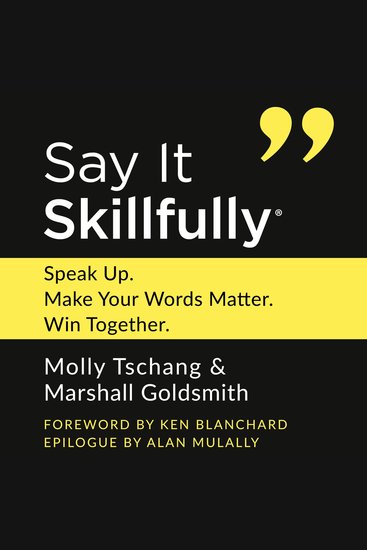
  • Say It Skillfully - Speak Up Make Your Words Matter Win Together - cover

    Say It Skillfully - Speak Up...

    Molly Tschang, Marshall...

    • 0
    • 0
    • 0
        Effective communication is the ultimate currency. It *is* the way to trusted relationships, great work and a happy life—and it’s a team sport. All of us play a role.Whether you’re a CEO, mid-level manager, or individual contributor, Say It Skillfully will empower you to:* Communicate with confidence* Navigate tough conversations with grace* Build stronger relationships, and* Drive meaningful results—ensuring your voice is heard and your impact is maximized.
    Show book
  • Deepika Jindal - cover

    Deepika Jindal

    Sindhy Kashyap

    • 0
    • 0
    • 0
    Mother, wife, and now entrepreneur: Meet Deepika Jindal of the Jindal Steel Family
    Show book
  • Mental Models In A Nutshell - Practical Thinking Frameworks To Amplify Your Decision Making And Simplify Your Life - cover

    Mental Models In A Nutshell -...

    Thinknetic

    • 0
    • 0
    • 0
    What would you do if there was a tool to help you make better decisions in less time? You'd jump at the chance, wouldn't you? 
    Mental models help you filter information, which allows you to see things more clearly and make better decisions. 
    Mental models are also a shortcut to finding the quickest and the best route to solve your problems, whether work-related or personal. 
    The beauty of mental models is that their variety is virtually infinite, and they help you come up with solutions for just about any issue. 
    So you're thinking about opening a business. You're not sure what kind of business will be best. The law of Supply and Demand can help. It dictates that companies provide the goods and services demanded by the public. The most profitable companies are those that do this best. 
    Armed with this knowledge, you can now narrow down your options considerably. 
    "Developing the habit of mastering the multiple models that underlie reality is the best thing you could do," according to Charlie Munger, who credits his success to the lifetime cultivation of a "latticework" of mental models on which to frame his decisions. 
    The problem with the average person's mental models is that most are not designed to handle complexity. 
    And while the conscious use of mental models is possible, they require higher-order thinking skills that few people engage in for various reasons. But that doesn't have to be you! 
    Inside you'll find:How mental models declutter your thinking and stimulate decision-making (warning: immediate impact on 4 cognitive processes!)The Master List of mental models (including the best two used by Munger)3 characteristics that help you to spot an excellent mental modelWhy we don't use mental models and what we tend to do insteadHow to make your mental toolkit resemble a Swiss army knife in 5 steps
    Show book
  • World War II in 1945 - The History of the Battles Fought During the War’s Final Year - cover

    World War II in 1945 - The...

    Editors Charles River

    • 0
    • 0
    • 0
    After resisting the German attack during the Battle of the Bulge, the Allied armies began advancing, and with that, the race to Berlin was truly on. While much has been written of the Battle of the Bulge, Okinawa, Midway, Stalingrad, and many other conflicts of the Second World War, the Battle for Berlin has remained in the shadows for many historians. Its importance in toppling Hitler cannot be denied, despite the fact that some thought its strategic value unnecessary to the war itself. The capture of the city and the red Soviet banner hanging victorious over the Reichstag is one of history’s most famous (an ominous) images. In the weeks it took for the Battle of Berlin to be fought, an American president passed away, a British Prime Minister had to make concessions he did not desire, a Russian leader fought his way into Western Europe to stay, and a German one took his own life. The battle’s implications would be felt for the next 50 years. 
    The Battle of Iwo Jima, code name “Operation Detachment,” is more of a misnomer than anything. It was fought as part of a large American invasion directed by steps toward the Japanese mainland, and it was more like a siege that lasted 36 days from February-March 1945, with non-stop fighting every minute. In fact, the iconic flag-raising photo was taken just four days into the battle, and as that picture suggests, the battle was not a pristine tactical event but an unceasing horror with no haven for protection.  
    Okinawa witnessed every conceivable horror of war both on land and at sea. American ground forces on Okinawa had to deal with bad weather (including a typhoon), anti-tank moats, barbed wire, mines, caves, underground tunnel networks, and fanatical Japanese soldiers who were willing to use human shields while fighting to the death. Allied naval forces supporting the amphibious invasion had to contend with Japan’s notorious kamikazes, suicide pilots who terrorized sailors.
    Show book
  • How To Raise A Citizen (And Why It's Up to You to Do It) - cover

    How To Raise A Citizen (And Why...

    Lindsey Cormack

    • 0
    • 0
    • 0
    An essential guide to nurturing the next generation of responsible, informed citizens 


    Lindsey Cormack's book, How to Raise a Citizen (And Why It's Up to You to Do It), speaks directly to an America in which civic knowledge is alarmingly sparse and many people dread politics. It's a tool for parents, educators, and anyone eager to fill this gap. In the book, Cormack offers an engaging and practical approach to discussing political issues and the inner workings of the US government with children. She explains why our schools can no longer be the sites of civic education that they used to be and provides parents with strategies and necessary know-how to be able to impart these lessons to their children. From the intricacies of the voting process to the foundational principles of democracy and the significance of key government documents like the Constitution, the author demystifies complex topics with clarity and insight. 


    How to Raise a Citizen is a roadmap to a future where political dialogue and civic engagement are not just encouraged but celebrated in our homes. With actionable advice and easy-to-understand explanations, it empowers listeners to instill a sense of civic responsibility and curiosity in the young minds they influence.
    Show book