Join us on a literary world trip!
Add this book to bookshelf
Grey
Write a new comment Default profile 50px
Grey
Subscribe to read the full book or read the first pages for free!
All characters reduced
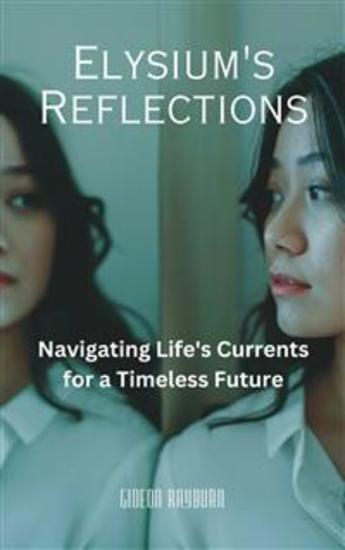
Elysium's Reflections - Navigating Life's Currents for a Timeless Future - cover

Elysium's Reflections - Navigating Life's Currents for a Timeless Future

Gideon Rayburn

Publisher: BookRix

  • 0
  • 0
  • 0

Summary

Embark on a profound journey of self-discovery and preparation for the future with "Elysium's Reflections." Drawing inspiration from the timeless wisdom of Socrates and the intriguing tale of Ivan the Terrible, this book offers insights into the art of living a purposeful and fulfilling life. As we navigate the currents of existence, we are constantly shaping our destinies. The narrative explores the idea that our present actions determine the kind of people we become in the future—a philosophy encapsulated in the quote, "We shall be the same kind of people that we were here." With each passing moment, we are sculpting our character, preparing for the chapters of life yet to unfold. Delve into the nuanced examination of Ivan the Terrible's life, skillfully portrayed by Richard Mansfield, revealing the consequences of a life steeped in cruelty, selfishness, and unchecked wrath. The lessons derived from this exploration offer readers a mirror to reflect upon their own choices and the paths they are laying for their futures. "Elysium's Reflections" does not just dissect the negative aspects of life; it also emphasizes the beauty of old age when it is a result of living a beautiful life. Resignation and consideration for the rights of others are presented as the two elements that can make the golden years truly golden. The book challenges readers to introspect and question their daily actions, providing practical advice on how to navigate life's complexities. It underscores the importance of cultivating qualities like Good Nature, patience, and a compassionate perspective toward others, acting as beacons of light in our journey towards a fulfilling existence. Discover the secrets of salvation, the power of self-absolution, and the art of keeping sweet amidst life's inevitable challenges. "Elysium's Reflections" serves as a timeless guide for those seeking purpose, wisdom, and a harmonious preparation for the chapters yet to be written.
Available since: 02/09/2024.
Print length: 41 pages.

Other books that might interest you

  • ATOMIC HABITS 10-Minute Summary - An Easy & Proven Way to Build Good Habits and Break Bad Ones - cover

    ATOMIC HABITS 10-Minute Summary...

    James Cleary

    • 0
    • 0
    • 0
    This book by James Clear offers an approach rooted in neuroscience, psychology, and sociology to help people build positive habits and eliminate negative ones. Its core premise is that habits are the foundation of success, and that small, incremental changes can lead to significant improvements in one’s life. 
    Beyond their personal impact on identity and success, Atomic Habits also raises broader questions about the role habits play in shaping societies and cultures. While Clear focuses on individual development, his principles can be applied collectively. For example, what would happen if governments, businesses, or communities intentionally designed environments that encourage good habits at scale? Behavioral architecture is already in use in some areas—like walkable city design or waste reduction through nudging strategies—but its full potential remains largely untapped. 
    Another underexplored aspect is how digital technology affects habit formation. In a world where algorithms influence what we see, read, and buy, our habits are no longer purely personal choices—they’re shaped by systems designed to maximize our engagement. This raises a critical question: how can we regain control over our behavior in such a hyperconnected environment? 
    Habits are valuable when they fit the context, but what happens when that context changes? A habit that’s beneficial today might become irrelevant—or even harmful—tomorrow. Real mastery isn’t just about building habits; it’s also about knowing when to adapt or let them go. 
    Ultimately, the book reminds us that the power to change lies in our hands—not in sweeping decisions, but in the small, consistent actions we take each day. Over time, those actions shape who we become and what we achieve. 


    Show book
  • Physiologus - A Medieval Book of Nature Lore - cover

    Physiologus - A Medieval Book of...

    Michael J. Curley

    • 0
    • 1
    • 0
    One of the most popular and widely read books of the Middle Ages, Physiologus contains allegories of beasts, stones, and trees both real and imaginary, infused by their anonymous author with the spirit of Christian moral and mystical teaching.  Accompanied by an introduction that explains the origins, history, and literary value of this curious text, this volume also reproduces twenty woodcuts from the 1587 version. Originally composed in the fourth century in Greek, and translated into dozens of versions through the centuries, Physiologus will delight readers with its ancient tales of ant-lions, centaurs, and hedgehogs—and their allegorical significance. “An elegant little book . . . still diverting to look at today. . . . The woodcuts reproduced from the 1587 Rome edition are alone worth the price of the book.”—Raymond A. Sokolov, New York Times Book Review
    Show book
  • The Founding of America - The Words that Shaped a Nation - cover

    The Founding of America - The...

    Alexander Hamilton, James...

    • 0
    • 0
    • 0
    This anthology brings together 20 texts which were vital in forging the United States and its constitution as we know it. 
    Since the founding of the republic, great thinkers and politicians have set out their visions for America through formal documents, impassioned speeches and momentous treaties. This collection includes some of the most important works that helped define the country that America was to become. 
    Politicians like George Washington, Benjamin Franklin, and Alexander Hamilton helped define the founding values of the United States of America. Their bold and revolutionary ideas did not come about unopposed, and they found themselves called upon to explain their reasoning to the wider public. The words of these incredible individuals ring just as true today as when they were first made and provided a firm foundation for the country that is the America we know and love today. 
    This volume features documents such as: 
    The Declaration of IndependenceBenjamin Franklin's Final Speech to the Constitutional ConventionThe Constitution and the AmendmentsThe Federalist PapersPresident George Washington's Farewell AddressThe Emancipation Proclamation
    Show book
  • Obadiah - The World English Bible Book 31 (Unabridged) - cover

    Obadiah - The World English...

    Various Authors

    • 0
    • 0
    • 0
    Obadiah is a biblical prophet. The authorship of the Book of Obadiah is traditionally attributed to the prophet Obadiah.
    Show book
  • A Rare Recording of Film Icons Humphrey Bogart and Lauren Bacall - cover

    A Rare Recording of Film Icons...

    Humphrey Bogart, Lauren Bacall

    • 0
    • 0
    • 0
    Humphrey DeForest Bogart (December 25, 1899 - January 14, 1957), nicknamed Bogie, was an American actor. His performances in classic Hollywood cinema films like The Maltese Falcon, Casablanca, and The Caine Mutiny, made him an American cultural icon. In 1999, the American Film Institute selected Bogart as the greatest male star of classic American cinema. Lauren Bacall, born Betty Joan Perske (September 16, 1924 - August 12, 2014), was one of the greatest female stars of classic Hollywood cinema and an award-winning Broadway stage actress. She was known for her alluring, sultry presence and her distinctive, husky voice. In the following September 1954 recording, Bogart and then-wife Bacall are interviewed at their Los Angeles, CA by Edward R. Murrow.
    Show book
  • Who Owns This Sentence? - A History of Copyrights and Wrongs - cover

    Who Owns This Sentence? - A...

    David Bellos, Alexandre Montagu

    • 0
    • 0
    • 0
    Copyright is everywhere. Your smartphone incorporates thousands of items of intellectual property. Someone owns the reproduction rights to photographs of your dining table. At this very moment, battles are raging over copyright in the output of artificial intelligence programs. Not only books but wallpaper, computer programs, pop songs, cartoon characters, snapshots, and cuddly toys are now deemed to be intellectual properties—making copyright a labyrinthine construction of laws with colorful and often baffling rationales covering almost all products of human creativity. 


    It wasn't always so. Copyright has its roots in eighteenth-century London, where it was first established to limit printers' control of books. But a handful of little-noticed changes in the late twentieth century brought about a new enclosure of the cultural commons, concentrating ownership of immaterial goods in very few hands. Copyright's metastasis can't be understood without knowing its backstory, a long tangle of high ideals, low greed, opportunism, and word-mangling that allowed poems and novels (and now, even ringtones and databases) to be treated as if they were no different from farms and houses. Principled arguments against copyright arose from the start and nearly abolished it in the nineteenth century. Nonetheless, countless revisions have made copyright ever stronger.
    Show book