Join us on a literary world trip!
Add this book to bookshelf
Grey
Write a new comment Default profile 50px
Grey
Subscribe to read the full book or read the first pages for free!
All characters reduced
Steel Empire - cover

Steel Empire

Gideon Fairchild

Translator A AI

Publisher: Publifye

  • 0
  • 0
  • 0

Summary

Steel Empire explores the dramatic transformation of the United States into an industrial powerhouse through the lens of the American steel industry. During the Gilded Age, innovations like the Bessemer process enabled mass production, forever changing the economic and urban landscape. The book uniquely examines how figures like Andrew Carnegie, representing entrepreneurial vision, intersected with the often harsh realities faced by steelworkers, offering a balanced view of the era's unprecedented growth and social inequality. The book argues that the steel industry's success resulted from abundant resources, favorable government policies, and a relentless pursuit of efficiency. Early chapters detail the technological breakthroughs that facilitated mass production, followed by an analysis of industrial leaders and a dedicated examination of the lives and struggles of steelworkers. By connecting industrial history with economics, sociology, and urban planning, Steel Empire provides a comprehensive and accessible understanding of the forces that shaped modern America.
Available since: 03/21/2025.
Print length: 66 pages.

Other books that might interest you

  • Me Myself and I - Unraveling the Mysteries of the Mind and Self - cover

    Me Myself and I - Unraveling the...

    Grant Mattos

    • 0
    • 0
    • 0
    Embark on a profound journey of self-discovery with "Me, Myself, and I: Unraveling the Mysteries of the Mind and Self." This meticulously crafted guide blends science, philosophy, and psychology to explore the essence of being human. From understanding the complexities of consciousness to the influence of technology on our identities, each chapter invites deep reflection and provides practical tools for self-discovery. Through engaging with existential questions and spiritual traditions, readers are encouraged to delve into the depths of their being and emerge more aware and connected. Join this transformative odyssey into the heart of who you are and embrace a richer, more meaningful life.
    Show book
  • Kingdom of Kongo - Christianity Trade and the Kingdom That Resisted Colonization - cover

    Kingdom of Kongo - Christianity...

    Rolf Hedger

    • 0
    • 0
    • 0
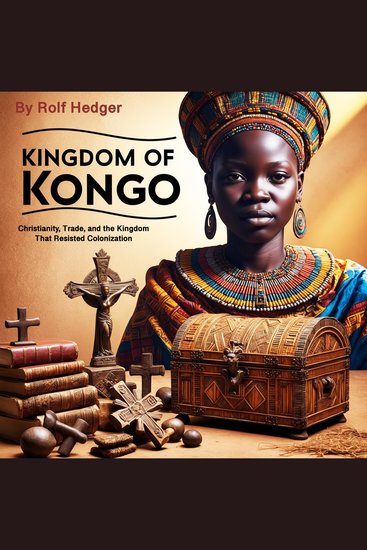
    The Kingdom of Kongo emerged as one of the most powerful and centralized states in Central Africa. Its origins can be traced back to the early Bantu migrations, which spread agriculture, ironworking, and complex social structures across the region. By the 14th century, various smaller chiefdoms in present-day Angola and the Democratic Republic of Congo began to coalesce under a single authority, forming what would become the Kingdom of Kongo. 
    The region’s fertile lands and access to major rivers facilitated both agriculture and trade. Kongo’s early economy relied on the cultivation of crops such as millet, sorghum, and bananas, as well as the production of iron tools and weapons. The abundance of natural resources allowed the ruling elite to accumulate wealth and expand their influence. As trade networks developed, Kongo became a center of commerce, linking the interior regions of Central Africa with coastal markets. 
    Kongo's social and political organization was highly structured. At the top of the hierarchy was the king, known as the Manikongo, who ruled from the capital, Mbanza Kongo. The Manikongo exercised authority over provincial rulers, who governed different regions of the kingdom. This system allowed for centralized administration while also granting local leaders autonomy in managing their territories. The kingdom was further divided into districts and villages, with a bureaucratic structure that ensured tax collection, military organization, and judicial functions.
    Show book
  • More Stories Behind the Best-Loved Songs of Christmas - Heartwarming Stories Behind Popular Carols - cover

    More Stories Behind the...

    Anonymous

    • 0
    • 0
    • 0
    Ace Collins has dug deep to uncover the true stories behind your favorite Christmas songs. Explore how these songs came into being, and discover a deeper appreciation for these melodic messages of peace, hope, and joy that celebrate the birth of Jesus.
    Show book
  • The Ark Deluge and the World’s Great Year - Ancient Egypt the Light of the World Book 9 - cover

    The Ark Deluge and the World’s...

    Gerald Massey

    • 0
    • 0
    • 0
    After the deluge in “the destruction of mankind” the god Ra establishes a covenant with those who have escaped from the flood. He says that what he commanded is well done, and that the destruction of his enemies removes destruction from themselves. “Said by the majesty of Ra, It is well done, all this. I shall now protect men on account of this. Said by Ra, I now raise my hand that I shall not destroy men” i.e. not again. The making of this covenant after the deluge is followed by the establishment of the New Year’s festival under the direction of the young priestesses of Hathor. ―from “The Ark, the Deluge, and the World’s Great Year” It goes unappreciated by modern Egyptologists, but it is embraced by those who savor the concept of a “hidden history” of humanity, and those who approach all human knowledge from the perspective of the esoteric. Gerard Massey’s massive Ancient Egypt: The Light of the World―first published in 1907 and the crowning achievement of the self-taught scholar―redefines the roots of Christianity via Egypt, proposing that Egyptian mythology was the basis for Jewish and Christian beliefs. Here, Cosimo proudly presents Book 9 of Ancient Egypt, in which Massey explores the prevalent imagery across numerous mythological traditions of a global flood unleashed at the behest of an angry god, and shows how they all sprang from Egyptian folklore. Peculiar and profound, this work will intrigue and delight readers of history, religion, and mythology. British author GERALD MASSEY (1828–1907) published works of poetry, spiritualism, Shakespearean criticism, and theology, but his best-known works are in the realm of Egyptology, including A Book of the Beginnings and The Natural Genesis.
    Show book
  • Social Justice Fallacies: Book Summary and Analysis - cover

    Social Justice Fallacies: Book...

    Briefly Summaries

    • 0
    • 0
    • 0
    This is a concise summary and analysis of Social Justice Fallacies, by Thomas Sowell.
     
    It is not the original book and is not affiliated with or endorsed by Thomas Sowell.
     
    Ideal those seeking a quick and insightful overview.


    What if the pursuit of fairness and justice was leading us down a path of unintended harm? In Social Justice Fallacies, the author dismantles the myths and misconceptions that dominate modern social justice narratives, offering a bold, evidence-based critique that will challenge the way you think about fairness, equality, and progress.
     
    This thought-provoking audiobook explores how well-intentioned policies—aimed at correcting historical wrongs and creating equal outcomes—often backfire, perpetuating dependency, resentment, and inefficiency. With clarity and rigor, the author dissects key social justice fallacies, from the misinterpretation of group disparities to the misuse of historical narratives. Through real-world examples and data-driven insights, the book reveals how cultural values, individual choices, and economic principles play a greater role in shaping outcomes than popular narratives suggest.
    Show book
  • The Persian Continuum - cover

    The Persian Continuum

    Santiago Machain

    • 0
    • 0
    • 0
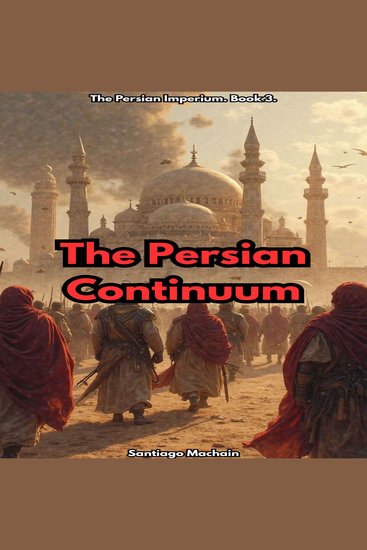
    The Persian Continuum traces how the Achaemenid Empire’s administrative genius, religious pragmatism, and infrastructural vision shaped a vast world stretching from the Aegean to the Indus—and how Alexander’s lightning conquests disrupted but did not erase that order. Through a sequence of richly drawn chapters, the book follows the Persian high tide under Xerxes, the long wars and negotiations with Greek city-states, and the empire’s resilient governance from Egypt to Bactria. It then charts Macedon’s rise under Philip II, Alexander’s campaigns and statecraft, and the striking continuity of Persian institutions under Hellenistic rulers. 
    Beyond conquest, the narrative explores what came after: Seleucid experiments in Greek cityhood layered over Iranian provincial rule, Parthian aristocratic federalism built on cavalry and caravan routes, and Sasanian resurgence with law, priesthood, and fortified frontiers. The final chapters bring the story into the present, revealing how Achaemenid ideas—satrapies and couriers, plural law and shared rituals, standardized coinage and road networks—continue to inform modern governance, diplomacy, and identity. Blending military history with economic systems, religious life, and everyday experience, the book illuminates how empires rise and endure, and how their vocabularies of order survive long after the names on the coins have changed.
    Show book