Join us on a literary world trip!
Add this book to bookshelf
Grey
Write a new comment Default profile 50px
Grey
Subscribe to read the full book or read the first pages for free!
All characters reduced
Sand Skills Earn - cover

Sand Skills Earn

Gideon Fairchild

Translator A AI

Publisher: Publifye

  • 0
  • 0
  • 0

Summary

"Sand Skills Earn" examines the intricate relationship between traditional hunting practices and the modern wage economy among the San people of Southern Africa. It delves into how the San navigate the challenges of economic adaptation while striving to preserve their cultural heritage. The book highlights the tension between ancestral skills and the demands of a cash-based society, revealing how economic integration can both offer opportunities and undermine traditional livelihoods. For example, while tourism initiatives might bring income, they can also disrupt hunting traditions passed down through generations. The book provides a historical context of the San's hunting traditions and land rights struggles before exploring case studies of San communities engaging with wage labor. It emphasizes the impact of conservation policies and tourism on their way of life. Readers gain insights into how the need for cash income influences skill transmission and community structures. The book further investigates sustainable development strategies that aim to leverage traditional knowledge for economic empowerment, offering a balanced perspective on the San's role in conservation and economic development.
Available since: 02/27/2025.
Print length: 54 pages.


Other books that might interest you

  • Jami At-Tirmidhi English Translation Book 12-24 (Volume 3) Hadith number 1205-1896 of 3956 - Audio Collection of Authentic Hadith (English Translation) - cover

    Jami At-Tirmidhi English...

    Imam At-Tirmidhi, Translator-Abu...

    • 0
    • 0
    • 0
    Jami` at-Tirmidhi is a collection of hadith compiled by Imam At-Tirmidhi. His collection is unanimously considered to be one of the six canonical collections of hadith (Kutub as-Sittah) of the Sunnah of the Prophet (peace be upon him). It contains roughly 4400 hadith (with repetitions) in 46 books. 
    Volume 3 contains books 12-24 of hadith 1205-1896 of 3956: 
    12 The Book on Business hadith 1205-1321 of 3956 English 
    13 The Book On Judgements hadith 1322-1385 of 3956 English 
    14 The Book on Blood Money hadith 1386-1422 of 3956 English 
    15 The Book on Legal Punishments (Al-Hudud) hadith 1423-1463 of 3956 English 
    16 The Book on Hunting hadith 1464-1492 of 3956 English 
    17 The Book on Sacrifices hadith 1493-1523 of 3956 English 
    18 The Book on Vows and Oaths hadith 1524-1547 of 3956 English 
    19 The Book on Military Expeditions hadith 1548-1618 of 3956 English 
    20 The Book on Virtues of Jihad hadith 1619-1669 of 3956 English 
    21 The Book on Jihad (struggle on the way of Allah) hadith 1670-1719 of 3956 English 
    22 The Book on Clothing hadith 1720-1787 of 3956 English 
    23 The Book on Food hadith 1788-1860 of 3956 English 
    24 The Book on Drinks hadith 1861-1896 of 3956 English 
    Contact: For any feedback or correction please feel free to contact at qnsacademy@outlook.com
    Show book
  • Shiva to Shankara - Giving Form to the Formless - cover

    Shiva to Shankara - Giving Form...

    Devdutt Pattanaik

    • 0
    • 0
    • 0
    We live in times where people have extreme views. On the one hand, there are scholars who describe Shiva's linga literally as a phallus, and see all metaphoric meaning as embarrassed apology of the uneducated. On the other hand, we have puritanical Hindus who want to strip the Shiva linga of all sexual meaning and sanitize Shiva's lore. In both cases, a symbol is being reduced to a sign. In Shiva to Shankara, Devdutt Pattanaik, India's leading mythologist, seeks to bridge the gap. As he explores the layers of meanings embedded in Shiva's linga, we discover why and how the Goddess transforms Shiva, the hermit, into Shankara, the householder.
    Show book
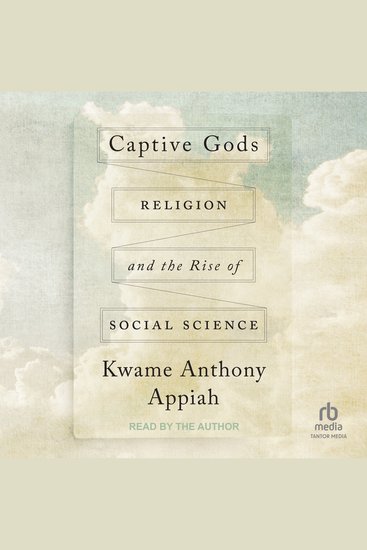
  • Captive Gods - Religion and the Rise of Social Science - cover

    Captive Gods - Religion and the...

    Kwame Anthony Appiah

    • 0
    • 0
    • 0
    Philosopher Kwame Anthony Appiah explores how early social scientists developed our modern understandings of society through their theories of religion The foundations of modern social science were built on the study of religion, the acclaimed thinker Kwame Anthony Appiah argues. Delving into the intellectual currents of the nineteenth and early twentieth centuries, he investigates how formative thinkers—notably Edward Burnett Tylor, Émile Durkheim, Georg Simmel, and Max Weber—grappled with the concepts of society and religion as interdependent categories. Appiah shows how their efforts to define religion, or evade the task, mark the power and limitations of social thought in ways that persist among theorists today. Religion was not an object of study but a framework through which early social scientists established sociology as a discipline. Appiah also examines recent work in both interpretive sociology and evolutionary and cognitive psychology about the mechanisms through which communities form beliefs and values—while underscoring the enduring significance of these earlier debates for contemporary social thought. Throughout, he intertwines storytelling, historical analysis, and philosophical reflection to show how our ideas about society and culture have been, and continue to be, forged in dialogue with religious questions.
    Show book
  • What the Anti-Federalists Were For - The Political Thought of the Opponents of the Constitution - cover

    What the Anti-Federalists Were...

    Herbert J. Storing

    • 0
    • 0
    • 0
    The Anti-Federalists, in Herbert J. Storing’s view, are somewhat paradoxically entitled to be counted among the Founding Fathers and to share in the honor and study devoted to the founding. “If the foundations of the American polity was laid by the Federalists,” he writes, “the Anti-Federalist reservations echo through American history; and it is in the dialogue, not merely in the Federalist victory, that the country’s principles are to be discovered.” It was largely through their efforts, he reminds us, that the Constitution was so quickly amended to include a bill of rights.Storing here offers a brilliant introduction to the thought and principles of the Anti-Federalists as they were understood by themselves and by other men and women of their time. His comprehensive exposition restores to our understanding the Anti-Federalist share in the founding its effect on some of the enduring themes and tensions of American political life. The concern with big government and infringement of personal liberty one finds in the writings of these neglected Founders strikes a remarkably timely note.
    Show book
  • Maria Montessori: Dr Montessori's Own Handbook - cover

    Maria Montessori: Dr...

    Maria Montessori

    • 0
    • 0
    • 0
    This is the authoritative book written by Montessori to describe her methods. It gives an overview of the Montessori Method as developed for 3 to 6 year olds. It is a short work, intended as a manual for teachers and parents, detailing the materials used as well as her philosophy in developing them. "As a result of the widespread interest that has been taken in my method of child education, certain books have been issued, which may appear to the general reader to be authoritative expositions of the Montessori system. I wish to state definitely that the present work, the English translation of which has been authorized and approved by me, is the only authentic manual of the Montessori method ..." M. Montessori in the Preface
    Show book
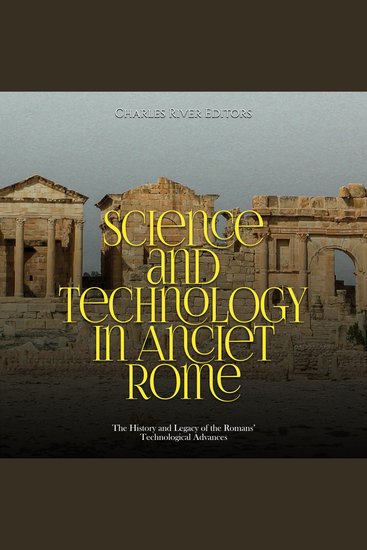
  • Science and Technology in Ancient Rome: The History and Legacy of the Romans’ Technological Advances - cover

    Science and Technology in...

    Editors Charles River

    • 0
    • 0
    • 0
    The modern world has the ancient Romans to thank for the origins of many modern technologies, conveniences, and ideas, from running water, baths, and republican style government to roads. Similarly, by the 3rd century BCE, the Romans were prodigious monument builders, so much so that the memory of the great Roman Republic and the Roman Empire continues to exist within a cityscape of stone. Rome’s public spaces were filled with statues, arches, temples, and many other varieties of monumental images, and each of these structures had its own civic or religious function. At the same time, most were embedded with stories, messages, and symbolism so that they also tended to function as propaganda. These monuments allowed the leading citizens of Rome, especially its emperors, to sculpt their own self-image and embed themselves and their most memorable deeds into the very structure of the Roman city.  
    	While some of the most famous examples, like the Colosseum and Pantheon, remain striking testaments to Roman engineering and technology, many of the scientific advances the Romans ushered into the world were smaller in scope but not necessarily any less important. Indeed, the Roman Empire was not just one of the most technologically advanced civilizations within the ancient world but also proportionately one of the most prolific throughout all history. A substantial number of these innovations were lost following the eventual fall of the Western Roman Empire in 476 and the subsequent centuries of decline of the Byzantine Empire starting in the early 7th century, but rediscoveries of their advancements began during the later Middle Ages and the beginning of the Modern Era (c. 1400s). Some of their ideas and designs are only now being improved upon thanks to newer, far more advanced modern technologies.  
    Show book