Rejoignez-nous pour un voyage dans le monde des livres!
Ajouter ce livre à l'électronique
Grey
Ecrivez un nouveau commentaire Default profile 50px
Grey
Abonnez-vous pour lire le livre complet ou lisez les premières pages gratuitement!
All characters reduced
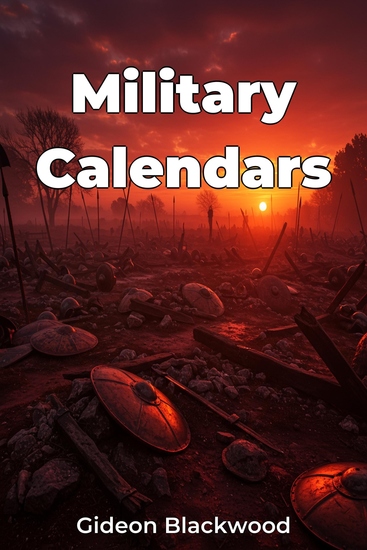
Military Calendars - cover

Military Calendars

Gideon Blackwood

Traducteur A AI

Maison d'édition: Publifye

  • 0
  • 0
  • 0

Synopsis

Military Calendars explores the crucial role of strategic time management in military history, examining how armies, navies, and air forces have structured time for training, campaigns, and wartime planning. The book highlights the importance of synchronization—the ability of military elements to act in concert—and planning horizons, balancing short-term needs with long-term goals. Discover how different cultures and eras have perceived and organized time, significantly shaping military practices.

 
The book progresses from introducing key concepts like operational tempo and the impact of seasonal changes, to analyzing specific campaigns and battles where timing influenced outcomes. It further investigates how military organizations have used calendars and schedules to coordinate logistics and strategic planning.

 
Through a comparative methodology, the book draws on military records, personal journals, and quantitative data to support its arguments. This unique approach offers a new perspective on military effectiveness, integrating insights from military history, organizational theory, and management science. By focusing on time as a strategic resource, Military Calendars provides a valuable framework for understanding how military organizations have gained advantages, offering insights applicable to contemporary military operations and future warfare.
Disponible depuis: 05/03/2025.
Longueur d'impression: 66 pages.

D'autres livres qui pourraient vous intéresser

  • Peace Is a Practice - An Invitation to Breathe Deep and Find a New Rhythm for Life - cover

    Peace Is a Practice - An...

    Morgan Harper Nichols

    • 0
    • 0
    • 0
    Read by the author. 
    When you breathe in all the grace available to you and release everything that is outside of your control, you'll discover peace that surpasses your circumstances. All it takes is practice. 
    If you feel overwhelmed with anxiety about the future, you're far from alone. For many of us, when we're not worrying about what is to come, we find ourselves wrestling with things from the past. Where does that leave us today? 
    Morgan Harper Nichols has learned the answer to this question. She has examined stories from her own life and the lives of people around the world and noticed a common thread: we all long for peace. We're all seeking light and life. 
    But these things don't happen passively. 
    Peace Is a Practice invites you to become an active peacemaker in your own life, starting right where you are, and in some of the most unexpected places. As these words and images inspire you to take daily steps toward peace, you'll uncover the key to:Embracing the beauty of the presentLetting go of regret of the past and fear of the futureDeveloping a path toward meaning and authenticityApproaching life's challenges with faith and a calm confidenceFeeling peace even in the midst of uncertainty or difficult times 
      
    In every moment, there is something as deep and boundless as a winding river waiting to be found--a true peace that flows, beckoning you to rest and be still. 
     
    Voir livre
  • CBT and DBT - Practical Dialectical and Behavioral Therapy Techniques to Reduce Anxiety and Depression - cover

    CBT and DBT - Practical...

    Julia Haart

    • 0
    • 0
    • 0
    Anxiety isn’t just in your head. Depression doesn’t go away with “just thinking positive.” And willpower alone won’t stop the emotional rollercoaster. 
    If you’re exhausted by spiraling thoughts, emotional crashes, or that numb, empty fog you can’t shake—it’s not because you’re broken. 
    You’ve just never been taught how to deal with your mind in a way that actually works. 
    This audiobook gives you that exact skillset. It doesn’t preach. It doesn’t fluff. 
    It delivers clear, proven strategies from two of psychology’s most powerful tools: CBT (Cognitive Behavioral Therapy) and DBT (Dialectical Behavioral Therapy). 
    What’s inside? 
    •	The real reason your thoughts feel out of control—and what to do the moment anxiety strikes 
    •	How to rewrite internal narratives that fuel depression, without faking positivity 
    •	Why certain emotions spiral—and how to stop them mid-cycle using DBT 
    •	CBT journaling prompts that help you decode your triggers and track real change 
    •	“Worst-case scenario” exercises that make fear lose its grip 
    •	The STOP technique for handling emotionally charged moments without exploding or imploding 
    •	Tools to reduce overthinking, perfectionism, people-pleasing and self-doubt 
    •	How to build an internal toolkit you can use in real time—at work, in relationships, or during panic 
    •	Simple daily mindfulness drills that don’t feel forced or spiritual 
    •	How to finally stop mistaking your feelings for factsYou’ve done hard things before. This time, do them with a guide that knows exactly what you’re up against—and how to help.
    Voir livre
  • The Indonesian Famine of 1945-1946 - A Study in Post-War Disruption - cover

    The Indonesian Famine of...

    Sarah Willards

    • 0
    • 0
    • 0
    The conclusion of World War II marked a pivotal turning point in Indonesia’s history. As the Japanese forces surrendered in August 1945, the vacuum left behind in their wake exposed the fragility of colonial and wartime institutions. Indonesia, long under Dutch colonial rule and occupied by Japan since 1942, was suddenly thrust into a state of political and administrative chaos. The power void that followed the Japanese capitulation was quickly filled by nationalist fervor, culminating in the proclamation of Indonesian independence on August 17, 1945. However, the declaration did not result in immediate recognition or control. Instead, the country found itself caught between competing powers and clashing agendas. 
    The collapse of Japanese administrative structures left the newly proclaimed Republic of Indonesia struggling to assert its legitimacy. Republican leaders, including Sukarno and Mohammad Hatta, faced the monumental task of organizing a new government while also managing the fallout of war. Meanwhile, Dutch authorities, with Allied support, sought to re-establish their colonial presence. This led to violent confrontations and widespread instability, as various factions—including local militias, former Japanese-trained troops, and returning colonial forces—vied for control over towns, supply routes, and administrative posts. 
    The disintegration of centralized governance had far-reaching consequences. Essential services, including food distribution and public health, were severely disrupted. The chaos was further compounded by a breakdown in communication lines and transportation infrastructure, much of which had been damaged during the war or repurposed by occupying forces. With no clear authority in many regions, local leaders and grassroots organizations were left to manage crises as best they could, often with limited resources and no coordination.
    Voir livre
  • Sigma Male & Mental Toughness 2 BOOKS IN 1 - Ultimate Guidebook Of The Lonewolf Dating With Self-Confidence Enhanced Mental State - cover

    Sigma Male & Mental Toughness 2...

    CHARLES REMINGTON VIKRAM PATEL

    • 0
    • 0
    • 0
    By developing certain personality traits, a person can become a Sigma male. But to develop these skills and personality traits, one must be open to change and accept it. 
    Without an open mindset, it can become impossible for a person to learn new personality traits. 
    Nobody is born a natural leader. Leadership qualities are learned. Similarly, nobody is born as a Sigma male. These qualities have to be learned as one goes through life. While some people put in efforts to develop their personalities, most people don't. 
    Those who go the extra mile to develop their personality, end up being identified as a Sigma male, while the rest fall into the beta category. 
    Here is a brief summarized version incorporating all the vital points that are discussed in this particular book – 
    A brief discussion about the SMART goals method 
    Understanding why finding out your inner potential is essential for unlocking your mental toughness 
    Advantages of being self-aware 
    The reason behind celebrating minor victories 
    A better comprehension of the connection between full potential and success 
    Tips to prepare a to-do list 
    Advantages of keeping an achievement list 
    Gathering knowledge regarding the necessity of starting with baby steps 
    Several tips to look for your potential in the best possible way 
    Ways of reaching your full potential with the assistance of discipline and simplicity 
    Scroll up and click on the Buy Now button!
    Voir livre
  • Persian Corridor in World War II The: The History of the Allies’ Most Important Supply Route - cover

    Persian Corridor in World War II...

    Editors Charles River

    • 0
    • 0
    • 0
    Operation Barbarossa was the most fateful decision of World War II, and when it gave the Soviets common cause with the British (and subsequently the Americans), the purpose of the Lend-Lease Act changed in nature as well. The bulk of Germany’s formidable armed forces were committed to the offensive in the east, which relieved the pressure on the British and meant that a German attack on Britain or elsewhere in Western Europe was not going to happen, so keeping the Soviets in the war became the most essential goal of the supply program. 
    Getting supplies to the Soviets to help them resist the German armies became a strategic imperative, and Iran’s geography of bordering the Persian Gulf to the south and Soviet territory to the north brought Iran to the front and center in the strategic supply effort. The German invasion devastated much of European Russia, but also devastated Ukraine and Belarus, other member “republics” in the Soviet Union, and the portions of the Soviet Union that bordered on Iran were Armenia, Azerbaijan and east of the Caspian, Turkmenistan. 
    The Persian Corridor involved British and Dominion forces, as well as Soviet armed forces and personnel, but the operation and management of the Persian Corridor became largely an American show. Most of the immense amount of aid sent was for transshipment across Iran to the Soviets, but it also involved supplying British and Commonwealth forces in Iran, Iraq and elsewhere in the Middle East. Some was used to feed and supply Iran’s people, and some was used to modernize and maintain Iran’s infrastructure. There was also the need to supply the American troops working in the Persian Corridor. While 80% or so of the aid came from the U.S., there was also a significant amount of aid sent from Canada, Australia, South Africa and especially India. 
    Voir livre
  • Raising Twice-Exceptional Children - A Handbook for Parents of Neurodivergent Gifted Kids - cover

    Raising Twice-Exceptional...

    Emily Kircher-Morris

    • 0
    • 0
    • 0
    Just because a child is gifted doesn't mean they don't have other types of neurodivergence, like ADHD, autism, dyslexia, and more. Conversely, even children with one of these diagnoses can be cognitively gifted. Raising Twice-Exceptional Children provides you with a road map to understand the complex make-up of your "gifted-plus," or twice-exceptional, child or teen. 


    The book helps you understand your child's diagnosis, meet their social-emotional needs, build self-regulation skills and goal setting, and teach self-advocacy. It also shows you effective ways to collaborate with teachers and school staff, and it offers advice on finding strengths-based strategies that support development at home. 


    For too long, these kids have fallen through the cracks. This book provides key information on how to best support neurodivergent children by leveraging their strengths while supporting their struggles.
    Voir livre