Join us on a literary world trip!
Add this book to bookshelf
Grey
Write a new comment Default profile 50px
Grey
Subscribe to read the full book or read the first pages for free!
All characters reduced
The Poems of Leopardi - cover

The Poems of Leopardi

Giacomo Leopardi

Translator Francis Henry Cliffe

Publisher: DigiCat

  • 0
  • 0
  • 0

Summary

In 'The Poems of Leopardi,' Giacomo Leopardi presents a profound exploration of the human condition, characterized by its melancholic introspection and vivid imagery. Composed during the early 19th century, these poems embody a Romantic sensibility intertwined with Classical influences, adeptly capturing themes such as mortality, nature, and the inexorable passage of time. Leopardi's unique stylistic approach—marked by haunting metaphor and philosophical depth—invites readers into a contemplative dialogue, as he wrestles with despair, beauty, and the eternal mysteries of life. The collection reflects the socio-political milieu of Italian unification, elevating personal sorrow to universal significance. A prominent figure in Italian literature, Leopardi's own life experiences profoundly shaped his poetic vision. Born into a noble family in 1798 in Recanati, he faced isolation and health issues that fed into his existential musings. His disillusionment with romantic ideals and the limitations of human experience informed his writing, making him a pivotal voice in the Romantic movement and a precursor to modern existential thought. This compilation is indispensable for readers seeking a deeper understanding of Romantic despair and philosophical inquiry. 'The Poems of Leopardi' is both a cerebral journey and an emotional experience, making it an essential read for anyone interested in the intersection of beauty and melancholy.
Available since: 06/02/2022.
Print length: 74 pages.


Other books that might interest you

  • A Dream Play - cover

    A Dream Play

    August Strindberg

    • 0
    • 0
    • 0
    In August Strindberg's "A Dream Play," the surreal landscape of dreams becomes the stage for a journey through the human experience. Set in a world where time and space are fluid, the play follows Agnes, the daughter of the Hindu god Indra, as she descends to Earth to understand the struggles of mortal life.   
    Come join me where the boundaries between reality and fantasy blur--where the depths of the subconscious mind are just out of reach, and where we question the need for meaning, the nature of suffering, and the possibility of transcendence. 
    Through poetic language and striking imagery, "A Dream Play" offers a profound meditation on the human condition and invites audiences to embark on their own journey of self-discovery and introspection, where the boundaries between dreams and reality dissolve, and anything is possible.
    Show book
  • The Complete Poetry of John Keats - cover

    The Complete Poetry of John Keats

    John Keats

    • 0
    • 0
    • 0
    'What the imagination seizes as Beauty must be truth' So wrote the Romantic poet John Keats (1795-1821) in 1817. This collection "The Complete Poetry of John Keats" contains all of his poetry: the early work, which is often undervalued even today, the poems on which his reputation rests including the Odes and of the uncompleted epic Hyperion, and work which only came to light after his death including his attempts at drama and comic verse. It all demonstrates the extent to which he tested his own dictum throughout his short creative life. That life spanned one of the most remarkable periods in English history in the aftermath of the French Revolution and this collection, with its detailed introductions and notes, aims to place the poems very much in their context. The collection is ample proof that Keats deservedly achieved his wish to 'be among the English Poets after my death'.
    The following John Keats poetry is included in this collection:
    • Ode on Indolence
    • Ode to a Nightingale
    • Ode on a Grecian Urn
    • Ode to Psyche
    • Ode on Melancholy
    • To Autumn
    • Hyperion
    • Endymion
    • The Eve of St. Agnes
    • Isabella
    • Lamia
    Show book
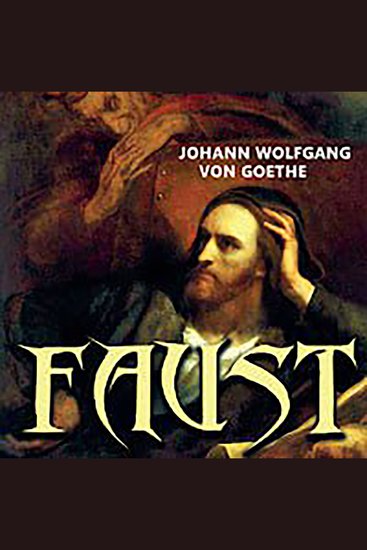
  • Faust - cover

    Faust

    Johann Wolfgang von Goethe

    • 0
    • 0
    • 0
    Faust is a tragic play in two parts by Johann Wolfgang von Goethe, usually known in English as Faust, Part One and Faust, Part Two. Although rarely staged in its entirety, it is the play with the largest audience numbers on German-language stages. Faust is considered by many to be Goethe's magnum opus and the greatest work of German literature.The earliest forms of the work, known as the Urfaust, were developed between 1772 and 1775; however, the details of that development are not entirely clear. Urfaust has twenty-two scenes, one in prose, two largely prose and the remaining 1,441 lines in rhymed verse. The manuscript is lost, but a copy was discovered in 1886.The first appearance of the work in print was Faust, a Fragment, published in 1790. Goethe completed a preliminary version of what is now known as Part One in 1806. Its publication in 1808 was followed by the revised 1828–29 edition, the last to be edited by Goethe himself.Goethe finished writing Faust Part Two in 1831; it was published posthumously the following year. In contrast to Faust Part One, the focus here is no longer on the soul of Faust, which has been sold to the devil, but rather on social phenomena such as psychology, history and politics, in addition to mystical and philosophical topics. The second part formed the principal occupation of Goethe's last years.
    Show book
  • Eumenides - cover

    Eumenides

    Aeschylus

    • 0
    • 0
    • 0
    The final play of the Oresteia, called The Eumenides (Εὐμενίδες, Eumenídes), illustrates how the sequence of events in the trilogy ends up in the development of social order or a proper judicial system in Athenian society. 
    In this play, Orestes is hunted down and tormented by the Furies, a trio of goddesses known to be the instruments of justice, who are also referred to as the "Gracious Ones" (Eumenides). They relentlessly pursue Orestes for the killing of his mother. However, through the intervention of Apollo, Orestes is able to escape them for a brief moment while they are asleep and head to Athens under the protection of Hermes. Seeing the Furies asleep, Clytemnestra's ghost comes to wake them up to obtain justice on her son Orestes for killing her.
    Show book
  • Joy Us - LGBTQ+ poetry - cover

    Joy Us - LGBTQ+ poetry

    Cherry Potts, Jeremy Dixon

    • 0
    • 0
    • 0
    Arachne Press has long been a champion of LGBTQ+ writers, but we've never before published an anthology of LGBTQ+ poetry. These are joyful poems that celebrate all that is best about our community/ies and lives. This is not an 'explain it to the straights' book, this is for us. LGBTQ+ readers can open this book at random and find a moment of poetic queer joy for themselves, however big or small.
    Featuring contributions from: Abhi Alexander Williams Annie Kerr Aoife Mannix Becky Brookfield Cherry Potts Conway Emmett Dean Atta Desree Elizabeth Chadwick Pywell Elizabeth Gibson Garnett 'Ratte' Frost Helen Bowie Jane Aldous Jeremy Dixon John McCullough Joshua Linney Joshua Jones Joy Howard JP Seabright K. Angel Kate Foley Khakan Qureshi, BEM Laurie B. Lawrence Wilson Lydia Fulleylove Maria Jastrzębska Mwelwa Chilekwa P Burton-Morgan Rab Green Rick Dove Robert Hamberger Sophia Blackwell Steph Morris Tanya Erin Sheehan Tom McLaughlin Vron McIntyre Zo Copeland
    Show book
  • Marie Corelli's Collected Poems - cover

    Marie Corelli's Collected Poems

    Marie Corelli

    • 0
    • 0
    • 0
    Marie Corelli is best known as a novelist, but was always a poet at heart, composing on her strongest passions, whether for love, nature, God, or country.This volume collects poems from across her bestselling books and across her career, curated by Brenda Vyver, her her 'companion' of 40 years, who she left everything to when she died, and who is buried alongside her in a twin grave. It is perhaps worth noting that Brenda drove much of Corelli's work, which ran heavy to erotic descriptions of women.Corelli was the Victorian romance author who outsold Arthur Conan Doyle, H. G. Wells, and Rudyard Kipling put together. Despite critics labelling her as "as "the favourite of the common multitude", she was a favourite of Winston Churchill, Queen Victoria and William Gladstone. She was the only author invited to the coronation of Edward VII, and her friends included Mark Twain, Ouida, the Empress Frederick of Germany, and Alfred Tennyson. Her often darkly romantic works tried to reconcile Christianity with mystical ideas such as reincarnation and astral projection.A true character, Corelli claimed that she had warned the finders of the tomb of Tutankhamun about the "dire punishment" likely to occur to those who rifle Egyptian tombs, claiming to cite an ancient book that indicated that poisons had been left after burials. She . She was associated at some point with the Fraternitas Rosae Crucis; a mystical Rosicrucian group, and her books were a part of the foundation of today's corpus of esoteric philosophy."a woman of deplorable talent who imagined that she was a genius, and was accepted as a genius by a public to whose commonplace sentimentalities and prejudices she gave a glamorous setting." - Grant Allen "the imagination of a Poe with the style of an Ouida and the mentality of a nursemaid." -James Agate
    Show book