Join us on a literary world trip!
Add this book to bookshelf
Grey
Write a new comment Default profile 50px
Grey
Subscribe to read the full book or read the first pages for free!
All characters reduced
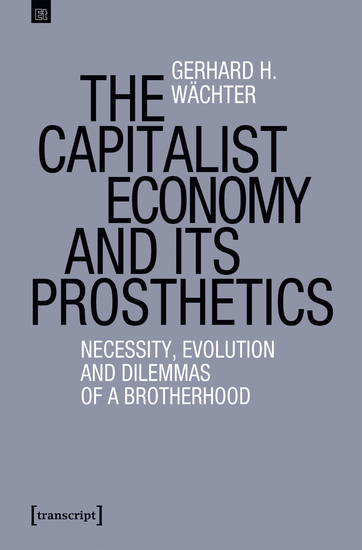
The Capitalist Economy and its Prosthetics - Necessity Evolution and Dilemmas of a Brotherhood - cover

The Capitalist Economy and its Prosthetics - Necessity Evolution and Dilemmas of a Brotherhood

Gerhard H. Wächter

Publisher: transcript Verlag

  • 0
  • 0
  • 0

Summary

Notwithstanding its ruthless dynamics, the capitalist economy has the flaw of deficient employment-generating spending. This leads to unemployment of non-owners, individual suffering, social unrest and it undermines military strength. To deal with these issues, states use prosthetic policies, artificial transfers to the productive economy and to non-owners. But the funding of such prosthetic policies - through violent wealth appropriation abroad, protectionism, war, domestic expropriation and taxation, debt and money creation - is caught in dilemmas, while politicians are caught between non-solutions. According to Gerhard H. Wächter, the history of capitalist society is largely the history of this dilemmatic brotherhood.
Available since: 07/31/2024.
Print length: 975 pages.


Other books that might interest you

  • Iron Rose - The Story of Rose Fitzgerald Kennedy and Her Dynasty - cover

    Iron Rose - The Story of Rose...

    Cindy Adams

    • 0
    • 0
    • 0
    Iron Rose takes an intimate look at the incredible life of Rose Kennedy—head of the Kennedy dynasty and one of the 20th century's most influential women—and her nine famous children. A riveting account of the power behind America's political throne for several decades, Iron Rose reveals the secrets behind the triumphs and tragedies of the renowned "Queen Mother of Camelot." It chronicles her life—from a mayor's daughter in Boston and her marriage to the multimillionaire ambassador to Great Britain—to the birth of her children and becoming the mother of a president. Never before had there been such a world-famous matriarch—a constant pillar of strength, guided by her faith in both her family and her religion—a woman who had given so much and yet had so much taken away.
    Show book
  • Gratitude - The Joyful Heart - Appreciating Every Blessing - cover

    Gratitude - The Joyful Heart -...

    Esther Jameson

    • 0
    • 0
    • 0
    Gratitude is one of the most powerful emotions a person can experience. It has the ability to shift our focus, change our perspective, and even improve our overall well-being. At its core, gratitude is the simple act of recognizing and appreciating the blessings, both big and small, that we encounter in our lives. When we focus on what we are grateful for, we begin to experience a greater sense of happiness and contentment. 
    Research has shown that gratitude is linked to numerous benefits, including better mental health, stronger relationships, and improved physical health. The practice of gratitude can lower stress levels, reduce symptoms of depression and anxiety, and increase overall life satisfaction. This is because when we focus on the positive aspects of our lives, we train our brains to look for the good rather than dwelling on what is lacking or going wrong. 
    The impact of gratitude on our lives is not just emotional. It also has profound physical effects. Studies have demonstrated that practicing gratitude can help boost the immune system, improve sleep quality, and lower blood pressure. When we are in a state of gratitude, our bodies release feel-good hormones such as dopamine and serotonin, which contribute to an overall sense of well-being and relaxation.
    Show book
  • Cloud Computing for Beginners - Learn AWS Google Cloud and Azure to Future-Proof Your Career and Business - cover

    Cloud Computing for Beginners -...

    Johnny Nelson

    • 0
    • 0
    • 0
    Unlock the future of tech with Cloud Computing for Beginners: Learn AWS, Google Cloud, and Azure to Future-Proof Your Career and Business—the ultimate beginner’s guide to mastering the most powerful and in-demand cloud platforms in the world. Whether you’re a student, entrepreneur, IT professional, or career switcher, this audiobook will teach you the fundamentals of cloud computing in a way that’s clear, practical, and instantly applicable. 
    In today’s digital economy, cloud computing is no longer optional—it’s essential. This step-by-step audiobook demystifies the cloud and helps you understand how Amazon Web Services (AWS), Microsoft Azure, and Google Cloud Platform (GCP) are transforming the way businesses store data, build apps, automate systems, and scale globally. Learn how to harness the power of these platforms to increase efficiency, reduce costs, and unlock innovation in any industry. 
    Explore real-world use cases, from hosting websites and automating workflows to deploying machine learning models and securing sensitive data. You'll also discover key concepts like SaaS, IaaS, and PaaS, and gain insights into tools such as EC2, S3, BigQuery, Kubernetes, and more—all explained in plain language for non-technical learners. 
    With cloud computing skills in high demand across every sector, this audiobook offers a future-ready roadmap for those looking to launch or grow a tech career, boost their résumé, or transform their business operations. No prior experience needed—just a willingness to learn and the drive to stay competitive in a rapidly evolving digital world. 
    Future-proof your knowledge. Future-proof your income. Cloud Computing for Beginners is your gateway to the cloud-powered economy.
    Show book
  • Democratic Delusions - How the Media Hollows Out Democracy and What We Can Do About It 1st Edition - cover

    Democratic Delusions - How the...

    Natalie Fenton

    • 0
    • 0
    • 0
    A free media is inextricably linked to a healthy democracy, but in many parts of the world liberal democracies are deemed to be dying or on the demise—a demise that many forms of media have enabled while heralding themselves as democracy's savior. The hollowing out of democracy in these ways has left many people questioning the value of (neo)liberal democratic societies. What can we do about it? 


    Democratic Delusions explores the potential of our media and tech systems to be democratic and contribute to a just and transformative democracy. This is only possible, Natalie Fenton argues, by first situating our political systems and mediated worlds within global capitalism. By interrogating different media and their relationship to seven key elements of democracy—power, participation, freedom, equality, public good, trust, and hope—the book asks: What is the response of society when the ability of news media to speak truth to power has been restricted by corporate logic? And, how do we tackle a deep-rooted market logic that shifts public debate towards private interest and marginalizes progressive perspectives? The book explores how these elements can be reimagined through newly conceived media and tech landscapes and, ultimately, what democracy might be in a future mediated world that places more power in the hands of more people.
    Show book
  • Mercury and Gemini: The History and Legacy of NASA’s Groundbreaking Spaceflight Programs - cover

    Mercury and Gemini: The History...

    Editors Charles River

    • 0
    • 0
    • 0
    The successful Apollo 11 mission was certainly an astonishing technological triumph, but what is less well remembered now are that many programs preceded Apollo and were essential to its success. Project Mercury was one of those, and in many ways it represented the greatest step forward in terms of the conquest of space. Before Project Mercury, there was no certainty that a human could survive the rigors of a space launch or live outside Earth’s atmosphere. There was no agreement on just what an astronaut should be, and various individuals involved debated whether they should be pilots, technicians, scientists, or even merely observers in an automated craft. Before Project Mercury, no one was entirely certain what a rocket capable of taking a person into space would look like, or even whether building such a craft was within the capabilities of engineering in the 1950s. 
    Gemini also marked another important milestone as America finally surpassed the Soviet Union in space technology. Before Gemini, the US was playing a desperate game of catch-up as it attempted to match Soviet accomplishments. The last Project Mercury flight launched in May 1963, and before then, Russia had put the first satellite in Earth’s orbit and the first man in space and had followed these with longer flights than the tiny Mercury spacecraft. In terms of military significance, it was recognized that the ability to dominate space was very important, and to many people in America, it seemed that Russia was well on the way to doing this. No one could have guessed that it would be almost three years before the next American manned space flight occurred when Gemini 3 left the launch pad in March 1965. It seemed to many people that the Russian lead in space exploration had become unassailable and, in order to reestablish the credibility of the US space program, the Gemini flights simply had to succeed.
    Show book
  • Savage Sky - Life and Death on a Bomber over Germany in 1944 - cover

    Savage Sky - Life and Death on a...

    George Webster

    • 0
    • 0
    • 0
    A firsthand account of aerial warfare from a USAAF veteran who flew in fighter bombers during WWII, perfect for military aviation enthusiasts.   George Webster, a flight radio operator on a B-17 during the second world war, gives readers a first person account from the inside of a bomber plane. Focusing on the 92nd Bomb Group, 8th Air Force, including missions to the Schweinfurt ball-bearing plant and Berlin, Webster’s memoir is vivid and intimate, describing the bitter cold at high altitudes, gut-wrenching fear, lethal shrapnel from flak, and German fighters darting through the bomber formation like feeding sharks. One of the first accounts of being shot down over Sweden, The Savage Sky is as close as you can get to experiencing aerial combat while still staying firmly planted on the ground.   “If you want to know what it was really like to fly in a bomber—read this!” —George Murdoch, Armchair Auctions
    Show book