Join us on a literary world trip!
Add this book to bookshelf
Grey
Write a new comment Default profile 50px
Grey
Subscribe to read the full book or read the first pages for free!
All characters reduced
Kincaid's Battery - cover

Kincaid's Battery

George Washington Cable

Publisher: DigiCat

  • 0
  • 0
  • 0

Summary

In "Kincaid's Battery," George Washington Cable crafts a vivid narrative that immerses readers in the experience of the Civil War through the eyes of a young soldier from Louisiana. The novel's richly detailed prose reflects Cable's commitment to incorporating regional dialect and local color, which serve to deepen the authenticity of the Southern experience during a tumultuous period in American history. Set against the backdrop of the Civil War, it addresses themes of loyalty, loss, and the moral complexities faced by individuals entangled in the strife of war, while also examining the cultural dynamics of the time. George Washington Cable, an influential figure in Southern literature, was shaped by his upbringing in the culturally diverse city of New Orleans. His firsthand experiences and deep understanding of Southern society informed his portrayal of its characters and landscapes. Known for addressing complex social issues, Cable's writing often reflected his commitment to social justice and a nuanced understanding of his homeland, attributes that resonate throughout "Kincaid's Battery." This novel is a poignant exploration of the human spirit in the depths of conflict, making it essential reading for anyone interested in Civil War literature, Southern culture, or the complexities of American history. Cable's masterful storytelling and sharpened social critique ensure that "Kincaid's Battery" remains relevant and compelling for contemporary audiences.
Available since: 09/16/2022.
Print length: 268 pages.
Other books that might interest you

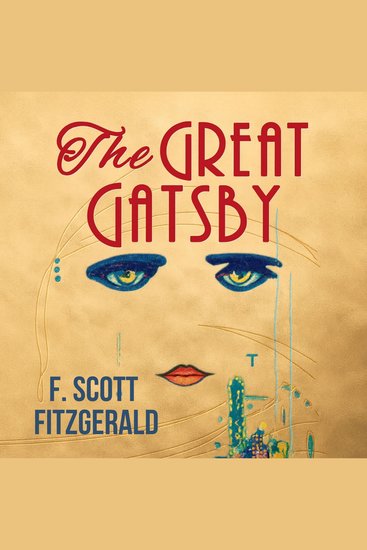
  • The Great Gatsby - Unabridged Audiobook of F Scott Fitzgerald’s Most Famous Novel with a New Introduction by Andrew Hole - cover

    The Great Gatsby - Unabridged...

    F. Scott Fitzgerald

    • 0
    • 0
    • 0
    The Great Gatsby is more than a novel: it is the heartbeat of American literature. A masterpiece that reveals ambition, desire, impossible love, and the fragile truth behind the glitter of the Roaring Twenties. 
    This unabridged audiobook edition by OLDpress includes a new original introduction by Andrew Hole, created for listeners who want to truly understand the world that shaped Gatsby: the history behind the parties, the real-life inspirations, the scandals, the obsessions, and the emotional tensions that defined the Jazz Age and Fitzgerald’s own life. 
    If you love great classics, and if you look for stories that explore identity, success, illusion and the hidden cost of the American Dream, this edition gives you a clear, complete and faithful experience of the original text. 
    And if you listen to grow, to reflect, or to discover the books that changed the world, The Great Gatsby is one of those essential works that belongs in every serious audio library. 
    Gatsby, Daisy, Nick and Tom are more than characters: they are symbols of a generation, mirrors of a nation and, in many ways, reflections of ourselves. 
    A timeless classic. 
    A story that still speaks to every generation. 
    An audiobook for anyone who wants the very best of American fiction.
    Show book
  • In the Midst of Life; Tales of Soldiers and Civilians - cover

    In the Midst of Life; Tales of...

    Ambrose Bierce

    • 0
    • 0
    • 0
    These stories detail the lives of soldiers and civilians during the American Civil War. This is the 1909 edition. The 1909 edition omits six stories from the original 1891 edition; these six stories are added to this LibriVox recording (from an undated English edition). The 1891 edition is entitled In The Midst Of Life; Tales Of Soldiers And Civilians. The Wikipedia entry for the book uses the title Tales of Soldiers and Civilians.  
     
    Ambrose Gwinnett Bierce (June 24, 1842 – after December 26, 1913) was an American editorialist, journalist, short story writer, fabulist and satirist. Today, he is best known for his short story, "An Occurrence at Owl Creek Bridge" and his satirical lexicon, The Devil's Dictionary. The sardonic view of human nature that informed his work – along with his vehemence as a critic, with his motto "nothing matters" – earned him the nickname "Bitter Bierce." Despite his reputation as a searing critic, however, Bierce was known to encourage younger writers, including poet George Sterling and fiction writer W. C. Morrow. Bierce employed a distinctive style of writing, especially in his stories. This style often embraces an abrupt beginning, dark imagery, vague references to time, limited descriptions, the theme of war, and impossible events. In 1913, Bierce traveled to Mexico to gain a first-hand perspective on that country's ongoing revolution. While traveling with rebel troops, the elderly writer disappeared without a trace. Since the book is a compilation of short stories, there is not an overarching plot. However, there are literary elements, or plot devices, that are shared throughout. Bierce's stories often begin mid-plot, with relevant details withheld until the end, where the dramatic resolution unfolds differently than expected, to a degree where most are considered twist endings. His characters were described by George Sterling as: "His heroes, or rather victims, are lonely men, passing to unpredictable dooms, and hearing, from inaccessible crypts of space, the voices of unseen malevolencies."... Bierce served as a union soldier during the Civil War and his experiences as a soldier served as an inspiration for his writing, particularly for the Soldiers section. In this way, Bierce's war treatments anticipate and parallel Ernest Hemingway's later arrival, whereas the civilian tales later influence horror writers. (Summary by Wikipedia and David Wales)
    Show book
  • Women The: Book Summary & Analysis - cover

    Women The: Book Summary & Analysis

    Briefly Summaries

    • 0
    • 0
    • 0
    This is a concise summary and analysis of The Women, by Kristin Hannah. It is not the original book and is not affiliated with or endorsed by Kristin Hannah. Ideal for those seeking a quick and insightful overview.
     
    The Women is a poignant and powerful novel that explores the often-overlooked stories of women who served during the Vietnam War. It follows Frances "Frankie" McGrath, a young nurse who leaves behind a privileged life to face the harsh realities of war. As she navigates trauma, loss, and camaraderie, Frankie’s journey becomes one of resilience and self-discovery, challenging societal expectations of gender and heroism. This gripping narrative sheds light on the sacrifices of female veterans and the struggles they faced upon returning home.
    Show book
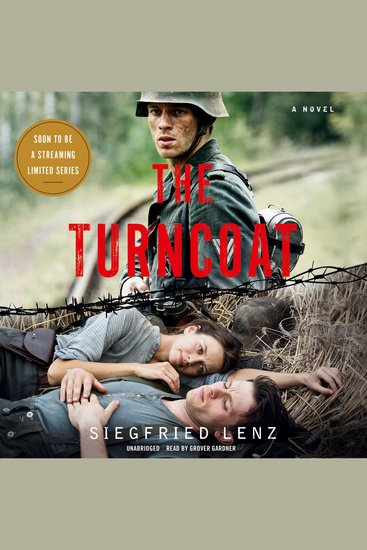
  • The Turncoat - cover

    The Turncoat

    Siegfried Lenz

    • 0
    • 0
    • 0
    Previously unpublished, this German postwar classic is one of the best books of this major writer, who died in 2014. 
    The last summer before the end of World War II, Walter Proska is posted to a small unit tasked with ensuring the safety of a railway line deep in the forest on the border with Ukraine and Belarus. In this swampy region, a handful of men—stunned by the heat, attacked by mosquitoes, and abandoned by their own troops in the face of the Resistance—must also submit to the increasingly absurd and inhuman orders of their superior. Time passes, and the soldiers isolate themselves, haunted by madness and the desire for death. An encounter with a young Polish partisan, Wanda, makes Proska further doubt the validity of his oath of allegiance, and he seeks to answer the questions that obsess him: When conscience and duty clash, which is more important? Is it possible to take any action without becoming guilty in some way? And where is Wanda, this woman from the Resistance he can’t forget? 
    A posthumous triumph, The Turncoat, written in 1951, is Siegfried Lenz’s second novel. Rejected by his publisher, who thought that the story of a German soldier defecting to the Soviet side would be unwelcome in the context of the Cold War, the manuscript was forgotten for nearly seventy years before being rediscovered after the author’s death.
    Show book
  • 25 Library Terrace - cover

    25 Library Terrace

    Natalie Fergie

    • 0
    • 0
    • 0
    Have you ever wondered about all the people who lived in your house before you? 
     
    25 Library Terrace in Edinburgh is a house where lives are changed. 
     
    In 1911, new resident Ursula Black embraces women’s suffrage in the form of census protest, discovers vegetarianism, and learns just how difficult it can be to bring up someone else’s children. 
     
    In 1931, the house becomes part of a radical experiment in a different way of living, and a family secret from the past is uncovered. 
     
    In 2011, Tess Dutton needs somewhere to live in the wake of a failed relationship and is introduced to a rather unusual landlady. 
     
    In 2022, delayed by the pandemic, it’s another census year for Scotland, and as Edinburgh’s residents are able to gather once more, the strands of four generations at 25 Library Terrace are finally woven together.
    Show book
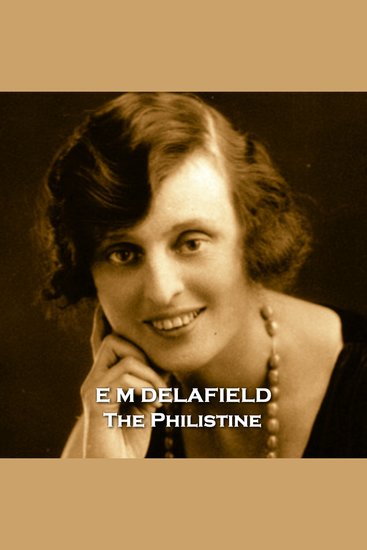
  • The Philistine - A touching story of an childs selfless actions despite tragedy striking him - cover

    The Philistine - A touching...

    E M Delafield

    • 0
    • 0
    • 0
    Edmée Elizabeth Monica Dashwood, née de la Pasture, and more commonly known as E M Delafield, was born in Steyning, Sussex on 9th June 1890.   
     
    Raised in the fading years of the Victorian era with its Empire and strict moral codes Delafield, not yet married at twenty-one, joined a French religious order, in Belgium, but soon decided that this was a totally wrong choice for her.   
     
    Her next challenge was her work during the horror of the First World War.  Delafield decided to take up a position as a nurse in a Voluntary Aid Detachment in Exeter.  It was whilst here that she managed to write her first novel, ‘Zella Sees Herself’.   
     
    With the end of the war new opportunities were sought and she now took up a position for the South-West Region of the Ministry of National Service in Bristol.  With it came enough time to write two more novels: ‘The War Workers’ (1918) and ‘The Pelicans’ (1918).   
     
    On 17th July 1919, she married Colonel Arthur Paul Dashwood, OBE, an engineer responsible for building the massive docks at Hong Kong Harbour.  The marriage produced two children; Lionel and Rosamund.  That same year her fourth novel, ‘Consequences’, was published.   
     
    The couple spent their early years in Malaya but returned to England to live in Croyle, an old house in Kentisbeare, Devon.  Delafield continued to collect responsibilities and organise whatever she could.  At the initial meeting of the Kentisbeare Women's Institute, Delafield was unanimously elected president, and also became a Justice of the Peace, raised the children and, of course, continued to write her best-selling novels.   
     
    Her greatest work is undoubtedly the largely autobiographical ‘Diary of a Provincial Lady’, which is a simply structured journal of the life of an upper-middle class Englishwoman, living mostly in a Devon village of the 1930s.  It spawned several best-selling sequels.  Her works also includes stage and radio plays, film scripts and short stories.  
     
    After the death of her son in 1940, her health began to markedly decline.    
     
    E M Delafield died on 2nd December 1943 after collapsing whilst giving a lecture in Oxford.  She was 53.
    Show book