Join us on a literary world trip!
Add this book to bookshelf
Grey
Write a new comment Default profile 50px
Grey
Subscribe to read the full book or read the first pages for free!
All characters reduced
Fletcher of Saltoun - Enriched edition - cover

Fletcher of Saltoun - Enriched edition

George W. T. Omond

Publisher: DigiCat

  • 0
  • 0
  • 0

Summary

In "Fletcher of Saltoun," George W. T. Omond offers a meticulously crafted exploration of the life and legacy of Andrew Fletcher, a Scottish patriot and political thinker of the 17th century. Omond employs a blend of biographical narrative and historical analysis, illustrating how Fletcher's contributions laid the foundations for modern Scottish nationalism. The book is characterized by its detailed research and eloquent prose, weaving together historical documents, personal letters, and Fletcher's own writings, providing readers with a vivid picture of the socio-political landscape of the time and Fletcher's steadfast commitment to Scotland's autonomy. George W. T. Omond was an eminent scholar with a keen interest in Scottish history and nationalism. His background in history and experience in archival research allowed him to delve deeply into the life of Fletcher, positioning the work within the broader context of Scottish resistance against political oppression. This blend of academic rigor and passionate advocacy for national identity fuels Omond's narrative, revealing his profound respect for Fletcher's intellect and ideals. "Fletcher of Saltoun" is essential reading for those fascinated by Scottish history, political philosophy, and the intricacies of national identity. Omond's engaging prose and insightful analyses will appeal to both scholars and general readers alike, inviting them to reconsider the impact of one of Scotland's most significant figures in the pursuit of liberty.

In this enriched edition, we have carefully created added value for your reading experience:
- Hand‐picked Memorable Quotes shine a spotlight on moments of literary brilliance.
- Interactive footnotes clarify unusual references, historical allusions, and archaic phrases for an effortless, more informed read.
Available since: 09/15/2022.
Print length: 93 pages.
Other books that might interest you

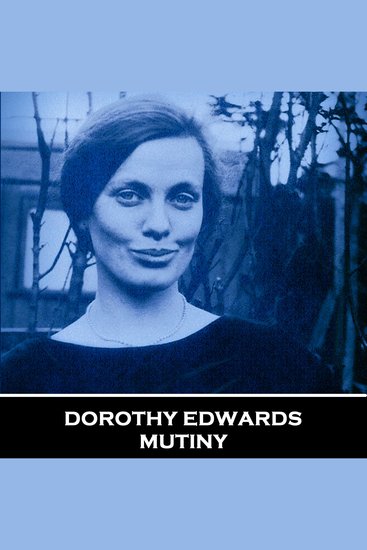
  • Mutiny - A womans quest for social advancement meets a reporter investigating the truth aboard a ship - cover

    Mutiny - A womans quest for...

    Dorothy Edwards

    • 0
    • 0
    • 0
    Dorothy Edwards, an only child, was born on the 18th August 1902 at Ogmore Vale in Glamorgan. 
     
    Her father was a headmaster and an early activist in the Independent Labour Party.  At age 9 Dorothy, dressed in red, welcomed Keir Hardy on to the stage at Tonypandy during the national coal strike of 1912. She was taught that revolution was at hand, that class barriers would be a thing of the past. 
      
    Dorothy won a scholarship and boarded at Howell's School for Girls in Llandaff before moving to University College of South Wales and Monmouthshire where she read Greek and philosophy. 
     
    Her early hopes to be an opera singer were set to one side after graduating and the death of her father. Instead she took on part-time work to supplement her mother’s pension with whom she now lived. 
     
    Dorothy managed to write a number of short stories which appeared in the literary journals of the day.  She spent several months with her mother in Vienna, all the time revising or writing before embarking on ‘Winter Sonata’, a short novel published in 1928. 
     
    Introductions to several members of the Bloomsbury Group meant a move to London and a division of her time between child-care for the family of Bloomsbury author David Garnett and the promise of an advance payment for her work on a new volume of stories. 
     
    However, Dorothy’s life was starting to spiral out of control; she was attracted to the Welsh nationalist movement but felt that her Welsh provincialism made her, in London at least, feel socially inferior. Leaving her mother dependent on a hired companion consumed her with guilt as did the end of an affair with a married musician. 
     
    On the 5th January 1934, having spent the morning burning her papers, Dorothy Edwards threw herself in front of a train near Caerphilly railway station.  
     
    Her suicide note read: "I am killing myself because I have never sincerely loved any human being all my life. I have accepted kindness and friendship and even love without gratitude, and given nothing in return."
    Show book
  • Summary of Mohandas K Gandhi’s An Autobiography - cover

    Summary of Mohandas K Gandhi’s...

    Falcon Press

    • 0
    • 0
    • 0
    Buy now to get the main key ideas from Mohandas K. Gandhi’s An Autobiography 
      
    Mohandas K. Gandhi’s An Autobiography (1927) chronicles a life of sacrifice, abstinence, love, and humility. Gandhi recounts his life from his early childhood until 1921, tracing the painful and challenging path he took as he searched for Truth and utmost humility. He details the moral experiments he conducted through self-abnegation, and tackles the topics of child marriage, racial discrimination, and political self-determination. From India to England and South Africa, Gandhi sought to serve the people and strengthen his pursuit of Ahimsa, the Indian principle of causing no harm to any creature.
    Show book
  • Control Freak - The Least Valuable Player - A dyslexic Type-A entrepreneurial Super Bowl winner winnable micromanager who surrendered it all to Jesus - cover

    Control Freak - The Least...

    TJ Sharitz

    • 0
    • 0
    • 0
    Life as a carefree kid ended for TJ with a diagnosis of dyslexia-ADHD. He would have to repeat the 3rd grade at another school and was henceforth to be learning challenged, a person viewed through his limitations. His response was to take control of his world so that he wouldn’t be embarrassed. He’d be funny: laughed with, not laughed at. He’d excel in athletics: swimming, soccer, football. God couldn’t be trusted. Look what he’d allowed! TJ’s life was tightly controlled, by him. Until one morning when TJ mysteriously lost his health to a strange, a terminal disease. Here was something he couldn’t control. Could God? Would God? 
    This is the story of one man’s wrestling with God over control. It’s the story of his discovery that being a control freak could mean the destruction of his family and of his ability to contribute, or even survive in this life. 
    Would he wield or yield? 
    I am a recovering control freak. Being a control freak was a way of life. The only way I knew I could survive and thrive. I treated control like it was the most valuable player that could make anything happen. What a joke. 
    They say in life that “life lessons” are the best teachers, preferably someone else’s. Well, I didn’t listen. I had to learn the hard way. Doing things my way, all by myself. So, I became a control freak who craved one thing, More control. For much of my life, I insisted on controlling everything. Every single thing. Like an addict, I had an unquenchable thirst for control, especially in times when God seemed to be uncaring and absent. I believed that only the perseverance of total control would get me the results I wanted. Until I finally discovered Who is actually in control. Spoiler alert; it’s not me. A few short years ago I found myself in a living hell where all hope seemed lost. I shouldn't even be alive. No one could’ve ever dared to dream that I’d get from there to here, not even me. But God was faithful and never let me go. 
    -TJ
    Show book
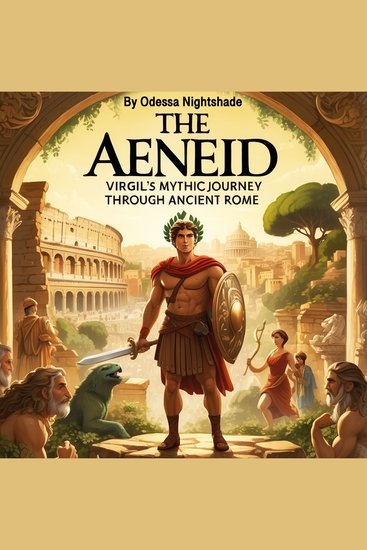
  • The Aeneid - Virgil's Mythic Journey through Ancient Rome - cover

    The Aeneid - Virgil's Mythic...

    Odessa Nightshade

    • 0
    • 0
    • 0
    The Aeneid stands as one of the most influential literary works of the ancient world, a masterpiece that shaped Rome’s cultural and political identity. Written by the poet Virgil between 29 and 19 BCE, this epic tells the story of Aeneas, a Trojan hero destined to lay the foundations for what would become Rome. Blending myth, history, and divine intervention, Virgil crafted a narrative that not only honored Rome’s past but also justified its imperial destiny. Commissioned during the reign of Augustus, The Aeneid served as both a patriotic epic and a moral guide, emphasizing duty, sacrifice, and perseverance.  
      
    At its core, The Aeneid explores Rome’s divine origins through the trials and triumphs of Aeneas. His journey mirrors the struggles of Rome itself—facing adversity, enduring loss, and ultimately fulfilling a grand destiny. Unlike Homer’s heroes, Aeneas is driven by pietas, a sense of duty to the gods, his people, and his future nation. This concept of duty over personal desire defines him, setting him apart from figures like Achilles, who is ruled by rage, or Odysseus, who relies on cunning. Through Aeneas, Virgil presents an ideal Roman leader—one who sacrifices personal happiness for the greater good.  
      
    The themes of fate and duty play a central role in The Aeneid, reinforcing the idea that Rome’s supremacy was preordained by the gods. From the moment Aeneas flees Troy, his path is guided by prophecy. Though he faces obstacles—such as the wrath of Juno, the temptations of love, and the horrors of war—his unwavering commitment to his destiny ensures that he prevails. Virgil uses this theme to legitimize Augustus’ rule, portraying Rome’s rise as part of a divine plan rather than mere political ambition. 
    Show book
  • Wayward Women - Sex Friendship and the Midlife Reset A Memoir of Reinvention Female Friendship and Wild Travels Around the World - cover

    Wayward Women - Sex Friendship...

    Tracey Davies, Rhonda Carrier

    • 0
    • 0
    • 0
    Eat Pray Love meets Want.
    Wayward Women is a unique, searingly honest, devastatingly raw two-person memoir about the friendship, travels and sex lives of two fiftysomething women finding their way again after divorce.
    It's an entertaining, emotional and geographical journey that bounces around the world from Florida to India, Lapland to Hong Kong, as the authors -both leading travel writers - relay their experiences as midlife women – love, loss, parenthood, divorce, menopause – along with the tales of the inspirational women they meet along the way, and the growth of their friendship.
    Show book
  • D L Moody - A Biography of One of America's Great Evangelists - cover

    D L Moody - A Biography of One...

    Kevin Belmonte

    • 0
    • 0
    • 0
    A plainspoken follower of Jesus, Dwight L. Moody embodies passionate,unflinching obedience to God. It’s 1860, the eve of America’s Gilded Age. A manin a gray, woolen suit stands in a dilapidated building in Chicago’s “LittleHell,” a slum forgotten by the world. He is surrounded by grimy children,attentive and watchful in this makeshift school Moody established just forthem. 
    They are waiting for Abraham Lincoln to speak. Why America’sgreatest president and one of America’s most celebrated spiritual giants areamong the poorest of the poor is just the beginning of D.L. Moody, a biography with a novel-like narrative style thatunveils the eternal power one life can have. 
    This book reintroduces the unlikely accomplishments of a mandesperate to obey God’s call and shows how one committed heart can impact thekingdom of God and the spiritual heritage of a nation. 
    We learn about life through the lives of others. Their experiences,their trials, their adventures become our schools, our chapels, ourplaygrounds. Christian Encounters, a series of biographies from Thomas NelsonPublishers, highlights important lives from all ages and areas of the Church throughprose as accessible and concise as it is personal and engaging. Some arefamiliar faces. Others are unexpected guests. Whether the person is D.L. Moody,Sergeant York, Saint Nicholas, John Bunyan, or William F. Buckley, we are nowliving in the world that they created and understand both it and ourselvesbetter in the light of their lives. Their relationships, struggles, prayers, anddesires uniquely illuminate our shared experience.
    Show book