Join us on a literary world trip!
Add this book to bookshelf
Grey
Write a new comment Default profile 50px
Grey
Subscribe to read the full book or read the first pages for free!
All characters reduced
A Handbook of Ethical Theory - cover

A Handbook of Ethical Theory

George Stuart Fullerton

Publisher: DigiCat

  • 0
  • 0
  • 0

Summary

In "A Handbook of Ethical Theory," George Stuart Fullerton presents a comprehensive exploration of ethical frameworks and moral philosophy, meticulously dissecting ideas from utilitarianism to deontological theories. Fullerton's literary style is characterized by clarity and precision, offering readers accessible insights into complex theories while engaging with contemporary ethical dilemmas. Written during a period of robust philosophical inquiry at the turn of the 20th century, this work resonates with the era's intellectual currents, paving the way for modern ethical discourse and reflecting the synthesis of classical and emerging theories. George Stuart Fullerton, an eminent philosopher and psychologist, was influenced by his rich academic background and profound interest in moral philosophy. His commitment to bridging psychological insights with philosophical inquiry is evident in his scholarly work. This combination of disciplines informed the perspectives he presents in the handbook, enabling him to approach ethical questions with both rigor and empathy, ultimately aiming to provide a grounding for moral reasoning in a rapidly changing world. "A Handbook of Ethical Theory" is an essential read for scholars, students, and anyone interested in understanding the fundamental questions of morality in an increasingly complex society. Fullerton's meticulous analysis encourages critical thought and ethical reflection, making it not only informative but also transformative for those seeking to grasp the intricacies of ethical thought.
Available since: 09/16/2022.
Print length: 250 pages.

Other books that might interest you

  • Yemen in Crisis - Autocracy Neo-Liberalism and the Disintegration of a State - cover

    Yemen in Crisis - Autocracy...

    Helen Lackner

    • 0
    • 0
    • 0
    Yemen is in the grip of its most severe crisis in years. The civil war between the Huthi rebels and the Western and Arab supporters of the regime has resulted in thousands killed and three million displaced. Those who remain suffer severe food shortages and a collapsed economy. The struggle for power in the Arab world's poorest but strategically vital nation has serious implications for the region and beyond. While Egypt and Saudi Arabia fear that a Huthi takeover would threaten free passage of oil through the Bab al-Mandab strait, western governments fear a rise of attacks from al-Qa'ida and IS as the country becomes more unstable. In this invaluable analysis, Helen Lackner uncovers the social and political conflicts that threaten the very survival of the state and its people. She reveals the corruption of the country's US-backed autocratic regime and how it failed to address national impoverishment and to plan an equitable economy for Yemen's growing population.
    Show book
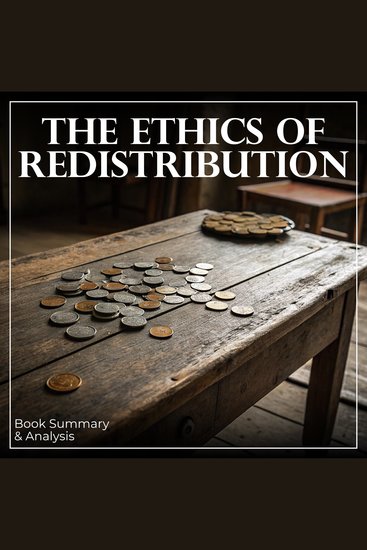
  • Ethics of Redistribution The: Book Summary & Analysis - cover

    Ethics of Redistribution The:...

    Briefly Summaries

    • 0
    • 0
    • 0
    This is a concise summary and analysis of The Ethics of Redistribution, by 
    Bertrand de Jouvenel.
     
    It is not the original book and is not affiliated with or endorsed by Bertrand de Jouvenel.
    Ideal those seeking a quick and insightful overview.
     
    In The Ethics of Redistribution, the author delves into the philosophical and economic implications of wealth redistribution, challenging commonly held assumptions about equality and social justice. The book explores the ethical boundaries of government intervention in economic systems, questioning whether redistributive policies truly benefit society or hinder individual freedoms and innovation. Through incisive arguments and historical examples, this work provides a thought-provoking critique of the role of the state in shaping economic fairness, making it an essential read for anyone interested in political philosophy, economics, or public policy.
    Show book
  • Sins Of Love - cover

    Sins Of Love

    Fay Leta Crawford

    • 0
    • 0
    • 0
    Sins of Love is a collection of poems written solely by myself. Sins of Love is my interpretation of love and heartbreak in correlation with the stages of death and dying. I have taken my experiences and the experiences of others and categorized them into five stages. This book is a walk through the side of love most people don’t want to talk about. This conversation is necessary in order to heal, grow and find the love meant for you. 
    Follow me as we trail through my denial, my anger, my bargaining, my depression and my acceptance in my Sins of Love. 
    Special thanks to my amazing Producer & Engineer Extraordinaire, Kenechi Ubani 
    Special thanks to my Cover Art Designer, Emmanuel Baligad
    Show book
  • The Bhagavad Gita - Hindi Presentation - cover

    The Bhagavad Gita - Hindi...

    Vyasa

    • 0
    • 0
    • 0
    The original "Yoga Secrets of Patanjali" are in themselves exceedingly brief, less than 10 pages in the original ancient texts. Yet, as they are based upon the great, timeless Bhagavad Gita, they contain the essence of all practical wisdom, set forth in admirable order and great detail. This timeless theme brings forth a palpable spiritual regeneration, the rebirth of the spiritual from the psychical: the same sacred theme that the realized yogis of India so wisely and eloquently set forth over 5,000 years ago. 
     
    Vyasa is the legendary Indian sage who is credited with compiling the Mahabharata, a collection of legendary and didactic poetry worked around a central heroic narrative. In India his birthday is celebrated as Guru Purnima, on Shukla Purnima day in the month of Ashadha (June–July). 
    Vyasa was the son of the ascetic Parashara and the dasyu (aboriginal) princess Satyavati and grew up in forests, living with hermits who taught him the Vedas. Thereafter he lived in the forests near the banks of the river Sarasvati, becoming a teacher and a priest, fathering a son and disciple, Shuka, and gathering a large group of disciples. Late in life, living in caves in the Himalayas, he is said to have divided the Vedas into the four traditional collections, composed Puranas, and, in a period of two and a half years, composed his great poetic work, the Mahabharata, supposedly dictating it to his scribe, Ganesha, the elephant god. 
     
    Perfect for all students of the eight-fold yoga path, curious commuters, and all library and school collections. A once-in-a-lifetime audio experience event. Perfect for universities and digital educational media.
    Show book
  • Plato’s republic - cover

    Plato’s republic

    Plato

    • 0
    • 0
    • 0
    The Republic poses questions that endure: What is justice? What form of community fosters the best possible life for human beings? What is the nature and destiny of the soul? What form of education provides the best leaders for a good republic? What are the various forms of poetry and the other arts, and which ones should be fostered and which ones should be discouraged?
     
    How does knowing differ from believing? Several characters in the dialogue present a variety of tempting answers to those questions. Cephalus, Polemarchus, Thrasymachus, and Glaucon all offer definitions of justice. Socrates, Glaucon, and Adeimantus explore five different forms of republic and evaluate the merit of each from the standpoint of goodness. Two contrasting models of education are proposed and examined. Three different forms of poetry are identified and analyzed. The difference between knowing and believing is discussed in relation to the objects of each kind of thinking.
    Show book
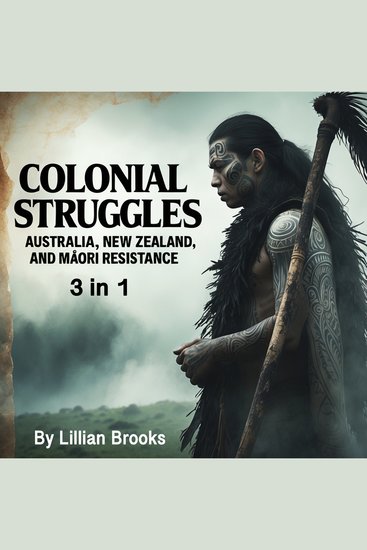
  • Colonial Struggles - Australia New Zealand and Māori Resistance (3 in 1) - cover

    Colonial Struggles - Australia...

    Lillian Brooks

    • 0
    • 0
    • 0
    This bundle offers a compelling exploration of the complex and often turbulent history of colonial conflict in the Southern Hemisphere. This three-part volume dives into the significant struggles that shaped the histories of Australia and New Zealand, shedding light on the fierce resistance of Indigenous communities against colonial powers.  
    The first section, Australia’s War, delves into the violent clashes between European settlers and Aboriginal Australians, exploring the devastating impact of colonization, frontier warfare, and the long-lasting consequences on Indigenous communities.  
    The second section, New Zealand Wars, examines the series of 19th-century armed conflicts between the British Crown and various Māori iwi (tribes), driven by land disputes, cultural resistance, and the fight for sovereignty.  
    The final section, The Māori and the Pākehā, offers a broader understanding of the cultural and political dynamics between the Māori and the European settlers (Pākehā), exploring themes of adaptation, resistance, and the ongoing struggle for recognition and rights. Together, these three perspectives provide a powerful and nuanced account of colonial conflict and Indigenous resilience, making this book essential reading for those seeking to understand the legacy of colonization in Australia and New Zealand.
    Show book