Join us on a literary world trip!
Add this book to bookshelf
Grey
Write a new comment Default profile 50px
Grey
Subscribe to read the full book or read the first pages for free!
All characters reduced
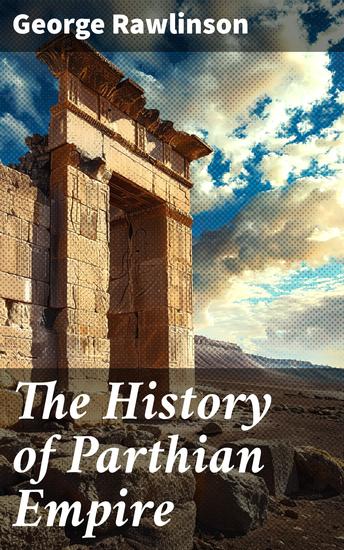
The History of Parthian Empire - Unveiling the Legacy of Ancient Parthian Rule - cover

The History of Parthian Empire - Unveiling the Legacy of Ancient Parthian Rule

George Rawlinson

Publisher: Good Press

  • 0
  • 0
  • 0

Summary

In "The History of the Parthian Empire," George Rawlinson offers a meticulous examination of one of antiquity's most formidable empires, exploring its rise, governance, and eventual decline. Written in an elegant yet accessible literary style, Rawlinson weaves a narrative that is rich in detail while drawing upon a substantial array of historical sources. This work places the Parthian Empire in a broader context of classical civilizations, seeking to elucidate its interactions with Rome and neighboring cultures. Rawlinson's thorough research illuminates the political intrigues, cultural exchanges, and military campaigns that defined the Parthian legacy, contributing significantly to our understanding of ancient geopolitics. George Rawlinson, a prominent 19th-century historian and Assyriologist, was deeply influenced by the evolving scholarly engagements with Near Eastern history and archaeology. His expertise in ancient languages and his foundational role in translating and interpreting significant historical texts guided him to undertake this ambitious endeavor. The fusion of his scholarly background and passionate interest in the Parthian narrative allows for a nuanced portrayal of a civilization often overshadowed by its Roman counterpart. Readers interested in ancient history, classical studies, or the complexities of intercultural relations will find "The History of the Parthian Empire" to be an invaluable resource. Rawlinson'Äôs authoritative and engaging approach not only enriches our comprehension of the Parthians but also invites reflection on the intricate tapestry of human history. This book is essential for both scholars and lay readers seeking to delve deeper into the legacies of ancient empires.
Available since: 11/17/2023.
Print length: 254 pages.


Other books that might interest you

  • Agnes Finnie - The Witch of the Potterrow Port - cover

    Agnes Finnie - The Witch of the...

    Mary Craig

    • 0
    • 0
    • 0
    Witchcraft holds a continued fascination for readers around the world, and the Scottish witch hunts have recently received renewed media attention, especially with the BBC 2 show Lucy Worsley Investigates, bringing attention to Edinburgh's witches.
    
    Expert Mary Craig explores the unusual story of Agnes Finnie, a middle class shopkeeper who lived in the tenements of Edinburgh. After arrest, most witches were tried within a matter of days but not Agnes. Her unusual case took months with weeks of deliberation of the jury. Mary explains why and gives her expert insight into the political and religious tensions that led to her burning.
    
    The book will interest a variety of readers, academics and non-academics alike – those interested in witchcraft, British and Scottish history, religious studies and women's studies.
    Mary Craig works as a historian with museums, archives and schools and hosts regular, well-attended events on the subject of witchcraft in the Scottish Borders. We expect strong media coverage. The Witches of Scotland campaign has recently gained traction and the attention of first minister Nicola Sturgeon, calling for a pardon and apology to those accused during the witch hunts.
    Show book
  • Progressive Dystopia - Abolition Antiblackness and Schooling in San Francisco - cover

    Progressive Dystopia - Abolition...

    Savannah Shange

    • 0
    • 0
    • 0
    San Francisco is the endgame of gentrification, where racialized displacement means that the Black population of the city hovers at just over three percent. The Robeson Justice Academy opened to serve the few remaining low-income neighborhoods of the city, with the mission of offering liberatory, social justice-themed education to youth of color. While it features a progressive curriculum, including Frantz Fanon and Audre Lorde, the majority Latinx school also has the district's highest suspension rates for Black students. In Progressive Dystopia Savannah Shange explores the potential for reconciling the school's marginalization of Black students with its sincere pursuit of multiracial uplift and solidarity. Drawing on ethnographic fieldwork and six years of experience teaching at the school, Shange outlines how the school fails its students and the community because it operates within a space predicated on antiblackness. Seeing San Francisco as a social laboratory for how Black communities survive the end of their worlds, Shange argues for abolition over revolution or progressive reform as the needed path toward Black freedom.
    Show book
  • Whispers of Betrayal - Love Letters That Changed Everything - cover

    Whispers of Betrayal - Love...

    Adela Edgecombe

    • 0
    • 0
    • 0
    On a journey of discovery into her parents history of love and fame in war torn Italy, Adela Edgecombe discovered a secret deception within love letters and from family who had been tight-lipped about the scandals for decades.            Bestselling author Jincy Willett describes the story as follows: "Since every human personality is at root mysterious, all families present us with an abundance of mysteries, the chief of which is often how marriages ever happened in the first place. In her family memoir, Adela Edgecombe tackles that mystery head-on, uncovering a web of circumstances peculiar to place and time. The place is the Province of Salerno, Italy; the time,1944, the depths of World War II. A young American GI meets an impoverished Italian family, grows to care for them, and, as he leaves for the front, promises a nine-year-old child that one day he will return and help them. And does the man, against all odds, keep that promise? Judging from the fairy-tale wedding that took place in Passiano in 1951 and was featured in Life Magazine, it would seem so.           "Edgecombe explores that fairy tale moment, how it came to pass, and what followed after. She digs fearlessly into the mystery of an unhappy marriage that began with such photogenic joy and hope. Read Whispers of Betrayal for a well-researched, surprising, and moving tale which reminds us that the casualties of war are many and varied."
    Show book
  • Hanuman The Servitor Of Ram - The Teachings Of Neem Karoli Baba - cover

    Hanuman The Servitor Of Ram -...

    Sripad Jaganantha Das

    • 0
    • 0
    • 0
    "Sripad Jagannatha Dasa guides us into the sacred heart space of this life-changing hymn as only a dedicated lifelong Ram bhakta may. A self-realized yogi - a wonderful trip!." The Yoga Journal 
     
    "I bow to the Hanuman who is swifter than the mind and wind. The sacred one who has controlled his senses, the one who is the epitome of learning and wisdom. Salutations to the son of the God of Air and chief of the Vanaras, I pray always to Lord Hanuman." 
     
    The Hanuman Chalisa is a Vedic devotional hymn (stotra) in praise of Hanuman authored by the poet sage Tulsi Das. The word "ch?l?s?" means the number forty in Sanskrit, as the Hanuman Chalisa has forty verses. Lord Hanuman is a great devotee of Sri Ram and one of the central characters in the epic, Ramayan. Hanuman is also an incarnation of Shiva. The qualities of Hanuman - his strength, courage, wisdom, celibacy, devotion to Lord Ram, and the many names by which he is known are all in the Hanuman Chalisa. Devotional recitation of this sacred prayer is done by millions every day. 
     
    Hanumanji is the greatest devotee of Sri Ram and an incarnation of the mighty Lord Shiva. He is therefore the epitome of ultimate devotion manifested with its full glory unchallenged in all times and places. By the power of his devotion to Sita Ram, he easily achieved supreme status as the perfect devotee and servitor. 
     
    Lord Hanuman is the eternal link between all devotees and Ram whom he serves, inspires, and protects. By honoring Hanuman one is blessed with all kinds of siddhis including power, valor, prosperity, and devotion. 
     
    Reciting or hearing the Hanuman Chalisa infuses one with unlimited energy and prana. This sacred mantra also increases a person's resilience and they emerge victorious in every challenging situation.
    Show book
  • Avars and Magyars The: The History of the Medieval Ethnic Groups that Settled in Hungary - cover

    Avars and Magyars The: The...

    Editors Charles River

    • 0
    • 0
    • 0
    The Avars entered Eastern Europe from the Central Asian steppes in the 6th century, and like the Huns before them and the Cumans and Magyars after them, the Avars were raiders and warriors who lived on their horses. The Avars’ impact on Europe was immediately felt, and from the Byzantine Empire to the Merovingian Kingdom in Gaul, some of Europe’s strongest powers had to learn how to deal with these new people through a combination of diplomacy and warfare. Eventually, the Avars established themselves in what is today Hungary and played an important role in the development of European history during its transitional period by earning a reputation as a fearsome and sometimes avaricious group. The medieval sources described the Avars as efficient and brutal horseback warriors who could devastate entire kingdoms in a matter of days and leave just as quickly. 
    Of all the steppe peoples in the medieval period, perhaps none were more important to European history than the Magyars. Like the Huns and Avars before them and the Cumans and Mongols after them, the Magyars burst into Europe as a destructive, unstoppable horde, taking whatever they wanted and leaving a steady stream of misery in their wake. They used much of the same tactics as the other steppe peoples and lived a similar, nomadic lifestyle. The Magyars also had many early cultural affinities with other steppe peoples, following a similar religion and ideas of kingship and nobility, among other things. That said, as similar as the Magyars may have been to other steppe nomads before and after them, they were noticeably different in one way: the Magyars settled down and became a part of Europe and Western Civilization in the Middle Ages. The Magyars exploded onto the European cultural scene in the late 9th century as foreign marauders, but they made alliances with many important kingdoms in less than a century.
    Show book
  • The Prince - cover

    The Prince

    Nicoló Machiavelli

    • 0
    • 0
    • 0
    The lion cannot guard himself from the toils, nor the fox from wolves. A Prince must therefore be a fox to discern toils, and a lion to drive off wolves. The modern-day term “Machiavellian” is used to describe deception, dishonesty, and cruelty to meet a goal. The Prince by Niccolò Machiavelli was written as a guide for autocrats on how to govern using means that were meant to deceive and manipulate a government’s constituency—to the extent of advocating the use of evil for political expediency. In this classic work, the end justifies the means reigns paramount to Machiavelli’s system of government.
    Show book