Join us on a literary world trip!
Add this book to bookshelf
Grey
Write a new comment Default profile 50px
Grey
Subscribe to read the full book or read the first pages for free!
All characters reduced
History of the Ancient Chaldea - Including Maps Photos & Illustrations - cover

History of the Ancient Chaldea - Including Maps Photos & Illustrations

George Rawlinson

Publisher: DigiCat

  • 0
  • 0
  • 0

Summary

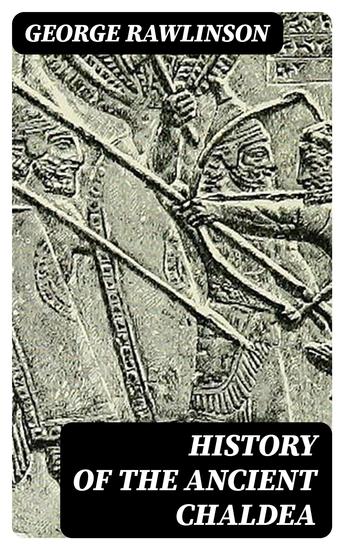
In "History of the Ancient Chaldea," George Rawlinson embarks on an exhaustive exploration of one of the cradle civilizations of human history. This scholarly work is characterized by Rawlinson's meticulous research and elegant prose, immersing readers in the cultural, political, and religious tapestry of the Chaldean society. Rawlinson adeptly synthesizes various historical and archaeological sources to present a detailed narrative that highlights the achievements and decline of a civilization that holds a vital place in Mesopotamian studies. The book reflects the 19th-century intellectual milieu, where antiquarian scholarship flourished, and it pays homage to the emerging disciplines of archaeology and comparative history, laying the groundwork for modern interpretations of ancient cultures. George Rawlinson, a noted Assyriologist and historian, was profoundly influenced by the era's revival of interest in ancient Near Eastern civilizations. His background in classical studies and his proficiency in deciphering cuneiform texts granted him unique insights into the political and cultural significance of Chaldea. His work reflects not only his scholarly rigor but also his deep-seated passion for revealing the complexities of ancient societies that have shaped contemporary understanding. This compelling book is highly recommended for historians, archaeology enthusiasts, and those with an interest in ancient civilizations. Rawlinson's accessible yet erudite style allows readers to navigate through intricate historical narratives with ease, making it an indispensable resource for both academic study and general interest in the grandeur of Chaldean history.
Available since: 05/17/2022.
Print length: 118 pages.


Other books that might interest you

  • Wrapped in Plastic: Twin Peaks - cover

    Wrapped in Plastic: Twin Peaks

    Andy Burns

    • 0
    • 0
    • 0
    Damn good coffee, cherry pie, and the “big bang of auteur television” ― why Twin Peaks deserves to be a pop culture classic In 1990, avant garde filmmaker David Lynch (Eraserhead, The Elephant Man, Dune, Blue Velvet) and acclaimed television writer Mark Frost (Hill Street Blues) teamed up to create a television show that would redefine what the medium could achieve in a one-hour drama. With Twin Peaks, the duo entranced audiences with the seemingly idyllic town, its quirky characters, and a central mystery ― who killed Laura Palmer? In a town like Twin Peaks, nothing is as it seems, and in Wrapped in Plastic, pop culture writer Andy Burns uncovers and explores the groundbreaking stylistic and storytelling methods that have made the series one of the most influential and enduring shows of the past 25 years.
    Show book
  • Ballers of the New School - Race and Sports in America - cover

    Ballers of the New School - Race...

    Thabiti Lewis

    • 0
    • 0
    • 0
    Ballers of the New School is one of the first and best books to come along that effectively explains contemporary athletes and the public response to them.  It asks readers to consider the role of race in the sweaty as well as the sweat-free zones of sport. It challenges the well-worn narrative of sport as America's most significant site of racial progress by scrutinizing the true role of sport in mobilizing and shaping definitions, social relations, and public life.American sport culture performs and propagates rituals, symbols, and expressions of fear and difference that sustain racism, and notions of racial supremacy and block bridges to racial progress.  
     The text encourages a restructuring of the power of the racial subtexts thrust into sporting arenas, upon the bodies of athletes of color, and into the mind and hearts of spectators via the racial contract.  The book's impetus is for readers to emerge with more truthful narratives, more honest dialogues, better American values, better social relations, and hopefully, using this new vision of sports culture as a model, real change.
    Show book
  • History of Marathas EP17 - Narayanrao Peshwa - cover

    History of Marathas EP17 -...

    Vikrant Pande

    • 0
    • 0
    • 0
    Ram Shastri Prabhune conducted an enquiry and found Raghunathrao the culprit in addition to another fifty persons of which there was one female servant. 'The law,' he thundered 'was above the individual.'
    The intrepid judge fearlessly argued the point and told Raghunathrao on his face that he was himself found to be the chief culprit and as such deserved the capital punishment. Raghoba asked indirectly whether a person who had committed a crime under unavoidable circumstances and now wanted to repent could seek penance.
    When his point was put forth, Ram Shastri boldly declared, 'Dehant prayaschitta shivay doosra kahi prayaschitta nahin,' meaning 'the only penance was capital punishment or a death sentence.' Never before in the history of India or for that matter in any country a sitting judge had passed a death sentence on the ruling monarch. It was a rare show of judicial independence which we possibly do not see even in today's times. Those present in the court could not believe what they had just heard. There was a hushed silence...
    Show book
  • The Cleveland John Doe Case - cover

    The Cleveland John Doe Case

    Thibault Raisse

    • 0
    • 0
    • 0
    Ohio. A suicide, no fingerprints, no identity. 


    In July 2002, the Eastlake police discovered a decomposed body in a modest studio apartment in Cleveland, Ohio. It appeared to be a suicide by firearm. The man was Joseph Newton Chandler III, a retiree whom neighbors and former colleagues described as quiet, secretive, and strange. But as the investigation progressed, less and less about Joseph's life and identity made sense. 


    In 2018, thanks to scientific advances in DNA, the man's true identity was finally discovered: Robert Ivan Nichols. A veteran with a wife and three sons, Nichols eventually left his family, telling his wife "One day you will know why." A few years later, in 1965, his family reported him missing. By 1978, he had stolen the identity of Joseph Newton Chandler III, who had been killed in a car accident at eight years old. But who was this man and why did he change his name? What secret was he trying to hide? 


    Thibault Raisse examines the case, exploring the many theories that have emerged, from the craziest to the most credible. Among these theories is a possible connection to the Zodiac Killer, whose murders date back to 1968 and 1969 in California.
    Show book
  • urban Geography and Land Use - The Spatial Organization of Cities (3 in 1) - cover

    urban Geography and Land Use -...

    Lyric Vale

    • 0
    • 0
    • 0
    Cities are fundamentally exercises in spatial organization—complex arrangements of human activity, physical infrastructure, and natural systems that collectively define how metropolitan regions function, evolve, and adapt. The geographic logic of urban environments—how different uses are distributed, how resources are allocated, and how communities develop within specific physical contexts—represents one of the most profound expressions of human social organization and values. This comprehensive exploration delves into the intricate domains of Urban Geography, Urban Land Use, and Community Development—examining how spatial patterns emerge, how they reflect deeper social and economic forces, and how they ultimately shape the lived experiences of urban inhabitants. 
    The narrative of urban spatial organization is far more than a technical study of land allocation; it encompasses the dynamic interactions between physical geography, economic systems, social forces, and political decisions that collectively determine the form and function of our cities. By examining the complex mechanisms that drive urban spatial development—from market dynamics and zoning regulations to community activism and cultural preferences—this book illuminates how cities represent physical manifestations of our collective choices, priorities, and power structures. Readers will journey through diverse urban landscapes—from the historic patterns of concentric development to the fragmented geographies of postindustrial cities and the emerging forms of sustainable urbanism—while exploring how community development initiatives seek to reshape urban spaces to better serve human needs.
    Show book
  • John Stuart Mill - Theories about the Economy and Utilitarianism - cover

    John Stuart Mill - Theories...

    Hector Davidson

    • 0
    • 0
    • 0
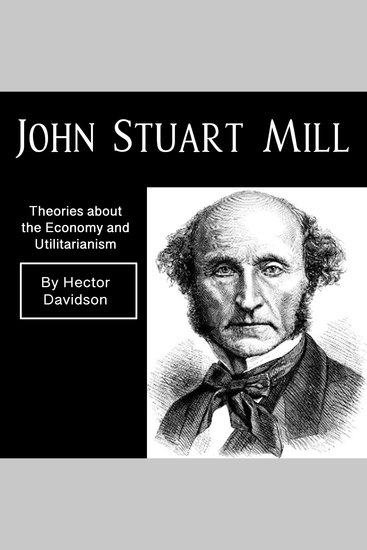
    John Stuart Mill, a British philosopher and political economist, remains one of the most influential thinkers of the 19th century. Born in 1806, Mill was exposed to rigorous intellectual training from an early age, particularly through his father, James Mill, a prominent utilitarian philosopher. This early exposure shaped Mill's understanding of the world, leading him to become a key figure in the development of utilitarianism, a moral theory that evaluates actions based on their ability to promote the greatest happiness for the greatest number of people. 
    Mill’s contribution to utilitarianism was both a continuation and a refinement of the ideas originally proposed by Jeremy Bentham, his intellectual predecessor. While Bentham’s version of utilitarianism focused primarily on the quantity of pleasure or pain produced by an action, Mill introduced a more nuanced view by distinguishing between higher and lower pleasures. According to Mill, pleasures of the intellect, imagination, and moral feelings were superior to those of mere physical satisfaction. This distinction between qualitative pleasures was central to Mill’s revision of utilitarian thought, emphasizing that the quality of happiness mattered as much as, if not more than, its quantity. 
    In this chapter, we explore the foundations of utilitarianism as laid out by Mill. He argued that the ultimate goal of human life is to achieve happiness, which can be defined as the presence of pleasure and the absence of pain. Mill believed that utilitarianism provided a clear and objective standard by which to judge actions, policies, and societal practices. The greatest happiness principle, which advocates for actions that maximize overall happiness, is a central tenet of Mill’s ethical framework. However, Mill also recognized the complexity of applying this principle in real-life situations, acknowledging the challenges of balancing individual rights with the greater good.
    Show book