Join us on a literary world trip!
Add this book to bookshelf
Grey
Write a new comment Default profile 50px
Grey
Subscribe to read the full book or read the first pages for free!
All characters reduced
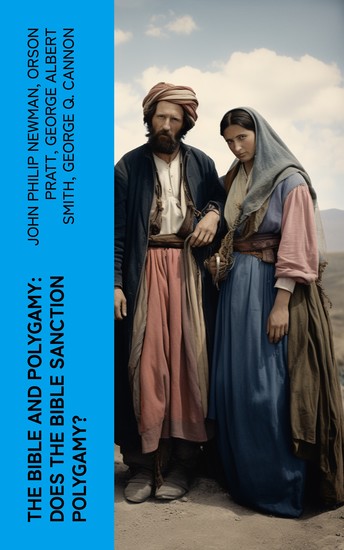
The Bible and Polygamy: Does the Bible Sanction Polygamy? - cover

The Bible and Polygamy: Does the Bible Sanction Polygamy?

George Q. Cannon, Orson Pratt, John Philip Newman, George Albert Smith

Publisher: e-artnow

  • 0
  • 0
  • 0

Summary

This is a series of letters discussing if polygamy is sanctioned in the Bible. It contains exchanges or debates between Reverend Dr J. P. Newman, pastor of the metropolitan Methodist church, Washington, D. C., and Brigham Young, president of the church of Jesus Christ of latter-day saints.
Available since: 11/25/2023.
Print length: 238 pages.

Other books that might interest you

  • Black Heart Fades Blue - Volume Three - cover

    Black Heart Fades Blue - Volume...

    Jerry A. Lang

    • 0
    • 0
    • 0
    If you're looking for the events that inspired the lyrics to all my songs? Those stories are in this book. If you're looking for what I did when I was younger? That's in here. What changed me, made me stop hating and hurting? It's all here. This is my story and I'm sticking to it. That's the one thing I have, the truth. 


    Volume three of Black Heart Fades Blue, a three-part memoir by the founder and frontman for one of punk rock's most notorious acts, Poison Idea. 


    In 1980, Jerry A. formed Poison Idea, a Portland-based punk band that gave voice to disaffected and disenfranchised youth for over thirty years. As happened to so many punk bands, Jerry A. and Poison Idea also went all in on drugs and drinking as they toured the country, spiraling out of control and blowing both the band and their lives apart. 


    Black Heart Fades Blue is not an apology or a nostalgic catalog of events, but a true reckoning with one's past and present. A memoir of a time and a place and a movement, as well as a deep conversation about the memories and moments we leave behind, Black Heart Fades Blue is a deep exploration of an unconventional life.
    Show book
  • The Backwoods of Everywhere - Words From a Wandering Local - cover

    The Backwoods of Everywhere -...

    R. E. Burrillo

    • 0
    • 0
    • 0
    Throughout personal essays spiked with humor and natural science, archaeologist R. E. Burrillo widens his range beyond his popular Behind the Bears Ears. 


    After an upstate New York childhood and a bartending stint in New Orleans's French Quarter, seasonal resort work led R. E. Burrillo to the desert Southwest, whose redrock landscapes were a source of stability through mental and physical illness. In The Backwoods of Everywhere, archaeologist Burrillo excavates his past, examining Indigenous and tourist cultures, the complexities of American archaeology, and what it means to be a local. From the ancient canal systems of Phoenix, Arizona, to the modern Mayan communities of the Yucatan Peninsula, to the depths of the Grand Canyon, Burrillo brings listeners on an entertaining romp chock-full of history, ecology, cultural preservation, and personal stories. 


    In the vein of Bill Bryson, Tim Cahill, and Ellen Meloy, Burrillo's is a fresh voice in humor-spiked nature writing and cultural commentary. Running throughout the wide-ranging topics of The Backwoods of Everywhere are themes of place and locality, and how these vary between cultures and individuals. Marrying the intensely personal with the complex and technical, Burrillo's candid voice brings humor, wonder, irony, and wit to each thought-provoking essay.
    Show book
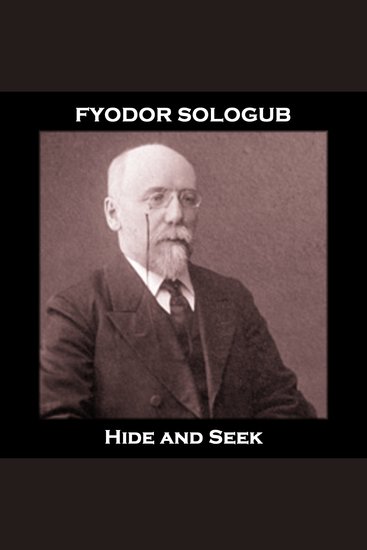
  • Hide And Seek - From their pens to your ears genius in every story - cover

    Hide And Seek - From their pens...

    Fyodor Sologub

    • 0
    • 0
    • 0
    Fyodor Kuzmich Teternikov was born on 1st March 1863 in St. Petersburg into the family of a poor tailor.  When his father died of tuberculosis in 1867, his illiterate mother was forced to become a servant in the home of an aristocrat, where Sologub and his younger sister grew up.  
    Seeing how difficult his mother's life was, Sologub was determined to rescue her from it, and after graduating from the St. Petersburg Teachers' Institute in 1882 he took his mother and sister with him to his first teaching post in Kresttsy.  It was here he began his literary career in 1884 with his poem ‘The Fox and the Hedgehog’ under the name Te-rnikov. 
    It would be another decade before he could escape his various jobs to move to Moscow and begin his literary career on what would be his most famous novel, ‘The Petty Demon’.  It was now suggested that he use a pseudonym and so Sologub became his new identity. 
    In 1896 he published a book of poems, a collection of short stories, and his first novel, ‘Bad Dreams’, which is considered one of the first decadent Russian novels. 
    In 1905 ‘The Petty Demon’, was published, initially in serial form. But life was still difficult unrewarding jobs, little time to write and a small, cramped apartment lightened only by gatherings of friends, poets and writers. 
    By the October Revolution his work was becoming popular and with the novel of ‘The Petty Demon’, finally published as a book, he now had a growing income. 
    His sister's tuberculosis could now be more easily treated with treatments in proper sanitoria, even as far away as Finland, but in June 1907 she passed. 
    He returned to St. Petersburg and retired.  The following year he married the translator Anastasia Chebotarevskaya who reordered his life.  A big new apartment was rented, small gilt chairs were bought, and the walls of the large cold office were decorated with paintings. 
    Sologub continued to write and publish poems, plays, and translations and in 1914 he started a magazine, Writers' Journals, but the outbreak of World War I put an end to it.  
    The October Revolution, with publishing under Bolshevik control, ensured he now had no outlets for his writing and could only lecture. 
    His wife’s suicide in September 1921, mainly due to deprivation and uncertainty, as they prepared for a new life abroad, grieved him for the rest of his life. 
    In May 1927 Sologub became seriously ill, and by summer he could leave his bed only rarely.  
    After a long struggle, Fyodor Sologub died on 5th December 1927 in Leningrad.  He was 64.
    Show book

  • The Conception of Utopia - One Woman's Journey into New Shamanism - cover

    The Conception of Utopia - One...

    Cherizar Walker

    • 0
    • 0
    • 0
    It is the darkness, not the light, that brings us together. Cherizar Walker had always felt drawn to shamanism. After the murder of her brother and the dissolution of her marriage, a message from the universe arrived in the form of an invitation to study with five renowned shamans in the mountains of Ecuador. Knowing that she was meant to walk this path, she accepted the call.The Conception of Utopia is the story of her journey to healing and transformation. Written within its pages are the never-before-recorded teachings of a colorful cast of shamans and healers. With the wisdom and guidance of these teachers, Walker not only learns to open and rewild her heart, but also becomes a capable shamanic practitioner in her own right. This is the story not just of one woman’s healing journey, but also of the new wave of shamanism that has the power to heal the world. Set against the striking landscapes of Ecuador and Mexico City, The Conception of Utopia is vulnerable, honest, and full of heart.
    Show book
  • The Book of Psalms - cover

    The Book of Psalms

    Anonymous Anonymous

    • 0
    • 0
    • 0
    “It is not out of compliment that lovers keep on telling one another how beautiful they are; the delight is incomplete till it is expressed…” 
    C.S Lewis 
    The Book of Psalms is at the heart of the Christian Bible. The Psalmist cries out to God at times of despair, in supplication, in frustration and penitence but ultimately, in Praise. 
    Half of the Psalms were likely written by the Shepherd-King, David, a man described in the Bible as “a man after God’s own heart”. Indeed, the Psalms express a true heart cry to the Creator, with no pseudo religiosity, but with a refreshing honesty that has kept the Psalms at the core of worship for thousands of years.  
    Here they are read, in the King James Authorised translation, by Simon Hester, with original music, sparingly used, to enhance the readings.
    Show book
  • What Men Live By and Other Tales - Stories of Compassion Faith and the Meaning of Life - cover

    What Men Live By and Other Tales...

    Leo Tolstoy, Tim Zengerink

    • 0
    • 0
    • 0
    What if one quiet story could change how you see the world? 
    What Men Live By and Other Tales brings together Leo Tolstoy’s most soul-stirring parables in a newly accessible modern translation.  
    These stories—rooted in compassion, humility, and divine presence—speak directly to the heart. 
    What you'll discover inside: 
    ●	What Men Live By – An angel disguised as a man learns three truths about the soul through human suffering and love 
    ●	Where Love Is, There God Is Also – A lonely cobbler discovers sacred beauty in small, everyday acts of kindness 
    ●	The Three Questions – A king learns that the present moment, not ambition, holds all the answers 
    ●	How Much Land Does a Man Need? – A fable of greed, mortality, and the cost of never being satisfied 
    ●	The Candle – A short tale of hidden faith and quiet spiritual resistance 
    With its elegant simplicity and moving lessons, this audiobook is perfect for thoughtful listening on peaceful walks, reflective mornings, or winding down in the evening. 
    Experience the timeless light of Tolstoy’s wisdom—one story at a time.
    Show book