Join us on a literary world trip!
Add this book to bookshelf
Grey
Write a new comment Default profile 50px
Grey
Subscribe to read the full book or read the first pages for free!
All characters reduced
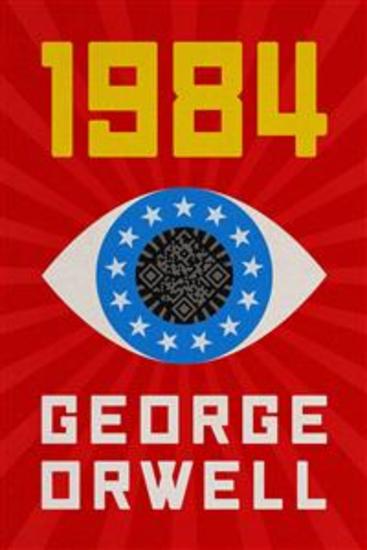
1984 - cover

1984

George Orwell

Publisher: Mercy House

  • 0
  • 1
  • 0

Summary

1984 is a dystopian novel by English novelist George Orwell. It was published on 8 June 1949 by Secker & Warburg as Orwell's ninth and final book completed in his lifetime. Thematically, 1984 centres on the consequences of government over-reach, totalitarianism, mass surveillance, and repressive regimentation of all persons and behaviours within society. More broadly, it examines the role of truth and facts within politics and their manipulation.
The story takes place in an imagined future, the year 1984, when much of the world has fallen victim to perpetual war, omnipresent government surveillance, historical negationism, and propaganda. Great Britain, known as Airstrip One, has become a province of a totalitarian superstate named Oceania that is ruled by the Party who employ the Thought Police to persecute individuality and independent thinking. Big Brother, the leader of the Party, enjoys an intense cult of personality despite the fact that he may not exist. The protagonist, Winston Smith, is a diligent and skillful rank-and-file worker and Party member who secretly hates the Party and dreams of rebellion. He enters a forbidden relationship with a co-worker, Julia.
1984 has become a classic literary example of political and dystopian fiction. Many terms used in the novel have entered common usage, including Big Brother, doublethink, thoughtcrime, Newspeak, Room 101, telescreen, 2 + 2 = 5, prole, and memory hole. Nineteen Eighty-Four also popularised the adjective "Orwellian", connoting things such as official deception, secret surveillance, brazenly misleading terminology, and manipulation of recorded history by a totalitarian or authoritarian state. Time included it on its 100 best English-language novels from 1923 to 2005. It was placed on the Modern Library's 100 Best Novels, reaching No. 13 on the editors' list and No. 6 on the readers' list. In 2003, the novel was listed at No. 8 on The Big Read survey by the BBC. Parallels have been drawn between the novel's subject matter and real life instances of totalitarianism, communism, mass surveillance, and violations of freedom of expression among other themes.
Available since: 05/26/2021.
Other books that might interest you

  • Tea-Table Talk and Other Stories - Wit and Nonsense Over the Teacups - cover

    Tea-Table Talk and Other Stories...

    Jerome K. Jerome

    • 0
    • 0
    • 0
    Four people at a tea table argue about marriage, money, women and the modern world, and nobody wins. Jerome wrote it after Three Men in a Boat had made him famous and the critics had decided he was vulgar. This edition includes 53 plates of paintings bound with the text, among them works by Edward Hicks, Edvard Munch and Spencer Gore.
    Show book
  • The Bride of Lammermoor - A Ruined House and a Forced Betrothal - cover

    The Bride of Lammermoor - A...

    Walter Scott

    • 0
    • 0
    • 0
    A ruined family, a daughter promised to the man they hate, and a bride who comes down the stairs after the wedding night with blood on her dress. Scott took it from a real Dalrymple family scandal, and Donizetti made the opera out of it sixteen years later. This edition binds 48 plates after Goya, Coccorante, Rosenthal and others, alongside 12 illustrations restored and coloured for the first time.
    Show book
  • The Legend of Sleepy Hollow - Fall asleep to a classic spooky horror story - cover

    The Legend of Sleepy Hollow -...

    Ambrose Bierce

    • 0
    • 0
    • 0
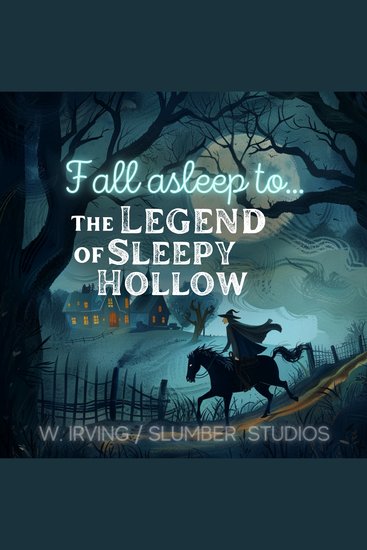
    Looking for a spooky story to help you fall asleep? Settle in for a spine-tingling journey with The Legend of Sleepy Hollow, narrated by the soothing voice of Elizabeth Grace and produced by Slumber Studios. 
    This audiobook offers the perfect blend of eerie and relaxing, ideal for those who love a touch of spookiness as they drift off to sleep. Elizabeth Grace’s calming narration gently guides you through Washington Irving’s classic tale of mystery and intrigue, perfect for a nighttime escape into the supernatural. 
    Immerse yourself in the haunting world of Sleepy Hollow, where the headless horseman roams and suspense lingers in the air—but don’t worry, the gentle pace and soft, atmospheric background music are designed to ease you into a deep, peaceful sleep. 
    At Slumber Studios, we specialize in creating relaxing, sleep-inducing content. Whether you’re a fan of spooky stories or just looking for a unique way to unwind, press play, get cozy, and let this timeless ghost story lull you into a serene slumber. Wake up refreshed, with a shiver of excitement lingering from the night before.
    Show book
  • A forgotten prince of wales - cover

    A forgotten prince of wales

    HENRY CURTIES

    • 0
    • 0
    • 0
    Unlike some other reproductions of classic texts (1) We have not used OCR(Optical Character Recognition), as this leads to bad quality books with introduced typos. (2) In books where there are images such as portraits, maps, sketches etc We have endeavoured to keep the quality of these images, so they represent accurately the original artefact. Although occasionally there may be certain imperfections with these old texts, we feel they deserve to be made available for future generations to enjoy...FROM THE BOOKS.
    Show book
  • Adventures in journalism - cover

    Adventures in journalism

    PHILIP GIBBS

    • 0
    • 0
    • 0
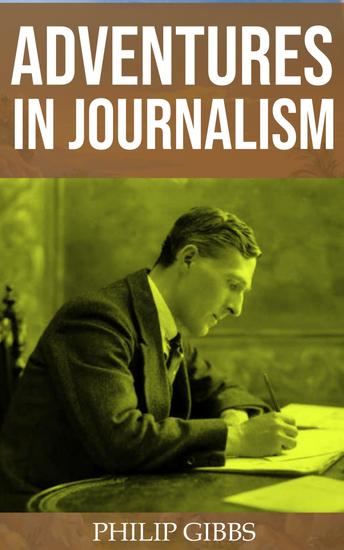
    ADVENTURES IN JOURNALISMSir Philip Armand Hamilton Gibbs was an English journalist and novelist who served as one of five official British reporters during the First World War. Two of his siblings were also writers, A. Hamilton Gibbs and Cosmo Hamilton.
    Show book
  • The Woman In White - cover

    The Woman In White

    Wilkie Collins

    • 0
    • 0
    • 0
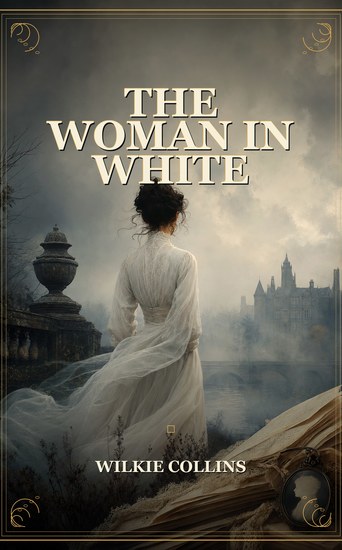
    The Woman in White tells the story of Walter Hartright, a young and impoverished drawing teacher who falls in love with his aristocratic pupil, Laura Fairlie. He cannot hope to marry her, however, and she is married off against her will to a baronet, Sir Percival Glyde, who is seeking her fortune. The terms of her marriage settlement prevent Glyde accessing her money while she lives, so together with his deceptively charming and cunning friend, Count Fosco, they hatch an unscrupulous deception to do so nonetheless. In an early 19th Century version of "identity theft," they contrive to fake Laura's death and confine her to a mental asylum. Their plot is eventually uncovered and exposed by Hartright with the help of Laura's resourceful half-sister, Marian Halcombe. The Woman in White was the most popular of Wilkie Collins' novels in the genre then known as "sensation fiction." It has never been out of print and is frequently included in lists of the best novels of all time. Published initially in serial form in 1859–60, it achieved an early and remarkable following, probably because of the strength of its characters, in particular the smooth and charming but utterly wicked villain Count Fosco, and the intelligent and steadfast Marian Halcombe opposed to him. Wilkie Collins (died 1889) was one of the most distinguished authors of the Victorian age. Their work has endured across generations and continues to be read and studied worldwide. As a work of classic literary fiction, The Woman In White exemplifies the narrative craft and social insight that defined great storytelling of its era. Literary fiction of this period was characterized by careful attention to character psychology, social milieu, and the moral questions that animated public discourse.
    Show book