Join us on a literary world trip!
Add this book to bookshelf
Grey
Write a new comment Default profile 50px
Grey
Subscribe to read the full book or read the first pages for free!
All characters reduced
A History of Lumsden's Battery CSA - Enriched edition - cover

A History of Lumsden's Battery CSA - Enriched edition

George Little, James Robert Maxwell

Publisher: DigiCat

  • 0
  • 0
  • 0

Summary

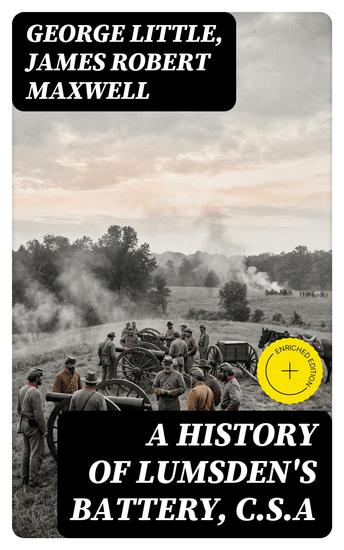
A History of Lumsden's Battery, C.S.A masterfully interweaves a tapestry of narratives that explore the intricate complexities and formidable experiences of a Confederate artillery unit during the American Civil War. The collection encapsulates a vivid panorama of military life, flavored by poignant personal anecdotes and strategic military discussions. This anthology distinguishes itself through its diverse literary styles, ranging from historical analysis to evocative prose, providing a well-rounded lens into the era. Standout pieces captivate readers with their nuanced portrayal of camaraderie amid chaos and the enduring struggle underlying the reclamation of a defining period in American history. Contributors George Little and James Robert Maxwell, noted for their depth of military insight and narrative prowess, draw upon an assortment of historical sources and personal accounts to breathe life into the tales of Lumsden's Battery. Their collaborative effort underscores a profound understanding of the antebellum South and the struggles contained within that epoch. This collection resonates with literary movements that valorize authenticity and realism, seamlessly blending historical inquiry with cultural exposition to offer a rich narrative exploration. This anthology serves as an invaluable resource for those seeking to traverse the multifaceted scope of Civil War history. A History of Lumsden's Battery, C.S.A provides an unparalleled opportunity to engage with perspectives that illuminate the human dimension of conflict, encouraging readers to reflect on the historical and cultural impact of war. Within the pages of this singular volume, scholars and enthusiasts alike will discover an enriching dialogue fostered by the unique confluence of recollections and reflections, making it an essential addition to any collection dedicated to understanding the complex tapestry of American history.

In this enriched edition, we have carefully created added value for your reading experience:
- Hand‐picked Memorable Quotes shine a spotlight on moments of literary brilliance.
- Interactive footnotes clarify unusual references, historical allusions, and archaic phrases for an effortless, more informed read.
Available since: 09/16/2022.
Print length: 61 pages.
Other books that might interest you

  • Phoney War The: The History of the Uneasy Calm along the Western Front at the Start of World War II - cover

    Phoney War The: The History of...

    Editors Charles River

    • 0
    • 0
    • 0
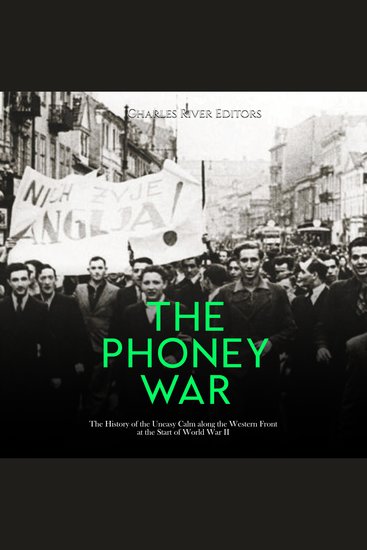
    Though the French would be decisively defeated soon after the Nazi invasion of Belgium and France in early 1940, they had not sat on their hands. As the power of Nazi Germany grew alarmingly during the 1930s, the French sought means to defend their territory against the rising menace of the Thousand Year Reich. As architects of the most punitive measures in the Treaty of Versailles following World War I, France was the most natural target for German retribution, so the Maginot Line, a series of interconnected strongpoints and fortifications running along much of France's eastern border, helped allay French fears of invasion.  
    	The popular legend of the Maginot Line portrays the frontier defenses as a useless “white elephant” project that was prompted by a gross misapprehension of warfare's new realities in the mid-20th century and quickly overwhelmed by the forceful advance of the German blitzkrieg. English idiom today invokes this vision of the Maginot Line as a metaphor for any defensive measure strongly believed in but actually useless. Indeed, usages such as “Maginot Line mentality,” describing an overly defensive, reactive mindset, perpetuate the legend. As a French author and military liaison with the British, Andre Maurois, wrote about his disillusionment with the defensive line he originally enthusiastically supported: “We know now that the Maginot line-complex was a dangerous disease of the mind; but I publish this as it was written in January, 1940.”  
    This was what brought about the stasis along the Western Front near the end of 1939, a short period of time now referred to as the Phoney War, during which the Western Allies awaited some sort of action by the Nazis. Ultimately, the Allies had not expected the Germans would be able to move armored units through the Ardennes Forests, a heavily wooded region spanning parts of Belgium, France and the Netherlands. 
    Show book
  • Psych2Go Presents: The Psychology of People - The Little Book of Psychology & What Makes You You - cover

    Psych2Go Presents: The...

    Thomas Kang

    • 0
    • 0
    • 0
    Finally understand why you do things differently from the rest! Psych2go created this guide to connect the history of human psychology with practical mental health therapy tools to help you thrive in your everyday life. 


    Discover things about yourself! With The Psychology of People, learn about the history of human psychology—and apply it to your own life. Understand your innate need to conform, the roots of your social anxiety, how to heal and grow emotionally—and so much more! 


    An empath's survival guide to psychology. Written by the creators of the popular YouTube channel, blog, and website Psych2go, The Psychology of People is one of the best mental wellness books that gives practical and applicable methods! From the ethics of experimental psychology to therapy techniques, The Psychology of People helps you develop empathy for yourself and others. 


    Inside, you'll find: 


    ● Your very own therapist on the go, packed with practical methods and experiments 


    ● How to understand and rewire your brain by discovering psychological-based patterns in yourself and others 


    ● One of the best books about psychology, the history of psychology, and the ethics of experimental science
    Show book
  • How to Tell a Story - An Ancient Guide to the Art of Storytelling for Writers and Readers - cover

    How to Tell a Story - An Ancient...

    Aristotle

    • 0
    • 0
    • 0
    An inviting and accessible new translation of Aristotle's complete Poetics—the first and best introduction to the art of writing and understanding stories 


    Aristotle's Poetics is the most important book ever written for writers and readers of stories—whether novels, short fiction, plays, screenplays, or nonfiction. Aristotle was the first to identify the keys to plot, character, audience perception, tragic pleasure, and dozens of other critical points of good storytelling. Despite being written more than 2,000 years ago, the Poetics remains essential reading for anyone who wants to learn how to write a captivating story—or understand how such stories work and achieve their psychological effects. Yet for all its influence, the Poetics is too little read because it comes down to us in a form that is often difficult to follow, and even the best translations are geared more to specialists than to general readers who simply want to grasp Aristotle's profound and practical insights. In How to Tell a Story, Philip Freeman presents the most accessible translation of the Poetics yet produced, making this indispensable book more engaging and useful than ever before.
    Show book
  • In the Cause of Liberty - cover

    In the Cause of Liberty

    William King

    • 0
    • 0
    • 0
    This decidedly unusual book gives an excellent account of what its title purports. Rendering fresh views, not only of the poet and engraver William Blake and the radical-democratic pamphleteer Thomas Paine, but of the entirety of that cavalcade of events encompassed under the rubric of Revolution in the 18th Century—in America, in France, and in the Caribbean island known today as Haiti, as well as of the reform and radical movements contemporaneous in Britain with the rise of empire and “industrialism”. Proceedings that have had an influence on the debates on liberty and equality, and sovereign authority, in the ensuing two centuries; that remain, despite ever-burgeoning scholarship, controversial and perplexing, even elusive, today. 
    William S. King’s vividly written and excellently researched narrative also doubles as a noteworthy literary examination, including Mary Wollstonecraft and Edmund Burke, Thomas Paine and William Blake, Marat and Condorcet, and the booksellers Nicolas Bonneville and Joseph Johnson, and many, many others—all mounted in memorable and sometimes gory tableaux, sketched against the turbulence of the time. 
    This book will interest a diverse set of readers; all who are concerned with the ideas propounded at the end of the 18th century, by these persons and stirred by these events.
    Show book
  • The War in the Air - How Aerial Combat Changed Warfare Forever - cover

    The War in the Air - How Aerial...

    Sage Winters

    • 0
    • 0
    • 0
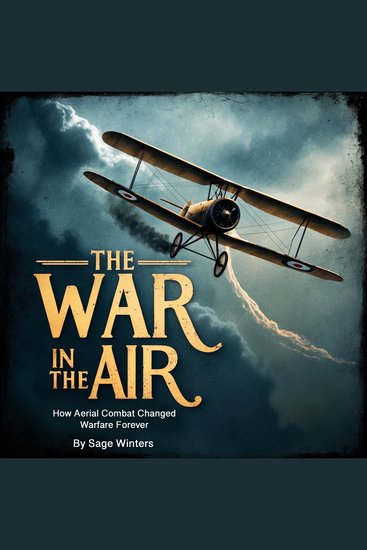
    The early 20th century marked a transformative period in military history, where the introduction of flight reshaped the very nature of warfare. Prior to this, battles were fought on the ground and at sea, with strategy revolving around infantry, artillery, and naval power. However, as aviation technology advanced rapidly, it presented military commanders with new opportunities and challenges that would forever alter how conflicts were conducted. 
      
    At the outset of World War I, the concept of aerial combat was in its infancy. Airplanes were initially seen as reconnaissance tools, providing vital intelligence for ground forces. Yet, it didn’t take long for the potential of aircraft to be realized in more aggressive terms. Pioneers such as the Wright brothers had already demonstrated the possibilities of flight, but the practical application of aircraft in combat was a game-changer. The skies above the battlefield soon became a new front, and aviation quickly proved indispensable in both strategic and tactical operations. 
      
    The early airmen of World War I were explorers of a new domain, and their role would evolve from mere observers to active participants in combat. The introduction of fighter aircraft, along with advancements in technology like the machine gun, turned the skies into a dangerous and dynamic environment. Aerial dogfights became iconic moments of the war, and the stakes of air superiority were made clear. As aircraft became faster, more maneuverable, and capable of carrying greater payloads, they not only impacted the outcome of individual battles but also began to influence the strategic decisions of entire nations.
    Show book
  • Mystics with the Queen’s Ear The: The Mysterious Lives of Rasputin and John Dee - cover

    Mystics with the Queen’s Ear...

    Editors Charles River

    • 0
    • 0
    • 0
    With the golden glow of the candlelight kissing his cheeks, he hovered over a spirit mirror, a flat, exquisitely lustrous “shew-stone” fashioned out of raven-black obsidian. Gazing intently upon his reflection in the dark volcanic glass, he chanted in hushed tones as he ran his fingers across the engravings on the oat-colored wax wheel next to him, the Sigilla iEmeth, which featured a septogram and runic carvings and symbols in minuscule print. This was none other than John Dee, one of the greatest scientific minds of his time, but also one of the most controversial. He was a learned man in fields as varied as mathematics and astronomy, centuries before they became formalized fields of study, but he is better remembered for performing magic and alchemy. Instead of astronomy, he became renowned across England for astrology, and he was one of the country’s most notorious occult writers during his life. 
    The world has never had its shortage of legends surrounding the lives of supposed mystics, visionaries, and prophets. But few have ever grabbed a hold on pop culture quite like that of Grigori Rasputin, one of the most shadowy and mysterious figures in Russian history. Naturally, what makes Rasputin one of the 20th century’s most colorful and memorable figures is what we do not know. Some contemporaries considered him a saintly mystic, psychic, healer and prophet, while others considered him a debauched heretic. The extent to which he beguiled the ruling Romanovs, and how he did so, remain mysterious as well. 
    It’s hard to kill a legend, and that has literally been the case with Rasputin, whose death remains the most legendary aspect of his life. Perhaps the best known part of the Rasputin story is that his murderers practically had to kill him 10 times to finish him off, using everything from poison to bullets to drowning. Naturally, exactly how Rasputin actually died remains a source of controversy as well.
    Show book