Join us on a literary world trip!
Add this book to bookshelf
Grey
Write a new comment Default profile 50px
Grey
Subscribe to read the full book or read the first pages for free!
All characters reduced
The Whirlpool - cover

The Whirlpool

George Gissing

Publisher: Bu Classics Books

  • 0
  • 0
  • 0

Summary

The frenzy of metropolitan life threatens to consume Harvey Rolfe and his wife Alma as they are drawn into a vortex of financial speculation and social climbing. Domestic peace is shattered by the neurotic pursuit of excitement and the instability of the stock market. It is a tragic portrait of a marriage eroding under the pressure of modern restlessness.
Available since: 03/05/2026.
Print length: 646 pages.

Other books that might interest you

  • Emma - cover

    Emma

    Jane Austen

    • 0
    • 0
    • 0
    Step into the charming and socially intricate world of Regency England with Emma, Jane Austen’s timeless tale of love, ambition, and self-discovery. Meet Emma Woodhouse, a spirited, witty, and often misguided young woman who delights in matchmaking for her friends while remaining oblivious to her own heart's desires. 
    Through Emma’s well-intentioned but often comical schemes, Austen weaves a brilliant exploration of human relationships, class dynamics, and personal growth. As Emma navigates friendships, misunderstandings, and unexpected revelations, she learns valuable lessons about humility, empathy, and the complexities of love. 
    Filled with Austen’s trademark wit, sharp social commentary, and unforgettable characters, Emma is a delightful and enduring classic that continues to captivate readers and listeners alike. Perfect for fans of romance, humor, and literary masterpieces, this audiobook brings the world of Highbury and its colorful inhabitants to life in a way that feels as fresh and relevant today as it did when it was first written.
    Show book
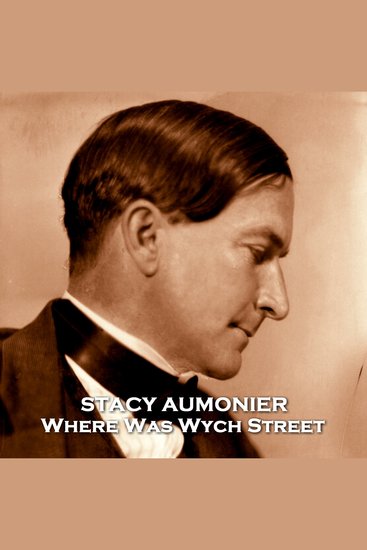
  • Where Was Wych Street - From their pens to your ears genius in every story - cover

    Where Was Wych Street - From...

    Stacy Aumonier

    • 0
    • 0
    • 0
    Stacy Aumonier was born at Hampstead Road near Regent’s Park, London on 31st March 1877. 
    He came from a family with a strong and sustained tradition in the visual arts; sculptors and painters. 
    In 1890 the teenage Aumonier attended Cranleigh School in Surrey. Although he would later write critically about English public schools (with articles for the London Evening Standard and New York Times) in how they tried to impose conformity on students, records indicate that he integrated well into Cranleigh. Aumonier was a passionate cricket player, belonged to the Literary and Debating Society, and, in his final year, became a prefect. 
    On leaving school it seemed the family tradition of the visual arts would be his career path. In particular his early talents were that of a landscape painter. He exhibited paintings at the Royal Academy in 1902 and 1903, and 1908. An exhibition of his work would later be held at the Goupil Gallery in London in 1911. 
    In 1907 he married the international concert pianist, Gertrude Peppercorn, at West Horsley in Surrey. She herself was the daughter of a landscape painter (Arthur Douglas Peppercorn, occasionally cited as ‘the English Corot’.) A son, Timothy, was born in 1921. 
    A year after his marriage, Aumonier began a brief career in a second branch of the arts at which he enjoyed outstanding success—as a stage performer writing and performing his own sketches.  
    The Observer newspaper commented that "...the stage lost in him a real and rare genius, he could walk out alone before any audience, from the simplest to the most sophisticated, and make it laugh or cry at will." 
    In 1915, Aumonier published a short story ‘The Friends’ which was well received (and voted one of the best short stories of 1915 by the Boston Magazine, Transcript).  
    Despite his age being 40 in 1917 he was called up for service in World War I. He began as a private in the Army Pay Corps, and then transferred as a draughtsman in the Ministry of National Service. 
    By now he had four books published—two novels and two books of short stories—and his occupation is recorded with the Army Medical Board as ‘author.’ 
    In the mid-1920s, Aumonier received the shattering diagnosis that he had contracted tuberculosis. In the last few years of his life, he would spend long spells in various sanatoria, some better than others. In a letter to his friend, Rebecca West, written shortly before his death, he described the debilitating conditions in a sanatorium in Norfolk during the winter of 1927, where the dampness was so severe that a newspaper left beside the bed would feel "sodden to the touch in the morning." 
    Shortly before his death, Stacy Aumonier sought treatment in Switzerland, but died of the disease in Clinique La Prairie at Clarens beside Lake Geneva on 21st December 1928. He was 55.
    Show book
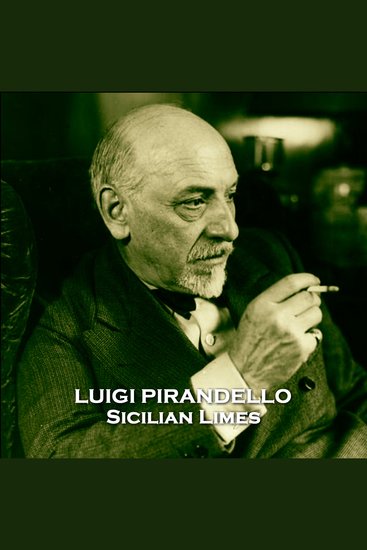
  • Sicilian Limes - From their pens to your ears genius in every story - cover

    Sicilian Limes - From their pens...

    Luigi Pirandello

    • 0
    • 0
    • 0
    Luigi Pirandello was born on 28th June 1867 into an upper-class family in Agrigento, in Sicily. 
    In 1880, the family moved to Palermo and there he completed high school and thence to the University of Palermo, at that time the centre of what became the Fasci Siciliani movement.  Although not an active member he had close friendships with many of its leading ideologists.  Pirandello then completed his university studies in Rome and Bonn, receiving his Doctorate in March, 1891. 
    His time in Rome had provided him with the opportunity to visit its many theatres. "Oh the dramatic theatre! I will conquer it. I cannot enter into one without experiencing a strange sensation, an excitement of the blood through all my veins..." 
    1894 brought marriage, at his father's suggestion, to a shy, withdrawn girl: Mara Antonietta Portulano.  The marriage encouraged his studies and writings and, the following year, the first part of the ‘Dialoghi tra Il Gran Me e Il Piccolo Me’ was published. 
    In 1903 the flooding of the sulphur mines in which his father had invested the family capital and Antonietta's dowry, brought financial catastrophe.  She, on hearing the news, was mentally broken.  Pirandello would now work a full day and then watch over his troubled wife at night. Somehow he found time to write ‘The Late Mattia Pascal’.  It was an immediate and resounding success.  
    In 1909, Pirandello began his collaboration with the prestigious Corriere della Sera.  Whilst his fame as a writer was increasing his private life was poisoned by the suspicion and jealousy of Antonietta who now turned physically violent.  His plays were now being regularly performed but, within a decade, Antonietta had to be placed into an asylum from which she never left. 
    In 1921, in Rome his play, ‘Six Characters in Search of an Author’ debuted.  It was a failure.  However, when presented in Milan it was a great success, as it also was in London and New York. 
    In 1925, Pirandello, with Mussolini’s help, assumed the artistic direction and ownership of the Teatro d'Arte di Roma.  He now described himself both as ‘a Fascist because I am Italian’ and ‘I'm apolitical, I'm only a man in the world...’  However his later conflicts with fascist leaders meant he fell under close surveillance by the OVRA, the secret police. 
    In 1934 he won the Nobel Prize but asked that the medal be melted down for Italy’s occupation of Abyssinia Campaign to which he had given his support.  
    Pirandello's canon stretches across novels, short stories, poetry, essays and some 40 plays.  His tragic farces are often cited as forerunners of the Theatre of the Absurd. 
    Luigi Pirandello died on the 10th December 1936 at his home at Via Bosio, Rome, Italy.  He was 69.
    Show book

  • The Man In A Case - cover

    The Man In A Case

    Anton Chekhov

    • 0
    • 0
    • 0
    A Man in a Case, written by Anton Chekhov, is an example of realist literature and serves to illustrate his mastery of the craft. The story centers around the protagonist, Belikov, who is characterized by his extremely rigid adherence to social conventions and strictures. By confining himself within the boundaries of socially accepted norms, Belikov creates a metaphorical "case" that further restricts his access to self-expression and freedom. Read in English, unabridged.
    Show book
  • War and Peace (Book Eight: 1811-12) - cover

    War and Peace (Book Eight: 1811-12)

    Leo Tolstoy

    • 0
    • 0
    • 0
    War and Peace is a literary work mixed with chapters on history and philosophy by the Russian author Leo Tolstoy. It was first published serially, then published in its entirety in 1869. It is regarded as one of Tolstoy's finest literary achievements and remains an internationally praised classic of world literature.
    Book 8: 1811-12: After Prince Andrew’s engagement to Natásha, Pierre without any apparent cause suddenly felt it impossible to go on living as before. Firmly convinced as he was of the truths revealed to him by his benefactor, and happy as he had been in perfecting his inner man, to which he had devoted himself with such ardor—all the zest of such a life vanished after the engagement of Andrew and Natásha and the death of Joseph Alexéevich.
    Show book
  • Sredni Vashtar - cover

    Sredni Vashtar

    Saki (H.H. Munro)

    • 0
    • 0
    • 0
    More classic horror narrations on Jonathan's YouTube channel: https://www.youtube.com/@JonathanDunneHorrorAudiobooks 
    Title: Sredni Vashtar 
    Author: Saki (H. H. Munro) 
    Narrator: Jonathan Dunne 
    Original Publication: 1912 
    Public Domain: Yes 
    Series Placement: Timeless Terrors No. 79 
    Description: 
    Sredni Vashtar is one of Saki’s most unsettling and darkly ironic tales — a precise exploration of repression, power, and private vengeance. The story follows Conradin, a frail boy living under the rigid control of his guardian, Mrs. De Ropp, whose cold authority dominates his life. Deprived of affection and freedom, Conradin retreats into a secret world of imagination and ritual. 
    Central to this world is the shed at the bottom of the garden, where he keeps a ferret he worships as a personal god, Sredni Vashtar. Through quiet devotion and imagined rites, Conradin gives this creature the power denied to him, and the story unfolds with a calm inevitability toward a chilling climax. 
    Saki’s restrained prose makes the horror subtle yet potent, arising not from spectacle but from moral indifference and the consequences of cruelty. Narrated by Amazon-bestselling horror author Jonathan Dunne, this performance captures the story’s tension, irony, and quiet menace. 
    Sredni Vashtar remains a timeless reminder that even the smallest, most silenced lives can harbor forces capable of unsettling and irrevocable change.
    Show book